
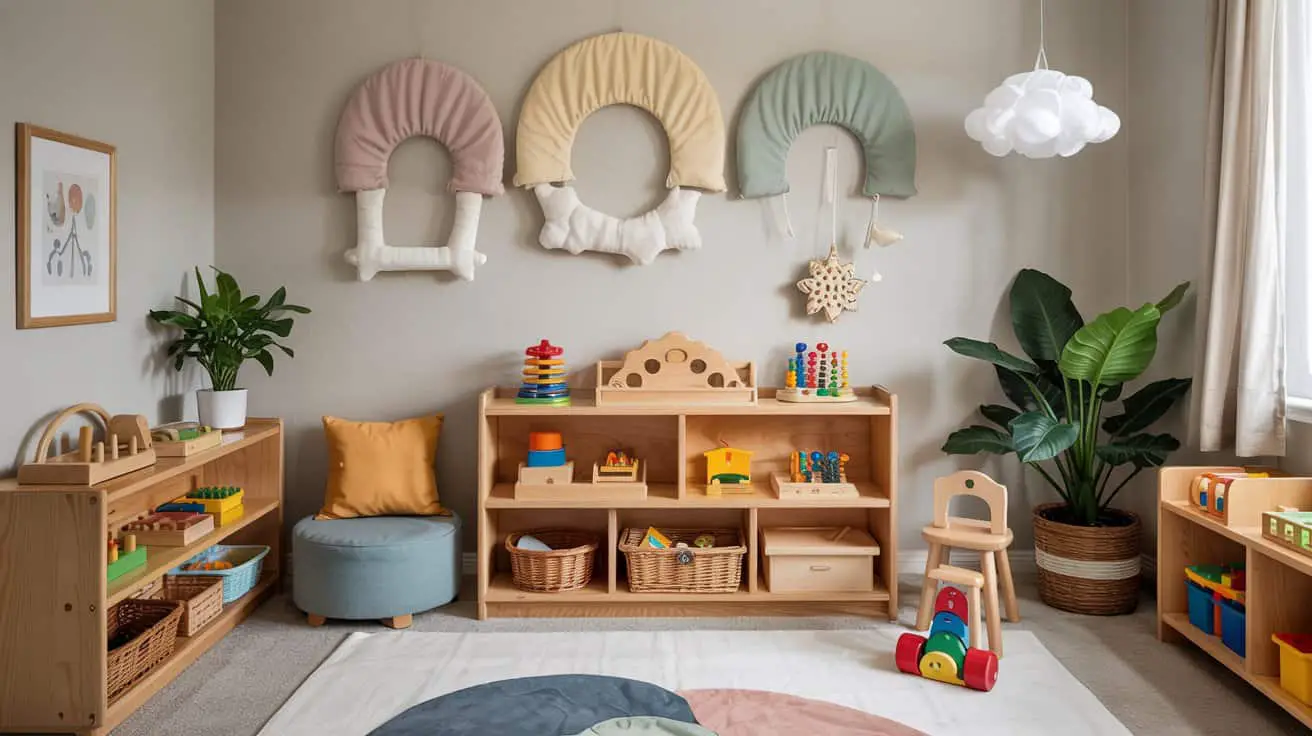
If you’ve ever stepped on a wooden block at 6 a.m. or found yourself Googling “how to store 1,000 toys in a two-bedroom apartment,” you’re not alone. Small family homes have a way of feeling like playgrounds — just not in the calm, Montessori sense. But here’s the good news: creating a functional, child-led playroom doesn’t require a big house or a big budget. It just takes intention.
I remember the moment I realized my toddler didn’t need more toys — she needed fewer. She didn’t need a playroom packed with color and noise; she needed space to explore, think, and focus. Montessori-style playrooms are perfect for this. They work beautifully in small homes because they emphasize simplicity, order, and independence — qualities that make life easier for both parents and kids.
The best part? You can create a Montessori playroom in almost any corner — a living room nook, part of a bedroom, or even under the stairs. It’s about designing a calm, accessible space that encourages curiosity without the chaos.
Here are six+ Montessori-inspired playroom layout ideas that fit real family homes, real budgets, and real life — no Pinterest mansion required.
Montessori Playroom at Home: Calm, Simple, and Accessible
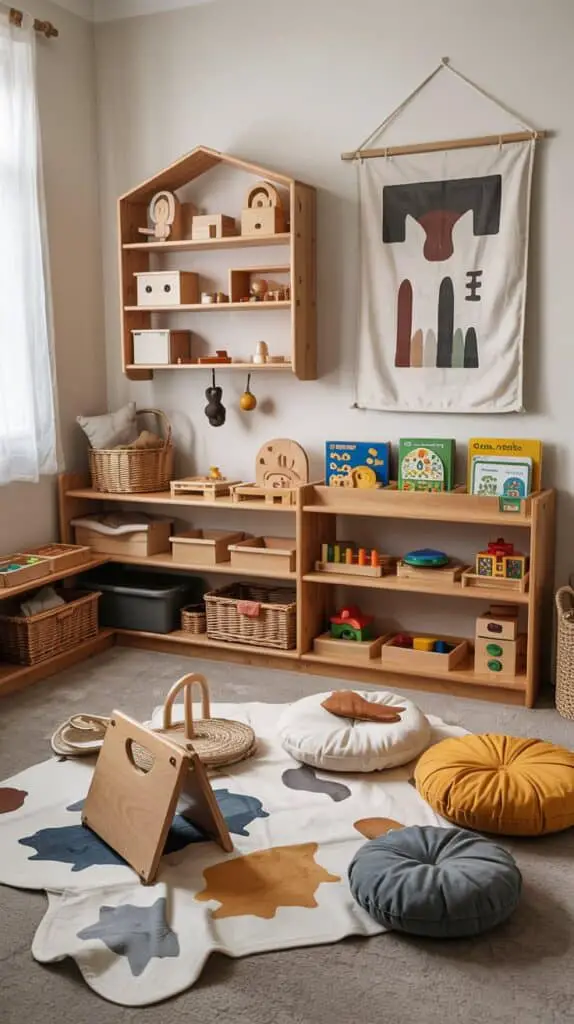
A Montessori playroom at home should feel like an invitation to explore, not a warehouse of toys. The core idea is to make everything accessible to your child. Low shelves, baskets at floor level, and defined play zones help children choose what they want to play with — and learn to put it away afterward (well, most of the time).
Use natural materials where possible — wood, cotton, and soft wool over plastic. Keep toys visible but not crowded; aim for around six to eight items on display and rotate them every few weeks to keep things fresh. Choose warm neutrals with small pops of color, like mustard yellow cushions or pastel play mats.
Add a cozy reading corner with a floor cushion, a soft rug, and low book racks where children can see the covers. If your space is tight, one wall with open shelving can hold everything from sensory bins to puzzles. It’s minimalism made family-friendly.
Baby Playroom Ideas for Small Spaces
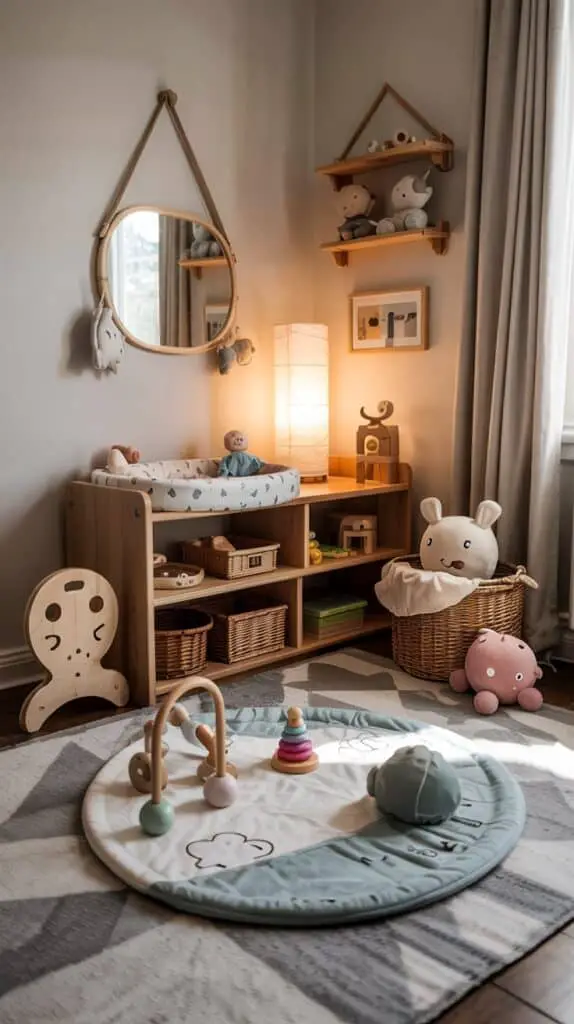
For infants, playrooms are less about “stuff” and more about gentle sensory experiences. A small area in your living room can easily become a baby play zone with a floor mirror, a soft mat, and a few tactile toys within reach.
Opt for lightweight wooden mobiles, textured fabric books, and stacking rings — simple items that invite touch and movement. Avoid cluttering; babies can get overstimulated fast. If space is limited, use a playmat that rolls up after use, and store everything in one woven basket that looks good even when left out.
Lighting makes a huge difference. Natural light is best, but a warm lamp creates a soothing glow for evening play. Keep colors soft — cream, sage, or blush — and introduce one or two contrasting toys to draw curiosity. The goal isn’t a designer nursery; it’s a calm, nurturing corner where your baby can safely explore the world.
Functional Playroom That Works for the Whole Family
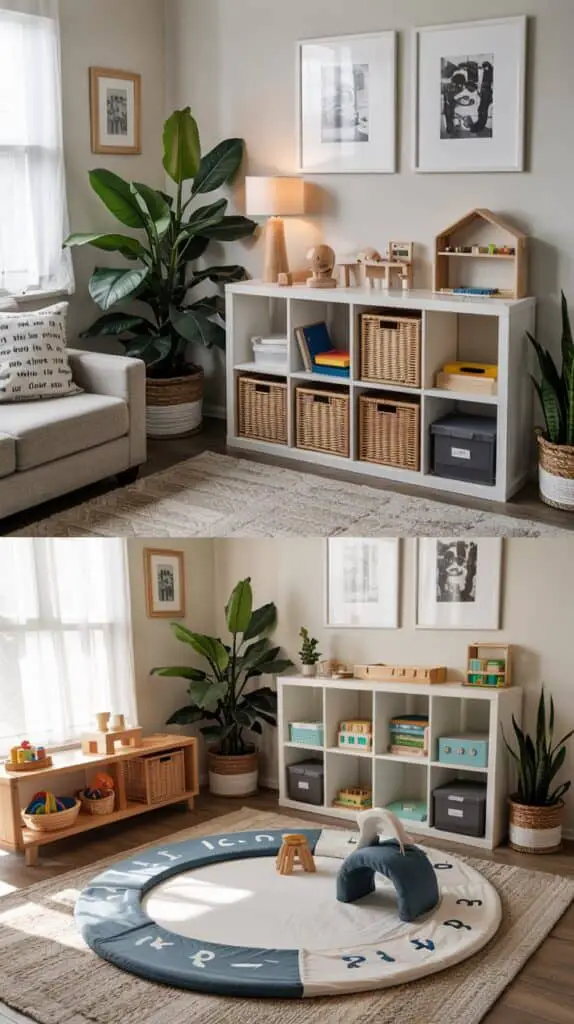
A functional playroom should make sense for everyone — parents included. When you’re short on space, design the room so it blends with the rest of the home. Think modular furniture, foldaway play tables, or cube storage that doubles as seating.
Zone the space for different activities: one area for imaginative play (dress-up or a small kitchen set), another for building, and a quiet spot for books or art. Use rugs or low shelving to define each section without needing walls.
Add wall hooks for hanging capes, baskets for art supplies, and a soft reading lamp. Keep storage visible and simple, so tidying up feels part of the play. It’s a functional setup that gives kids freedom and parents peace of mind — no more tripping over toy trains in the hallway.
Montessori Living Room That Doubles as a Play Space
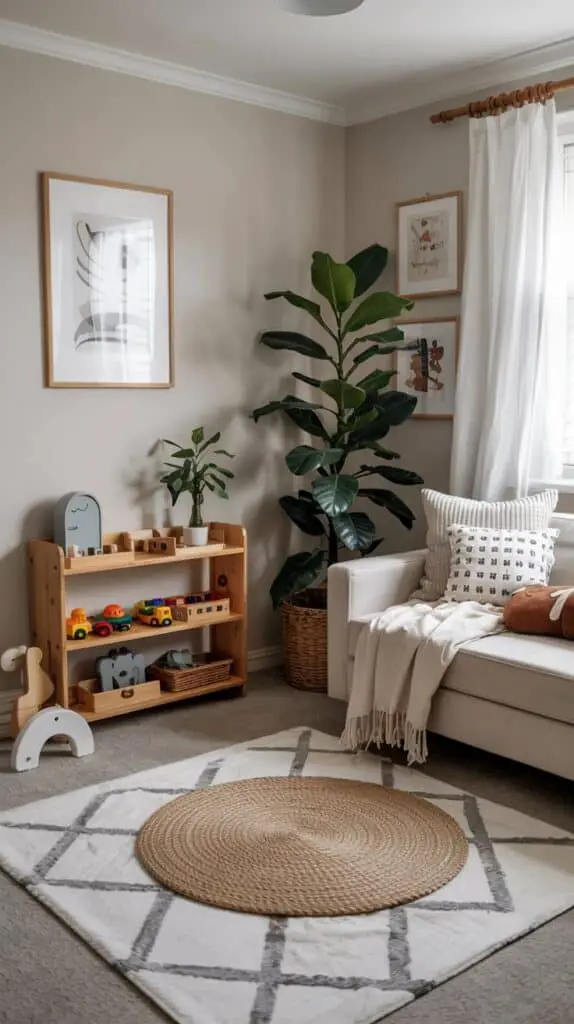
In small family homes, the living room often is the playroom. And that’s okay — a Montessori-inspired layout makes it feel intentional instead of messy. Choose furniture that’s easy to move or repurpose, like a coffee table that doubles as a craft zone or ottomans with hidden storage.
Keep play items on low shelves, not scattered across the floor. A soft rug defines the play area and provides a sensory zone for babies and toddlers. Stick to a calm palette so toys add gentle color rather than overwhelm the space.
Add Montessori touches like a child-height mirror or a small wooden table where your child can draw or snack independently. When everything is within reach, kids learn self-reliance — and you keep your sanity.
Simple Playroom Ideas for Busy Parents
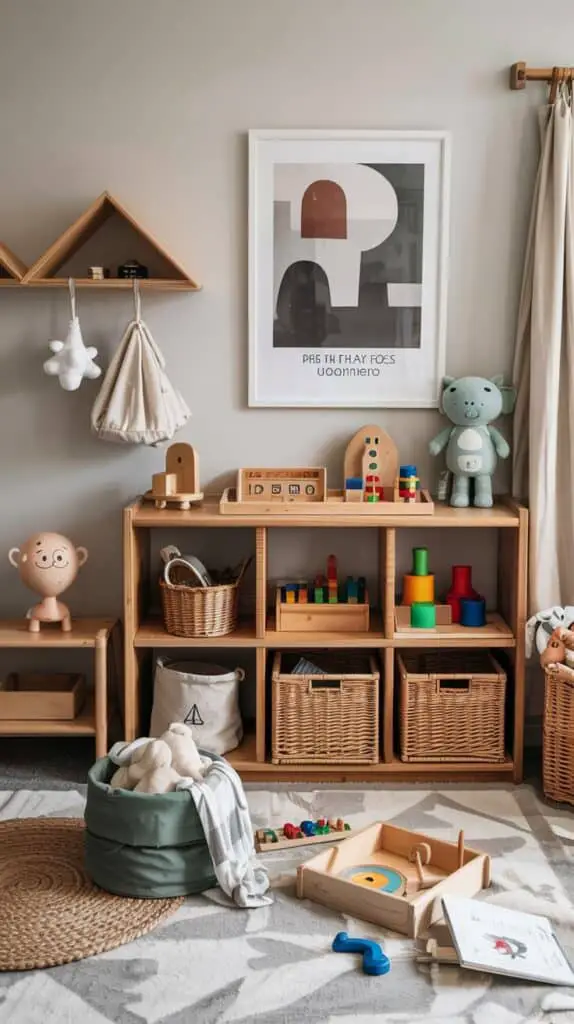
You don’t need to overhaul your whole house to create a peaceful playroom. Start small with these simple ideas: one open shelf, one mat, one reading nook. The less there is, the more meaningful the play becomes.
Try the “basket system” — one for blocks, one for art, one for music. Rotate them weekly to keep play interesting. This also helps children develop focus, because they’re not overwhelmed by too many choices.
For parents who crave calm, simple storage solutions are everything. Neutral bins, woven baskets, and a few floating shelves can completely change the tone of your space. Add a soft blanket, a few wooden toys, and watch your child rediscover play in its purest form.
Colorful Playroom That Still Feels Calm
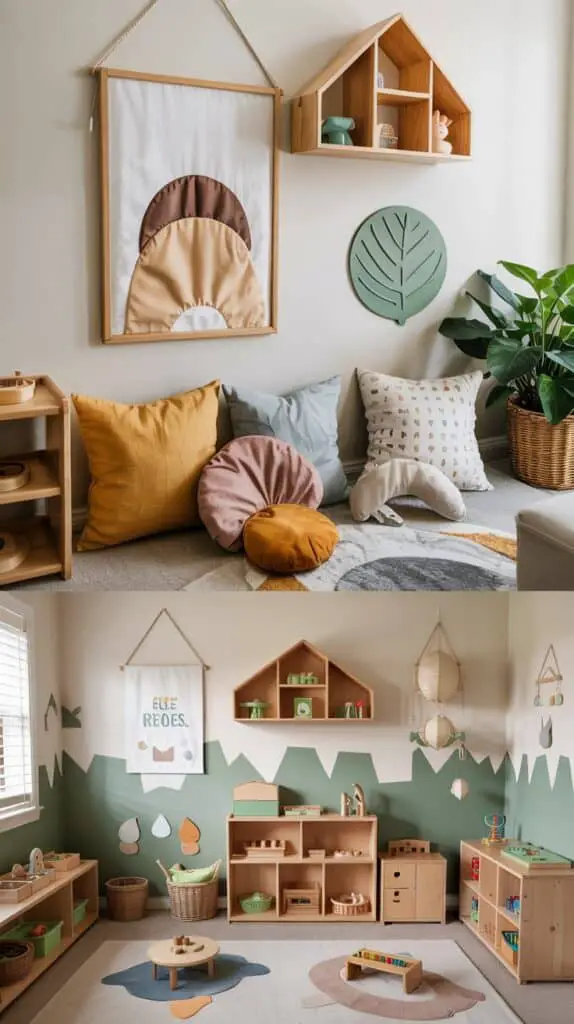
Montessori playrooms aren’t always beige — they can be colorful too, just mindfully so. The trick is balance. Use color in defined areas rather than everywhere. A cheerful rug, a bright reading nook cushion, or pastel wall art brings energy without chaos.
Involve your kids when choosing the color accents — they’ll love the ownership, and it helps them connect to the space. Just keep walls and main furniture neutral so the room stays adaptable as they grow.
If your space allows, create an art wall where your kids can display their drawings. It adds color, personality, and a sense of pride — no paintbrush required.
Final Thoughts
A Montessori playroom isn’t about perfection; it’s about purpose. Whether you’ve got a corner of your living room or a full spare room to play with, these ideas help create calm within the chaos of family life.
What makes a playroom truly work isn’t the furniture or the budget — it’s how it feels. When your child can choose, play, and rest independently, the space becomes more than a room; it becomes part of their growth. And maybe, just maybe, you’ll get to finish your coffee while it’s still hot.