
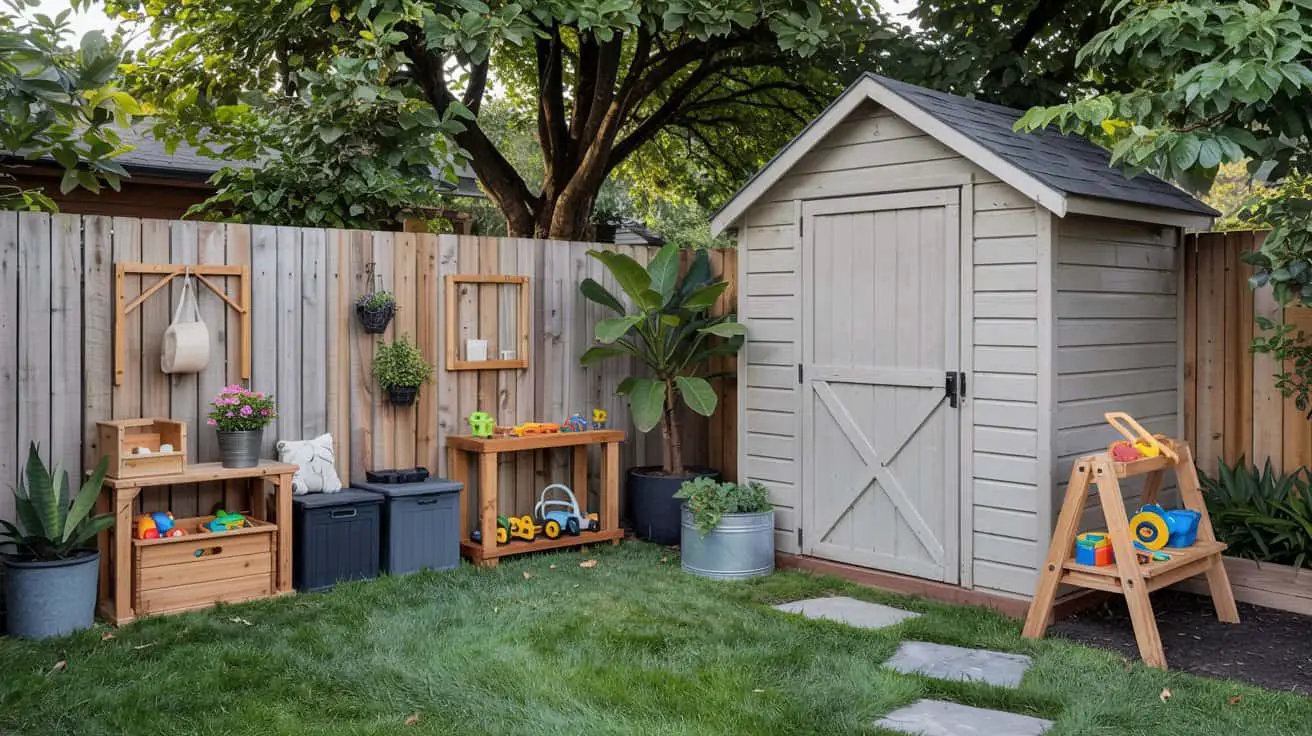
A backyard can be three things at once: a place to grow a few tomatoes, a place where kids burn off energy, and a place where all the outdoor stuff actually has a home. The problem is that most yards drift toward one extreme. Either it becomes a toy zone that’s hard to reset, or it becomes a garden that’s too precious to touch, or it becomes a storage dumping ground that nobody enjoys spending time in.
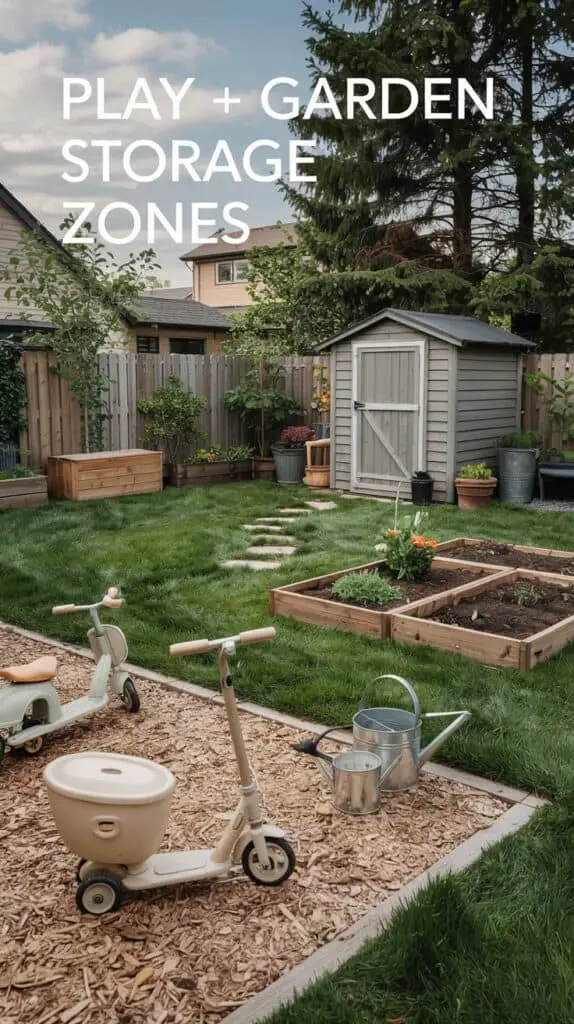
Designing backyard play spaces that include backyard storage isn’t about building more. It’s about setting up a few simple zones that work together: a play area that’s safe and clear, a garden zone that feels doable, and an organization plan that makes cleanup feel realistic. This approach is especially helpful for families, beginners, and renters who want a yard that looks calm and functions well without a massive budget or permanent construction.
Think of this as lived-in guidance for a normal home: maybe a suburban family yard, maybe a small rental with a patch of grass and a patio, maybe a shared outdoor space where you’re trying to keep things tidy without over-controlling how kids play.
Start With Three Zones That Don’t Compete
Before you choose a shed or buy another bin, decide where these three zones will live:
- A play zone (movement, messy play, chalk, scooters)
- A garden zone (beds, pots, compost, watering)
- A storage zone (tools, toys, cushions, seasonal gear)
Most backyards can handle this even if they’re small. The goal is not equal sizes. The goal is clarity. When the zones overlap too much, the garden feels trampled, the toys spread everywhere, and “outside storage ideas” turn into piles behind the grill.
A simple way to lay it out:
- Put play where you can see it easily from the house
- Put garden where it gets the best sun
- Put backyard storage near the path between the door and the yard, so resetting is quick
If you do nothing else, this mental map keeps everything from drifting into chaos.
Choose Backyard Storage First, Not Last
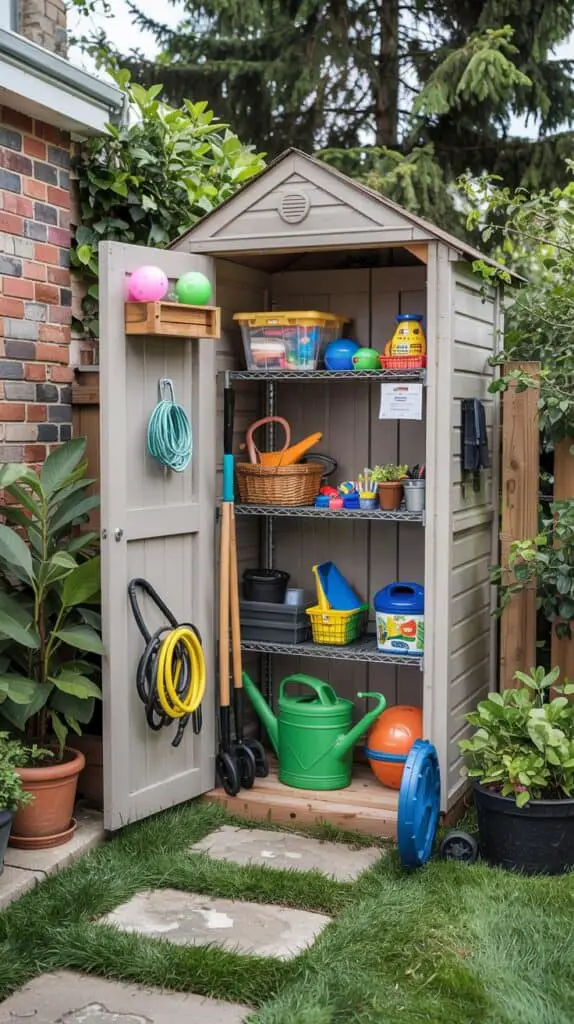
It feels backwards, but storage is what makes the rest possible. If there’s nowhere for scooters, soccer balls, small shovels, or potting soil to go, the yard will always look half-finished.
Start with what you already own and categorize it:
- Kid outdoor gear (balls, chalk, bubbles, helmets)
- Garden supplies (gloves, hand tools, seed packets, soil)
- Big items (watering can, folding chairs, kiddie pool, hose)
Then pick a backyard storage option that matches your space and commitment level. For renters and beginners, small outdoor storage that’s movable is usually the sweet spot. For homeowners or long-term renters, a shed or dedicated structure can make the whole yard feel calmer.
The best storage doesn’t need to be huge. It needs to be close enough that you’ll actually use it.
Try Small Outdoor Storage That Blends Into the Yard
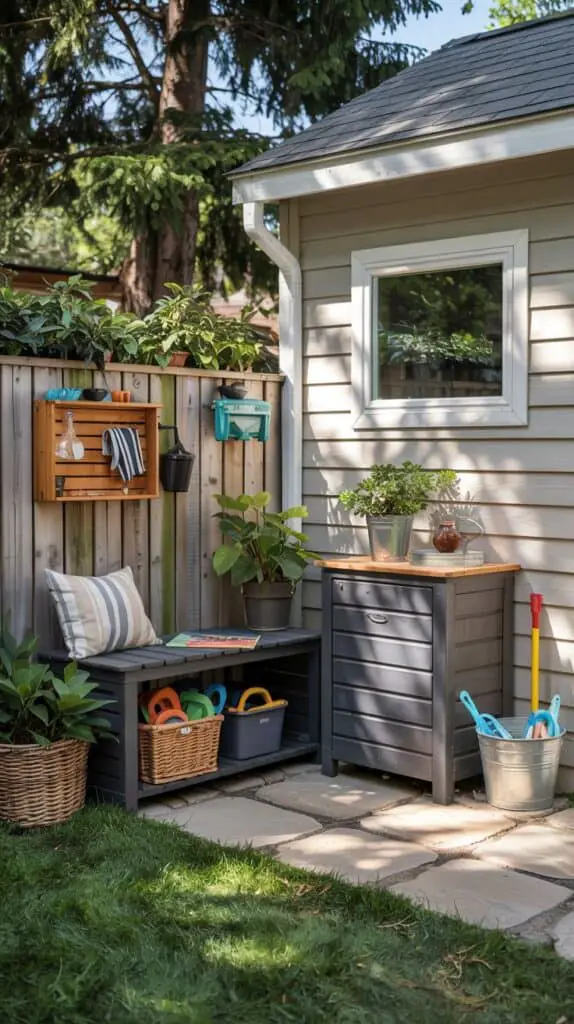
If you’re working with a smaller patio or a tight side yard, big structures can feel like overkill. This is where small outdoor storage shines, especially if you want the yard to look intentional.
A few practical options:
- A weatherproof deck box that holds toys and garden gloves
- A storage bench that doubles as seating
- Slim vertical cabinets that tuck against a wall or fence
- Lidded totes on a low shelf under a covered patio
This is also where outdoor patio storage ideas matter. If your main outdoor “hangout” is a patio or small deck, put storage there first. That’s where cushions, chalk, and quick-grab toys naturally live. When storage is right where you already are, cleanup stops feeling like a separate chore.
Keep the visual clutter down by using one color or material (black, gray, wood) and limiting the number of containers.
Use Storage Sheds Ideas Backyard Families Actually Need
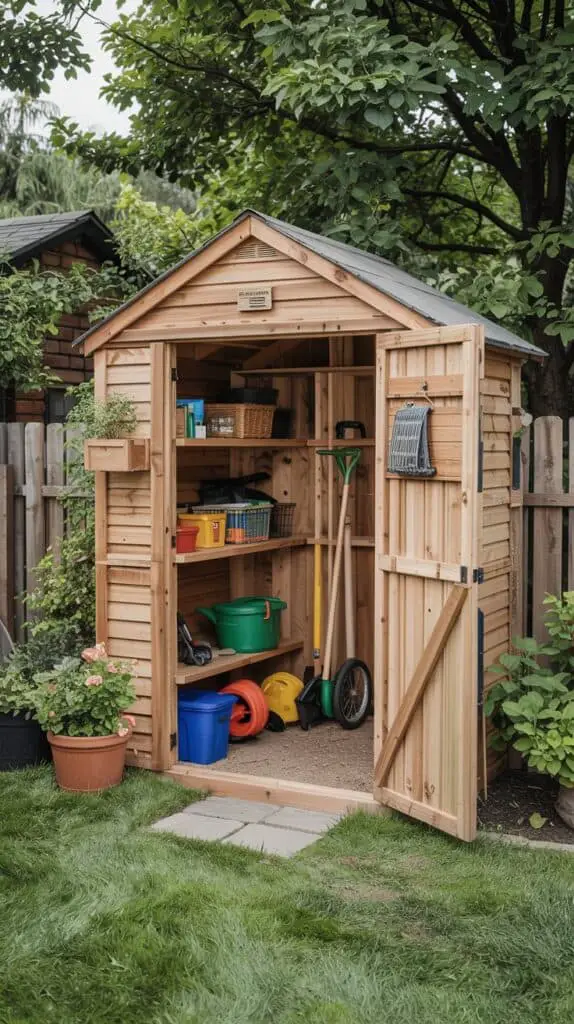
When people picture sheds, they often picture either a big wooden building or something flimsy and cluttered. In real family yards, the best shed is the one that supports daily life: it holds tools, it hides the toy pile, and it’s easy to open with one hand while holding a watering can.
A few realistic storage sheds ideas backyard families tend to love:
- A compact shed with double doors so you can roll in bikes
- A tall, narrow shed for tool storage when floor space is limited
- A shed placed at the edge of the yard to create a boundary for the play zone
- A shed that opens toward the garden so watering and potting feel convenient
If you’re trying to combine garden storage ideas and kid gear, consider a simple split: one side is “clean” storage (cushions, patio items), and the other side is “messy” storage (tools, sand toys, soil). Even a small shed can feel organized if you give each category a side.
If you’re renting, check your lease and stick to movable sheds or storage cabinets that don’t require a foundation. Some renters do well with a resin shed placed on pavers so it can be removed later.
Consider a Modern Shed or Studio Shed as a Calm Backdrop
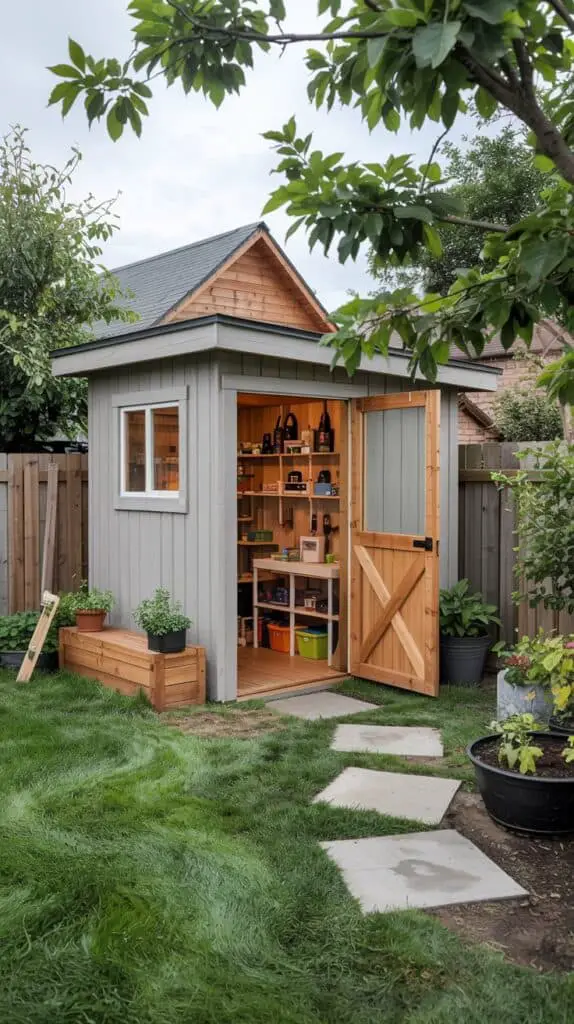
If your style leans clean and minimal, a modern shed can make the whole yard feel designed, even if the inside is just practical storage. This is less about aesthetics for their own sake and more about creating a calm anchor so the yard doesn’t feel like a jumble of kid stuff and garden stuff.
A modern shed works well when:
- You want the storage structure to feel like part of the home
- Your patio area is visible from inside the house
- You’re trying to reduce the “backyard clutter” feeling
A studio shed can be similar, even if you’re not using it as a studio. Some families use a studio-style shed as a flexible zone: half storage, half workspace, or a quiet corner where older kids can do crafts while someone gardens nearby. You don’t need a full build to borrow the idea. Even a small shed with a clean exterior, a simple pathway, and a couple of planters can give that same calm feeling.
The practical tip: if the shed is visible, keep the area around it tidy. A few pavers, a gravel strip, or a simple plant border makes it feel intentional and keeps weeds from turning it into a maintenance headache.
Make Outdoor Organization Easy With One “Reset Station”
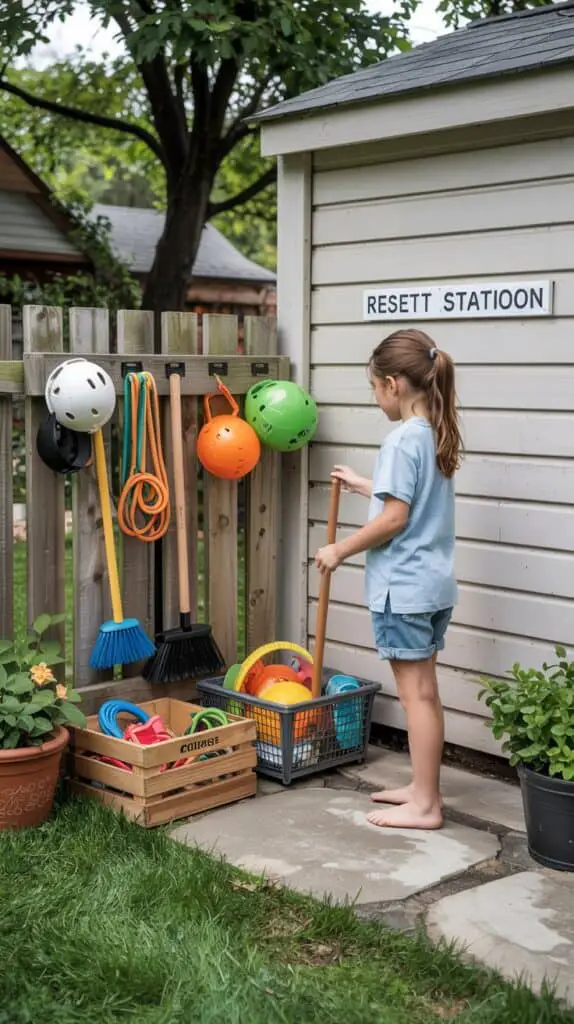
Backyard play spaces work better when there’s a predictable place to put things at the end of the day. A reset station is just a small setup near the door or near the storage zone that makes the yard easy to tidy in five minutes.
A simple reset station might include:
- Hooks for helmets and jump ropes
- A bin for balls
- A shallow crate for garden gloves and small tools
- A small broom for patio cleanup
- A basket for “found things” that need to go back inside
This is outdoor organization that supports real life. It keeps toys from migrating into garden beds and keeps garden tools from ending up in the sandbox. It also helps kids learn the routine without you hovering.
If you’re trying to keep things visually calm, choose containers that match your shed or storage box and label them simply.
Design Backyard Play Spaces With a Clear Surface and Soft Landing
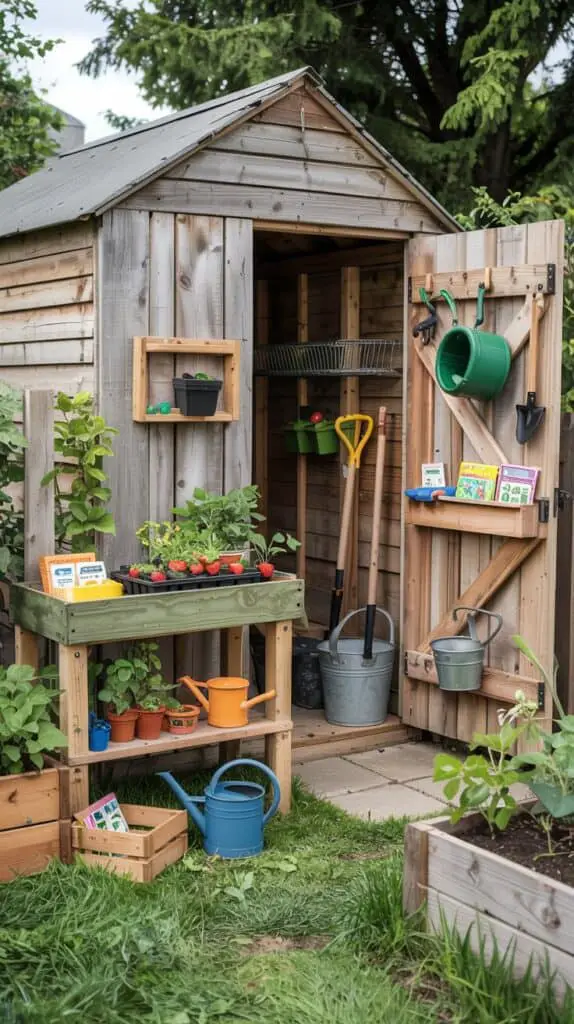
When play happens on grass only, it tends to spread. Kids drag toys everywhere, the garden becomes part of the track, and you’re constantly stepping on something. A defined play surface makes backyard play feel contained and safer.
Good surfaces for a kid zone:
- Mulch or wood chips for climbing and running
- A large outdoor rug for a calm play corner
- Stepping stones that create a path and define boundaries
- Rubber mats under a small climber or slide
This doesn’t need to be expensive. Even a small defined area changes how the whole yard functions. It also makes cleanup easier because toys have a “home base” where they’re used.
The storage connection matters here: if your backyard storage is close to the play surface, kids can grab and return items more easily. If storage is across the yard, toys will end up scattered.
Combine Garden Storage Ideas With Kid-Friendly Gardening
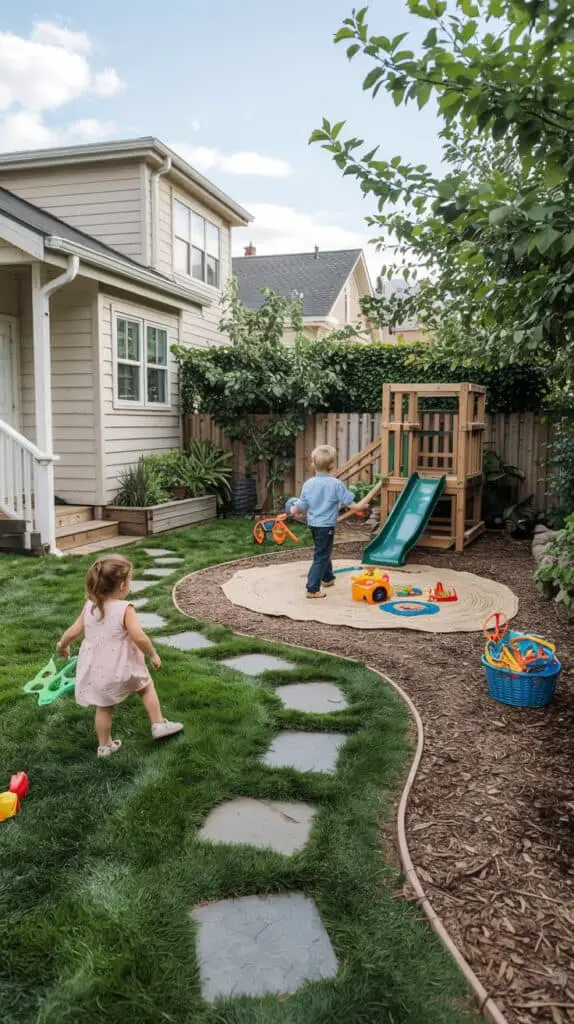
If you want gardening to live alongside play, the garden needs to feel approachable, not fragile. The simplest shift is to create a kid-accessible gardening zone that’s separate from your “grown-up” garden storage.
Try these combinations:
- A small raised bed just for kids (strawberries, snap peas, cherry tomatoes)
- A potting table that holds both seed trays and sidewalk chalk
- A low shelf with kid-sized tools and a watering can
Garden storage ideas that work well for families:
- A lidded bin for seed packets and gloves
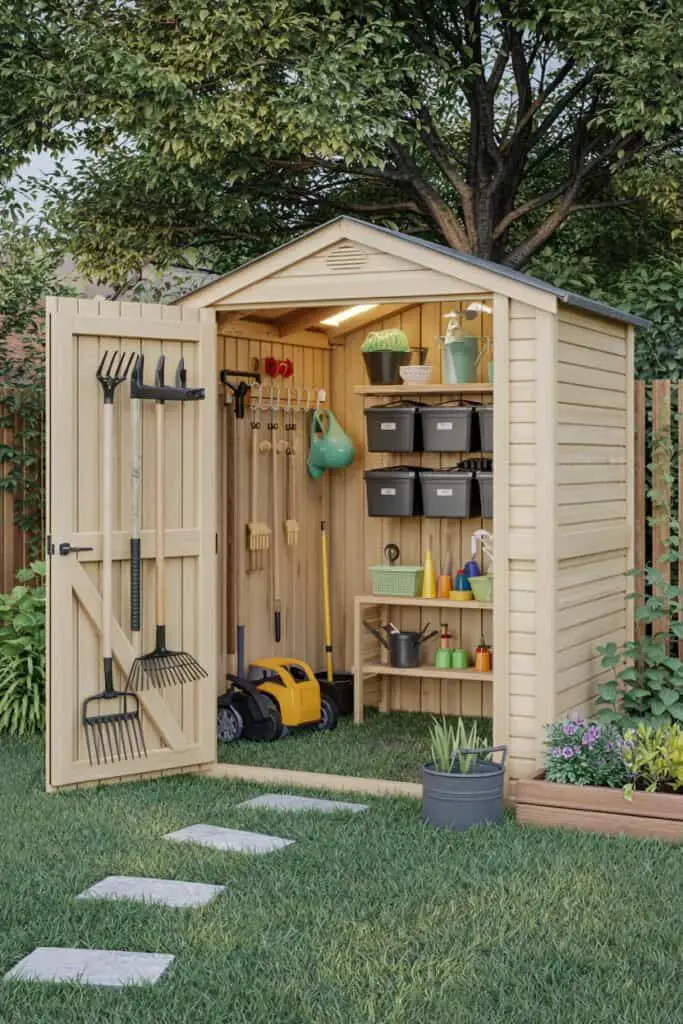
- A small tool rack inside the shed for hand tools
- A bucket that holds quick-grab garden items for five-minute sessions
The goal is to reduce friction. If gardening requires opening three containers and digging through clutter, it won’t happen on busy days. If garden tools are easy to grab and put away, you’ll use the yard more often.
Use Outdoor Tool Storage Ideas That Keep Sharp Things Separate
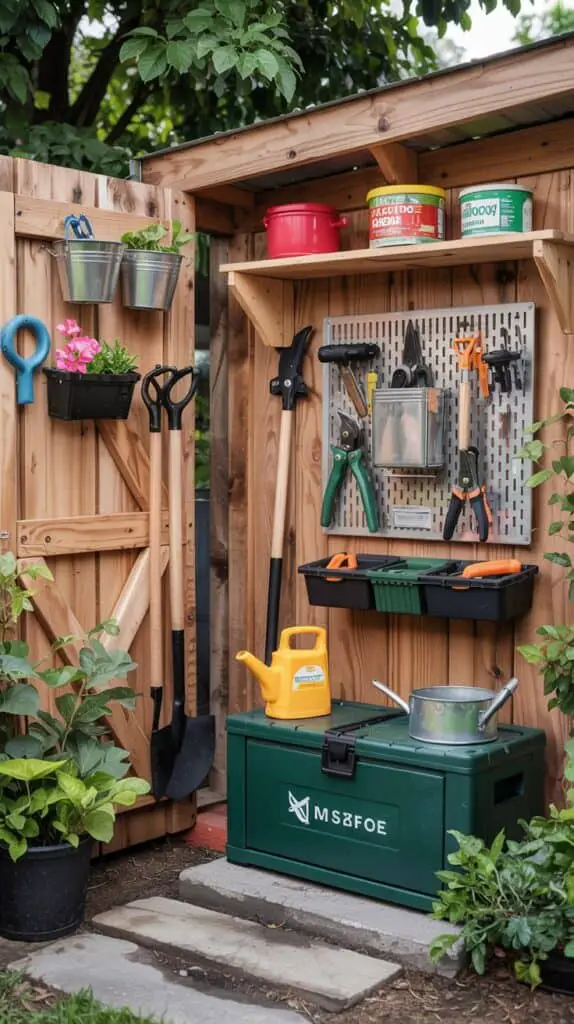
One of the trickiest parts of combining play and gardening is tool safety. The fix is simple: store sharp tools and chemicals high, locked, or behind a barrier.
Outdoor tool storage ideas that work in family yards:
- A wall-mounted pegboard in the shed for hand tools
- A locked cabinet for pruning shears and anything sharp
- A high shelf for fertilizer or pest treatments
- A dedicated tool tote that gets put away immediately after use
Even if you don’t have a shed, you can still create safe outside storage ideas by using a lockable deck box or a tall cabinet placed against the house. The main thing is consistency: tools always go back to the same spot.
When your storage system supports safety, you can relax more while kids play nearby.
Make Outdoor Storage Ideas DIY Feel Simple and Portable
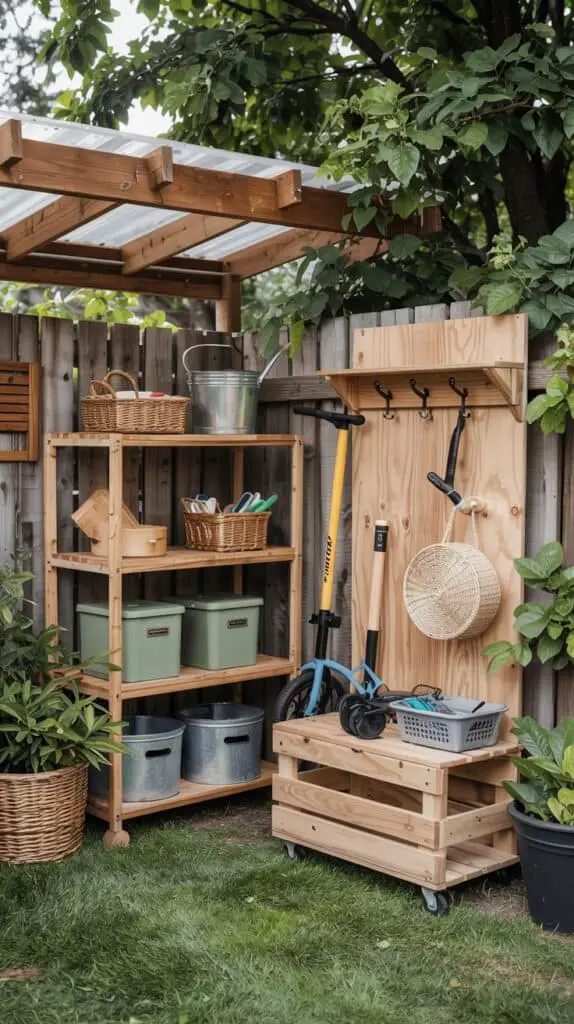
Not everyone wants to build a full shed or invest in permanent systems. Outdoor storage ideas DIY can be as basic as creating a small structure from things you can move later.
DIY-friendly options that don’t feel messy:
- A simple shelf unit under a covered patio with matching lidded bins
- A rolling cart for garden supplies that tucks into a corner
- A freestanding hook rack for scooters and bikes
- A plywood panel with hooks mounted to a fence (use removable hardware if renting)
If you’re renting, lean toward freestanding solutions. The best renter-friendly backyard storage is the kind you can take with you: benches, boxes, cabinets, and carts.
DIY doesn’t have to look homemade. It just needs a consistent look and a limit. One shelf, one cart, one bin system—then stop.
Add Outside Storage Ideas That Support Seasonal Swaps
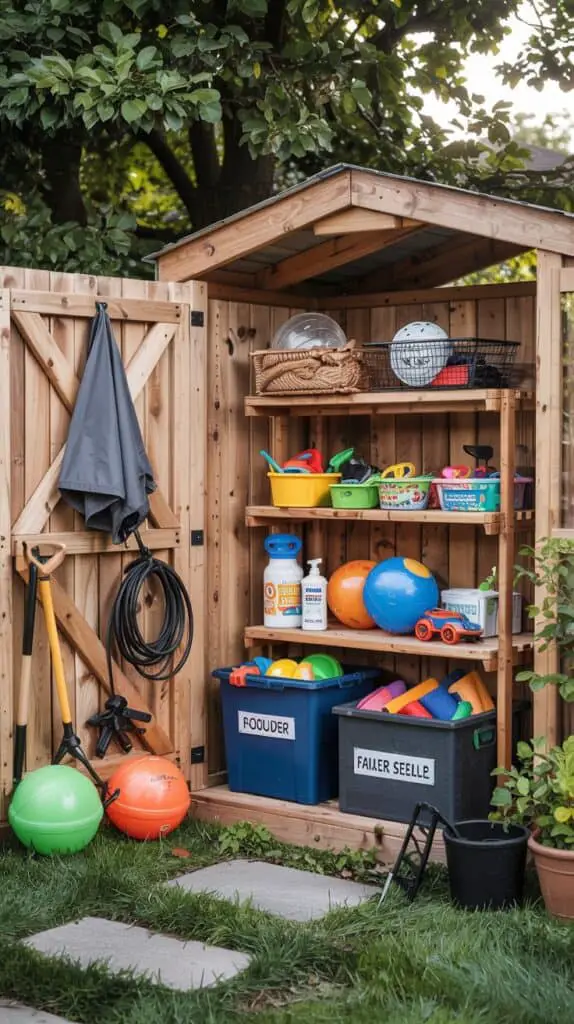
Backyards change with the seasons. In warm months, you might have a water table, sports gear, and gardening supplies out constantly. In cooler months, you might want blankets, fire pit items, or leaf cleanup tools.
A seasonal swap system keeps backyard storage from overflowing:
- One bin for summer gear (water toys, sunscreen, bubbles)
- One bin for fall/winter gear (blankets, gloves, outdoor lights)
- A small “current season” shelf that stays accessible
This kind of outside storage ideas approach prevents the shed from becoming a black hole. It also keeps play spaces usable because you’re not digging through last season’s clutter to find one ball.
Labeling helps, but the real secret is limiting how much you keep.
Use a Shed Placement Trick: Let Storage Create a Natural Boundary
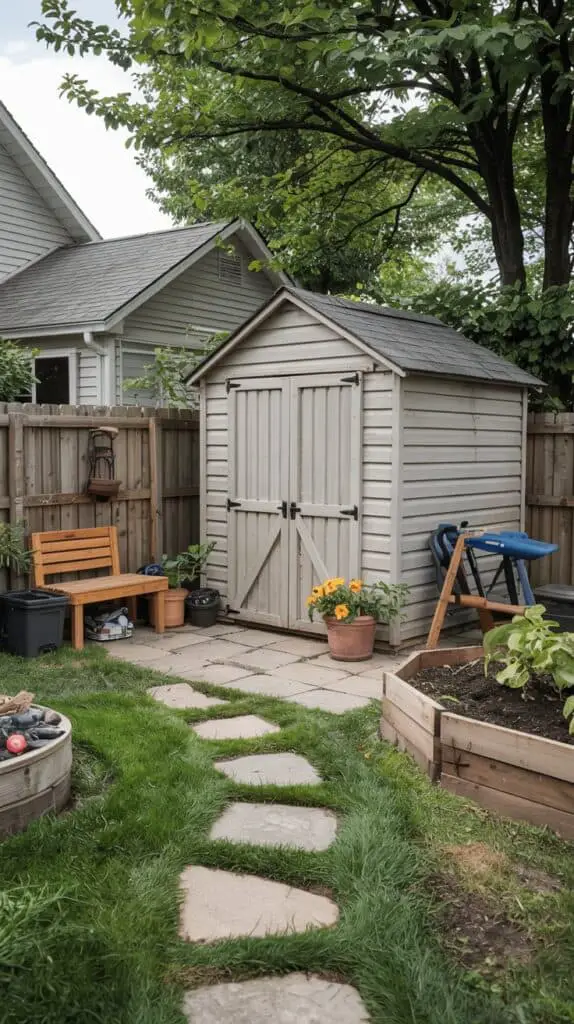
One of the easiest ways to balance gardening and backyard play is to use your storage structure to shape the yard. A shed can do more than store things—it can define where play lives and where gardening lives.
Placement ideas:
- Put the shed near the garden zone so tools and soil stay contained
- Use the shed as a backdrop for a small patio seating area
- Position the shed so the play zone is visible from the house, with the shed off to the side
If you don’t have a shed, you can use a line of storage benches or cabinets along a fence to create that same boundary effect.
When the yard has a clear “edge,” it feels calmer. Kids still roam, but there’s an intuitive layout that stops everything from blending together.
Keep the Whole Yard Visually Intentional With a Simple Palette
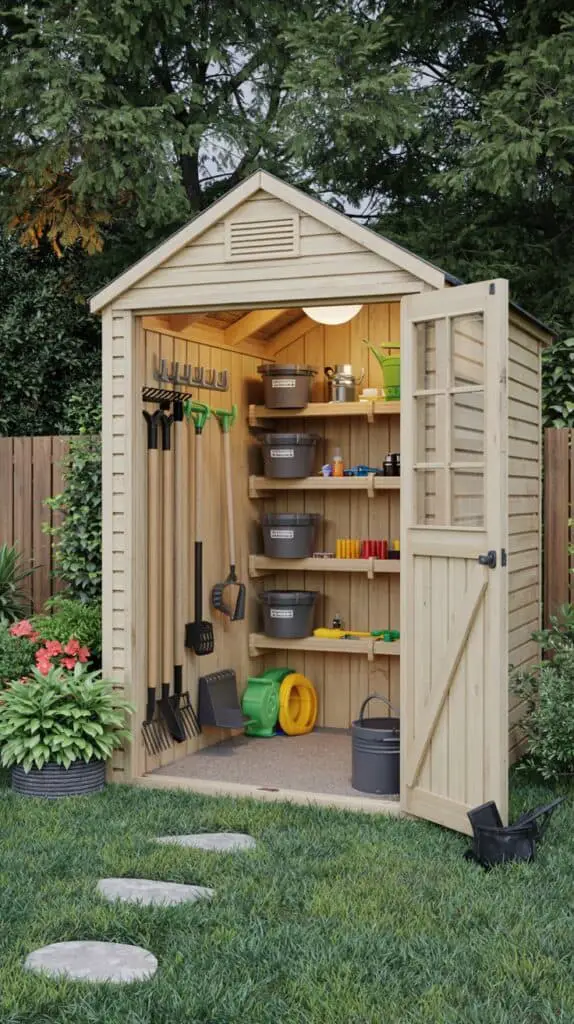
This is the part nobody talks about, but it matters a lot if you’re trying to avoid the “toy yard” look. Backyard play spaces can still feel cohesive if you keep a simple visual plan.
A calm approach:
- Choose one main material for storage (wood, black resin, or gray metal)
- Keep outdoor toys contained in matching bins
- Use a few planters to soften storage areas
- Add one path element (stepping stones, gravel strip, or pavers) to connect zones
A modern shed or clean-lined storage box helps because it reduces visual noise. But you can get a similar effect with smaller storage choices if you keep things consistent.
This isn’t about perfection. It’s about making the yard feel like part of your home, not a separate messy zone you avoid.
A Short, Grounded Conclusion
A balanced yard doesn’t require a big makeover. Start by deciding where play, gardening, and backyard storage will live. Choose one storage solution you’ll actually use, then build the play and garden zones around it. When storage is close, clear, and safe, the rest of the yard becomes easier to enjoy—kids can play, you can garden, and cleanup doesn’t feel like a full project.
Over time, you can add pieces that fit your family: a small shed, a simple path, a kid garden bed, or a tidy reset station. The goal is a backyard that looks calm, works hard, and still feels like a real place to live.