
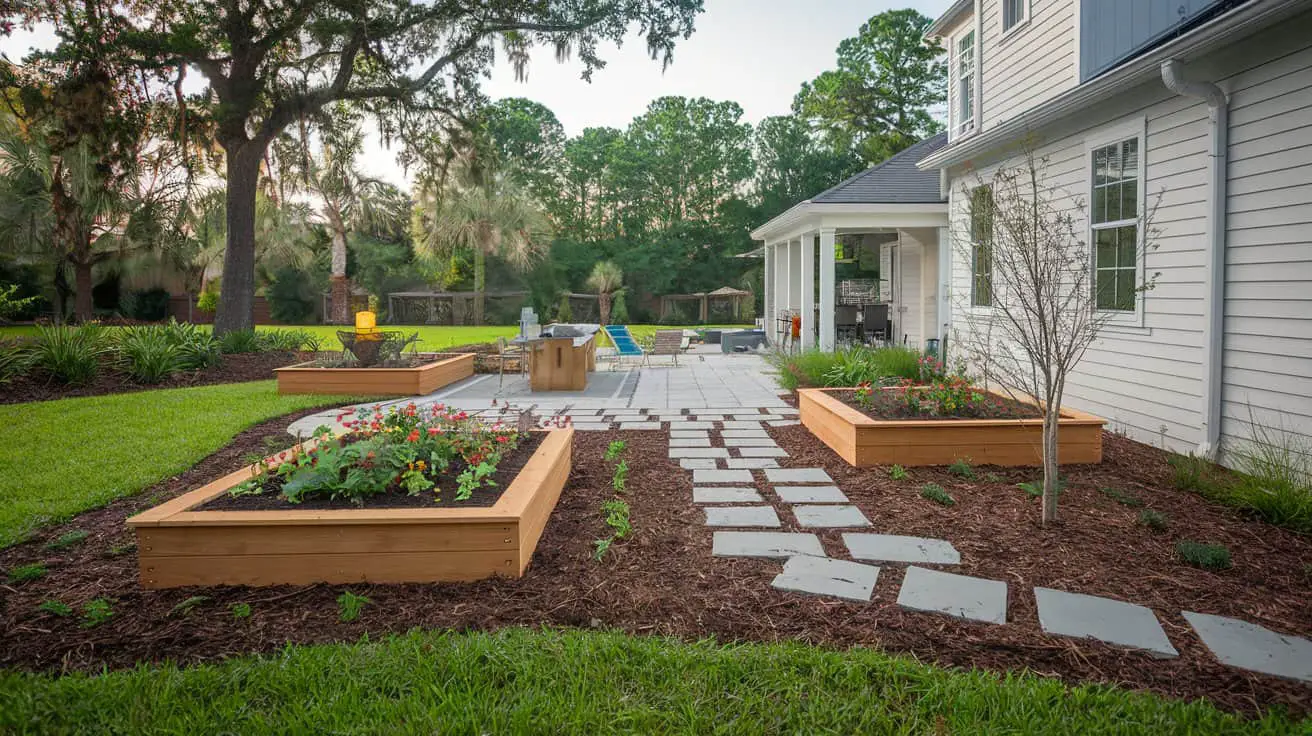
Florida yards are a little different. The heat lingers, the rain comes fast, the soil can be sandy or stubborn, and plants don’t always behave the way the seed packet promises. For families trying to create a yard that looks alive year-round without constant replanting or frustration, raised beds quietly solve a lot of problems.
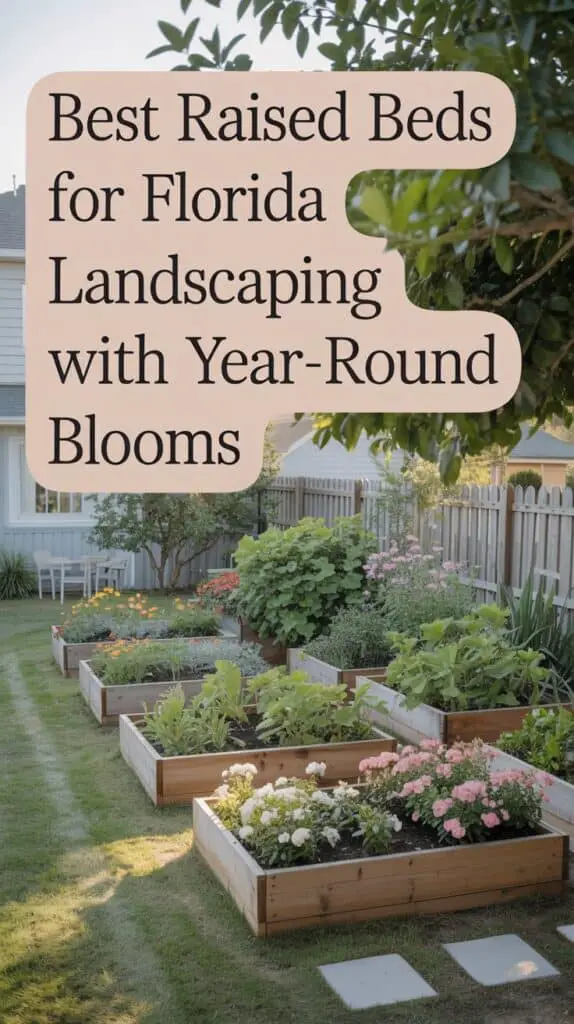
This guide focuses on the best raised beds for Florida landscaping, especially for people who want color through the seasons without turning gardening into a full-time job. Whether you’re working with a suburban lawn, a small rental yard, or a shared family space, raised flower beds and elevated garden bed setups make it easier to plan, plant, and enjoy blooms that actually last in Florida’s climate.
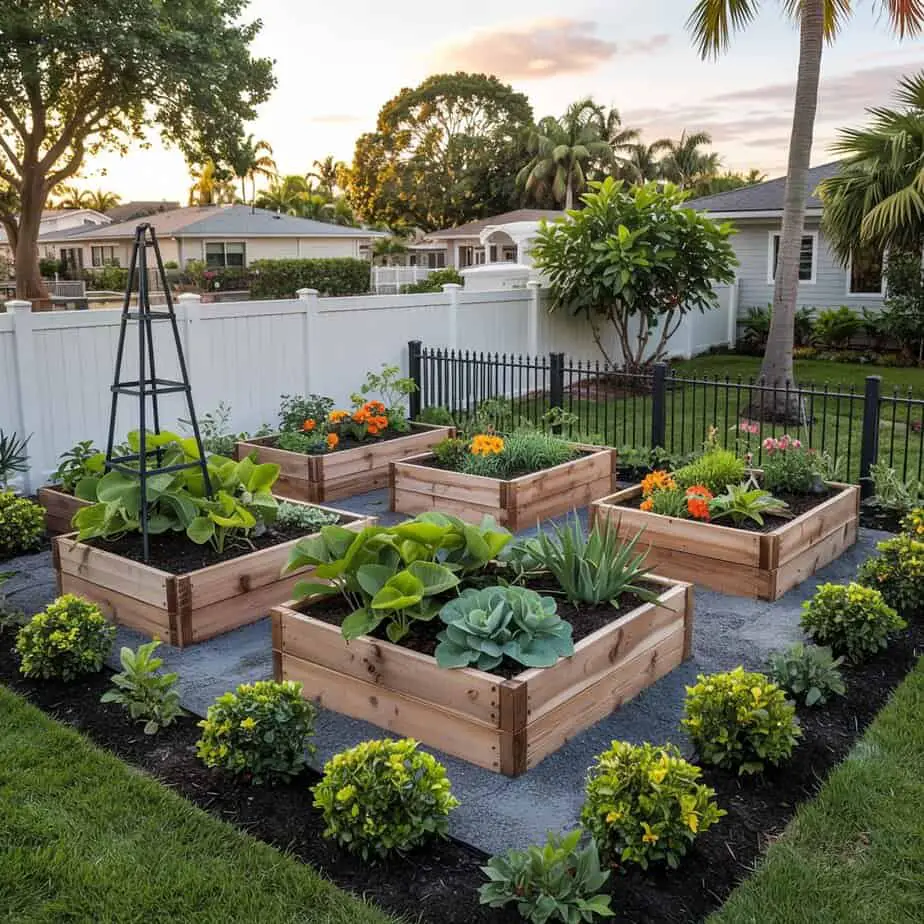
Why Raised Beds Make Sense for Florida Yards
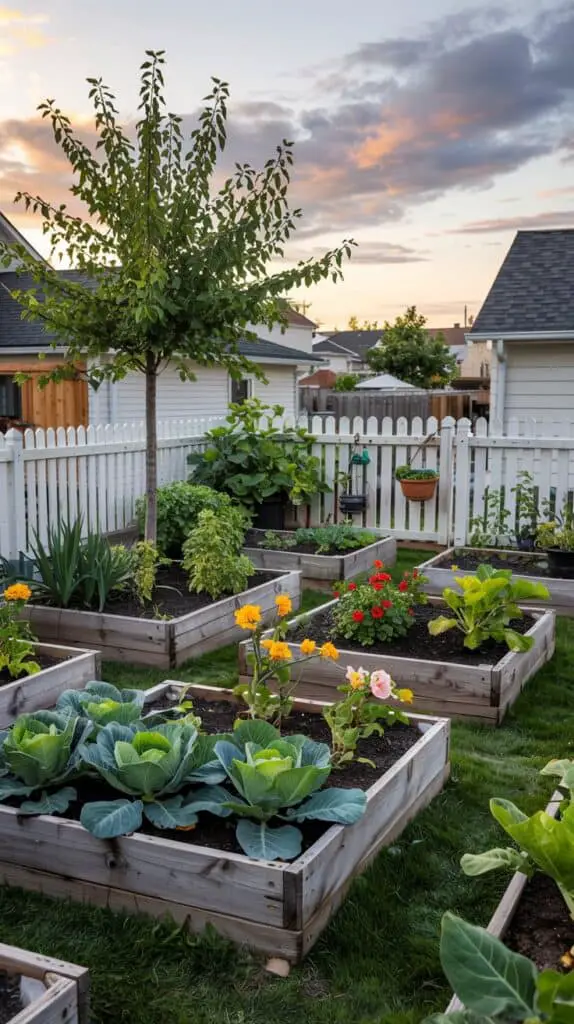
Florida soil can be unpredictable. Some areas drain too quickly, others hold water longer than plants prefer, and many yards are compacted from construction. Raised beds give you control over what your plants are growing in, which is one of the biggest advantages when trying to keep flowers blooming consistently.
Because raised flower beds sit above ground level, they warm up faster in cooler months and drain better during heavy rains. That balance matters in a state where sudden downpours are common and root rot can wipe out a garden fast. Elevated garden bed designs also reduce weed pressure, making maintenance more manageable for busy households.
From a landscaping perspective, raised beds add structure. They define space without fencing everything off, which is helpful for families with kids, pets, or mixed-use yards where play and planting need to coexist.
Choosing the Right Raised Bed Height for Heat and Drainage
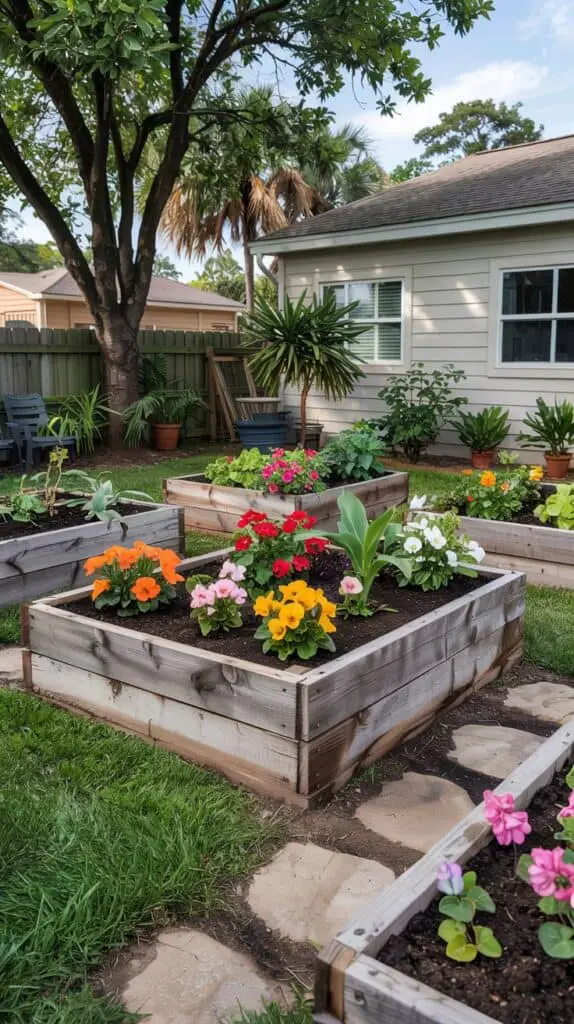
Not all raised beds perform the same in Florida. Height plays a bigger role than many people expect.
Lower raised beds, around 6 to 8 inches, work well for annual flowers and ground-cover style blooms, but they can struggle in areas with heavy rain. For better airflow and root health, many Florida gardeners find that 12 to 18 inches is a sweet spot. This height keeps roots above saturated soil while still being easy to reach.
Taller elevated garden bed options, especially those 24 inches or higher, are great for mixed planting and for families who want less bending. They also create visual layers in the yard, which helps landscaping feel intentional rather than flat. These taller beds are especially helpful near patios, walkways, or fences where you want flowers at eye level.
Materials That Hold Up in Florida’s Climate
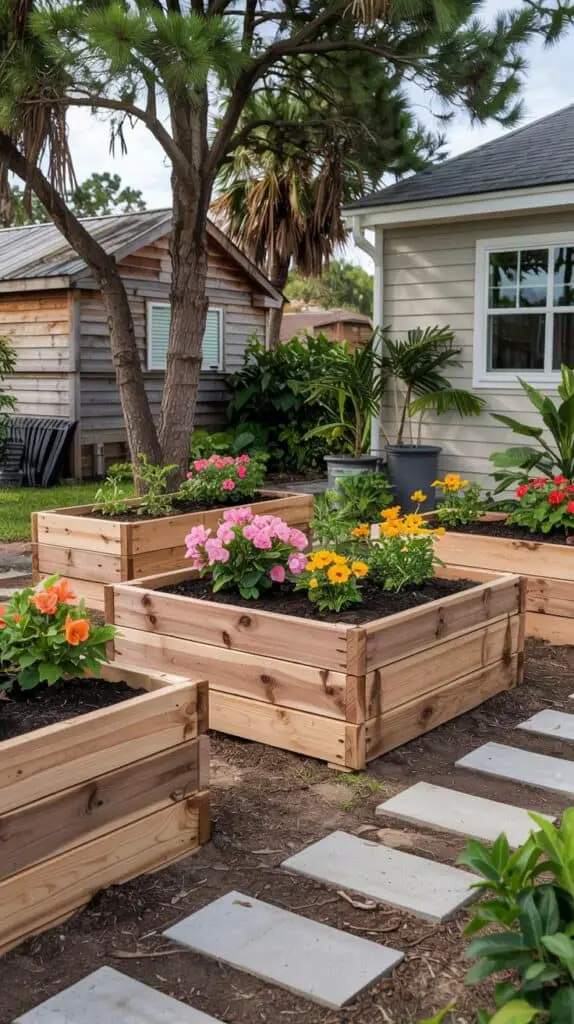
Humidity, sun, and insects are hard on materials, so choosing the right raised bed construction matters.
Cedar and cypress are popular choices because they naturally resist rot and insects. They cost more upfront but tend to last longer without chemical treatments. For budget-aware families, pressure-treated wood rated for ground contact can work, especially if lined properly, though it’s often used more for ornamental flowers than edible plants.
Composite raised beds are becoming more common in Florida landscaping. They don’t rot, don’t attract termites, and stay visually clean. While they cost more initially, they’re renter-friendly in the sense that they can often be disassembled and moved.
Concrete blocks and stone create permanent raised flower beds that handle heat well and anchor a landscape visually. These are better suited to long-term homes, but they excel at holding soil temperature steady, which helps flowering plants stay consistent through seasonal changes.
Designing Raised Beds for Year-Round Color
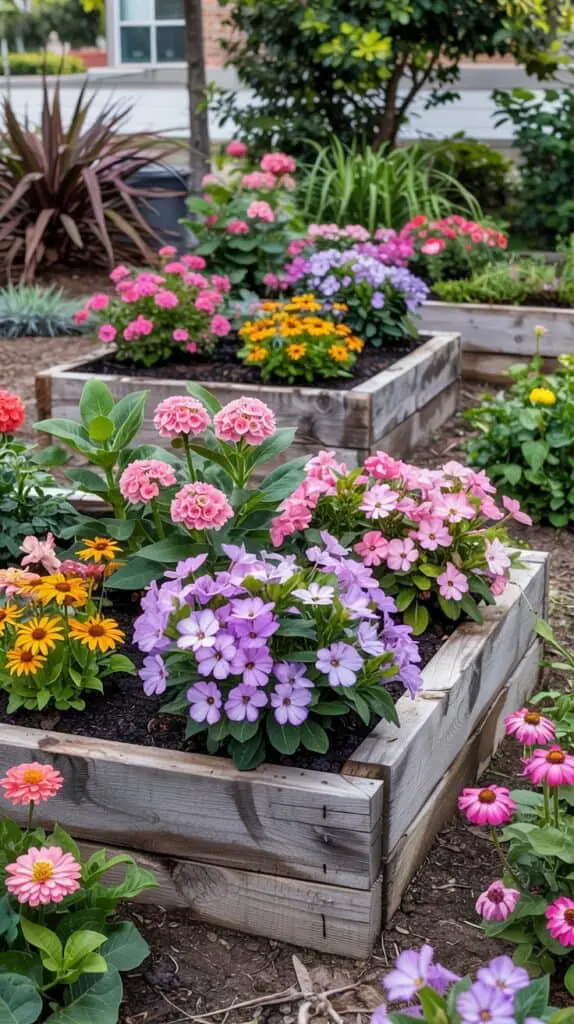
Continuous blooms in Florida aren’t about planting everything at once. They’re about layering and timing.
Raised bed ideas that work well here often combine long-blooming perennials with seasonal fillers. Plants like pentas, vinca, and blanket flower thrive in heat and bloom for months. These form the backbone of the bed. Around them, you can rotate shorter-lived flowers like zinnias or snapdragons depending on the season.
Using raised beds makes this rotation easier because soil conditions stay consistent. You’re not fighting compacted ground every time you swap plants. This approach keeps beds looking full without large gaps, even when individual plants finish their cycle.
From a landscaping standpoint, grouping plants by water needs within the same raised bed prevents overwatering and stress during hotter months.
Raised Flower Beds That Work for Families and Pets
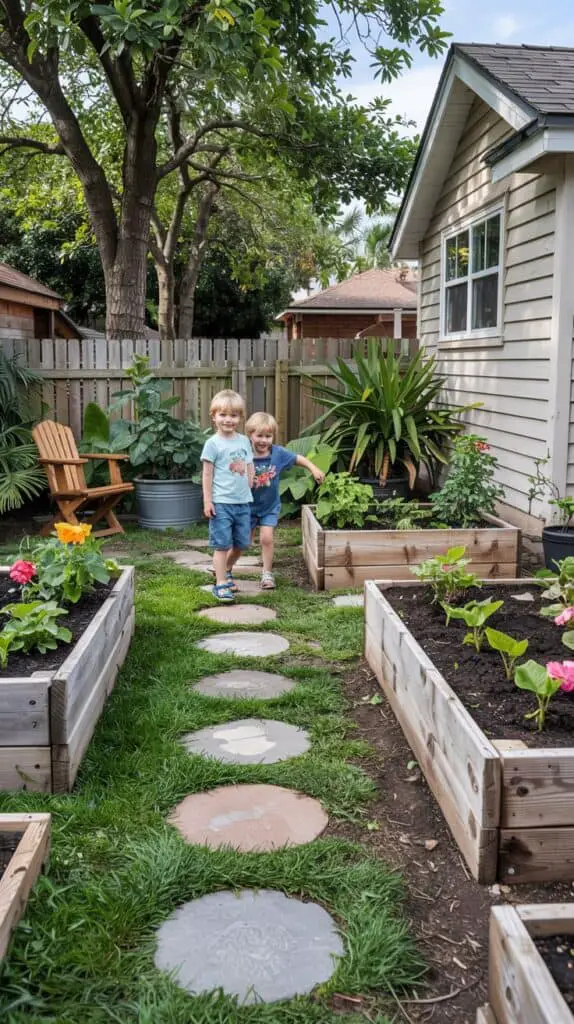
Many Florida families need gardens that can handle activity. Raised beds help by creating clear boundaries without fencing everything off.
Beds with defined edges keep kids from accidentally stepping on plants and make it easier to teach basic garden respect. For pet owners, raised beds reduce the chance of digging or trampling, especially when placed along fences or borders.
Wider raised flower beds can double as informal seating edges if capped with smooth stone or wood, making them part of daily yard use rather than something to work around. This integration makes gardening feel less like a separate task and more like part of everyday outdoor living.
Renter-Friendly Raised Bed Ideas for Florida Homes
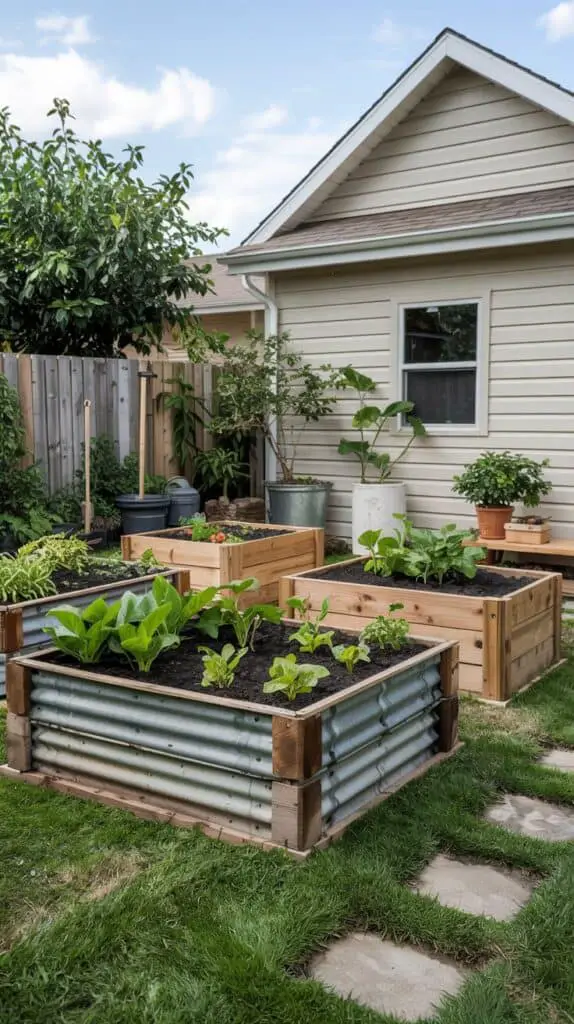
Not everyone can dig into the ground or build permanent structures. Fortunately, many raised bed ideas work well for rentals.
Freestanding elevated garden bed systems, including metal or composite designs, sit directly on grass or concrete without altering the yard. These are especially useful for patios, side yards, or small backyards where space is limited.
Fabric grow beds are another flexible option. While not always as visually polished, they drain extremely well, which suits Florida’s rain patterns. Placing them inside simple wooden frames or arranging them in clusters can improve their appearance while keeping costs down.
For renters, keeping raised beds movable ensures you can take your garden with you, which makes investing in quality soil and plants more worthwhile.
Placement Matters More Than Plant Choice
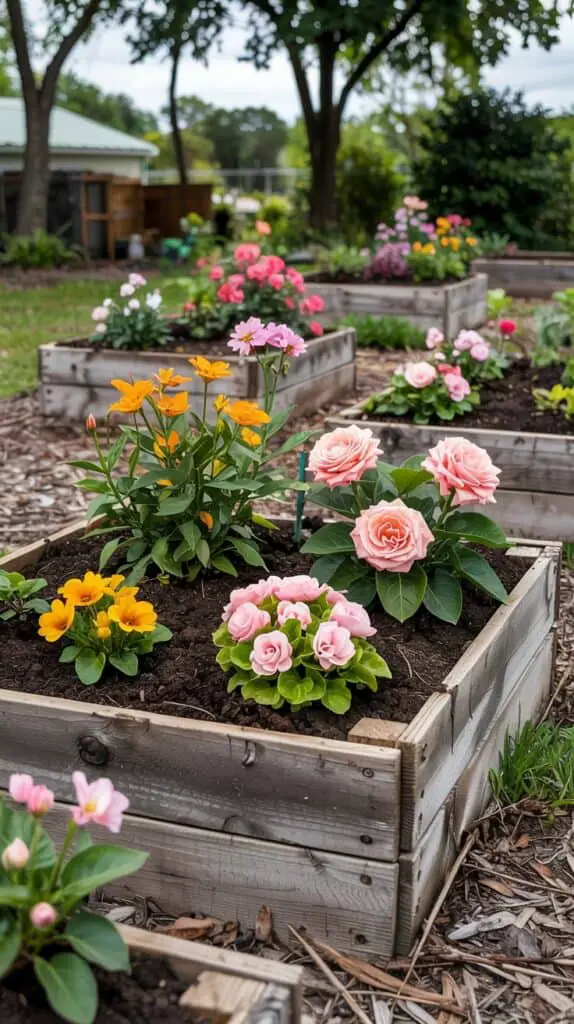
Even the best raised beds for Florida landscaping won’t perform well if they’re placed poorly.
Most flowering plants need at least six hours of sun, but Florida sun can be intense. Morning sun with afternoon shade often produces better results than full-day exposure. Raised beds placed along east-facing fences or near trees with light canopy cover tend to balance heat and light well.
Airflow is another consideration. Beds placed too close to walls or solid fences can trap humidity, increasing the risk of fungal issues. Leaving space around raised flower beds helps plants dry out after rain, which is essential in Florida’s climate.
Soil Setup for Long-Lasting Blooms
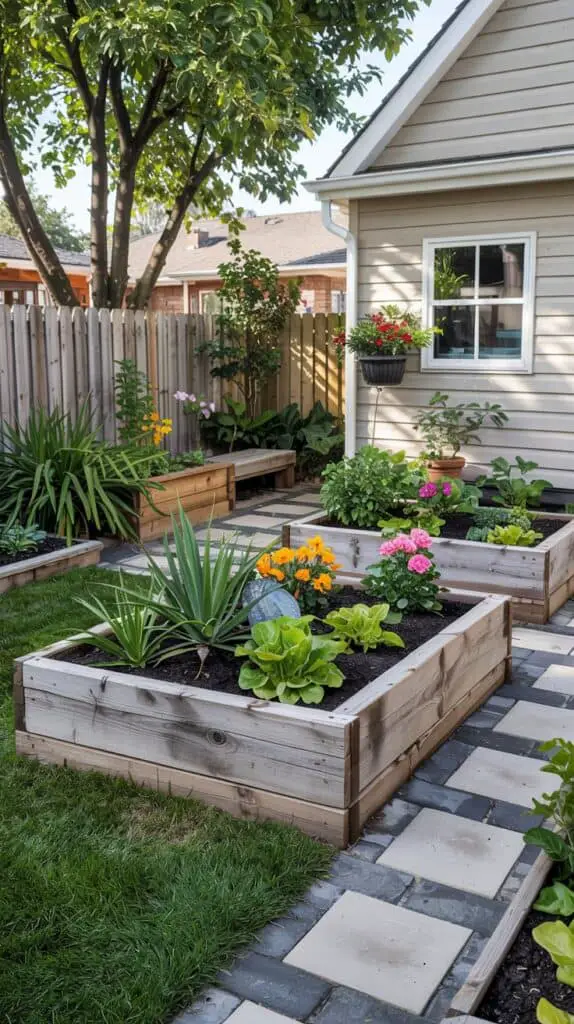
Soil is where raised beds really shine. Instead of relying on native soil, you can create a mix that supports flowering plants long-term.
A common approach is blending compost, topsoil, and a lightweight amendment like pine bark fines or coconut coir. This mix holds moisture without staying soggy and allows roots to breathe.
Because Florida rain can leach nutrients quickly, raised beds benefit from slow-release fertilizers and regular organic matter additions. The contained environment makes it easier to replenish soil without affecting the rest of the yard.
Over time, this soil consistency is one of the biggest reasons raised beds outperform in-ground plantings for continuous blooms.
Elevated Garden Beds as Visual Anchors
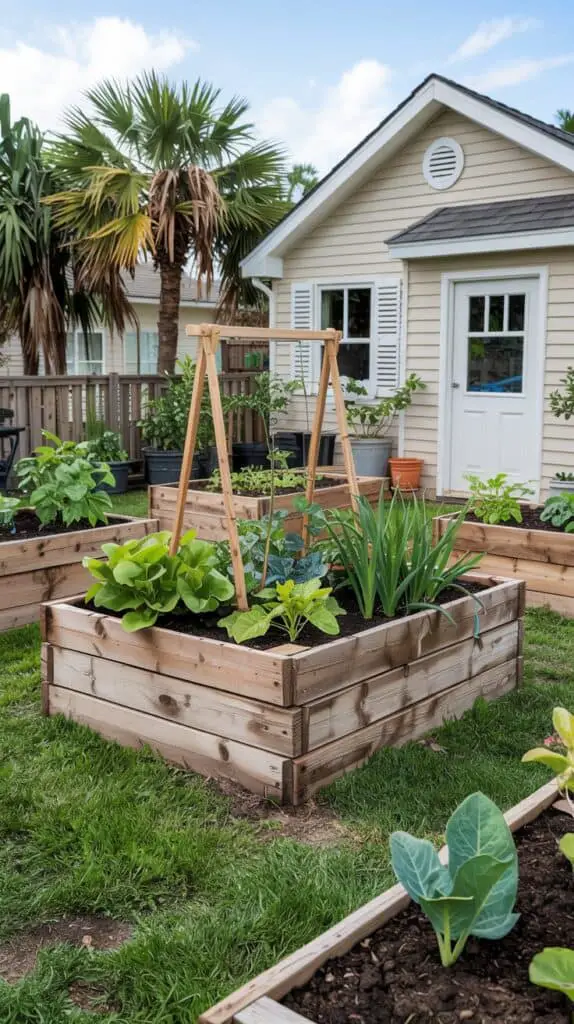
Raised beds aren’t just functional. They shape how a yard feels.
An elevated garden bed placed at the end of a walkway or along a patio edge draws the eye and creates a sense of purpose. In family yards, this helps define zones without walls or barriers.
Using matching materials for multiple raised beds ties the landscape together visually. Even simple wooden beds can look intentional when aligned or evenly spaced. This is especially helpful in smaller Florida yards where clutter can make spaces feel crowded.
Keeping plant choices limited within each bed also improves the overall look. Fewer varieties planted in thoughtful groupings feel calmer and more cohesive.
Seasonal Adjustments Without Full Redesigns
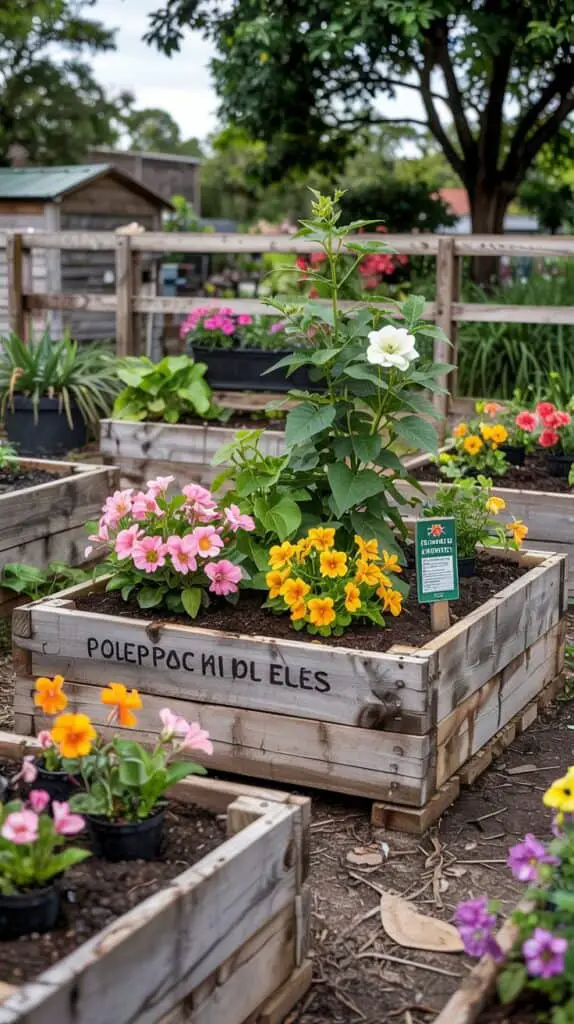
One of the most practical advantages of raised beds is flexibility. When a plant struggles, you can adjust without tearing up the whole yard.
In Florida, where weather patterns can shift unexpectedly, this adaptability matters. Raised beds allow you to swap out plants after storms, refresh soil after extreme heat, or experiment with new varieties without committing long-term.
For families and beginners, this reduces frustration. Mistakes feel smaller and easier to fix, which encourages continued gardening rather than burnout.
Budget-Conscious Raised Bed Planning
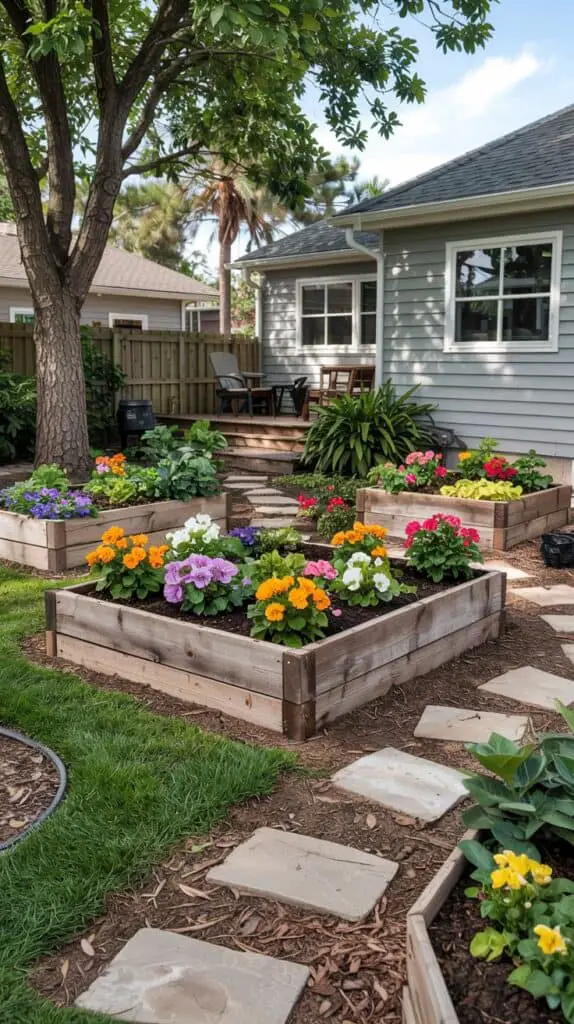
Raised beds don’t have to be expensive to work well.
Starting with one or two beds and expanding over time keeps costs manageable. Repurposed materials, like leftover lumber or concrete blocks, can be used creatively without sacrificing durability.
Focusing spending on soil quality rather than decorative extras often produces better results. Healthy soil supports stronger plants, which means fewer replacements and more consistent blooms over time.
Budget-aware raised bed ideas also include choosing plants that thrive locally. Florida-friendly flowers require less water, fewer inputs, and recover faster from stress.
Making Raised Beds Feel Like Part of the Landscape
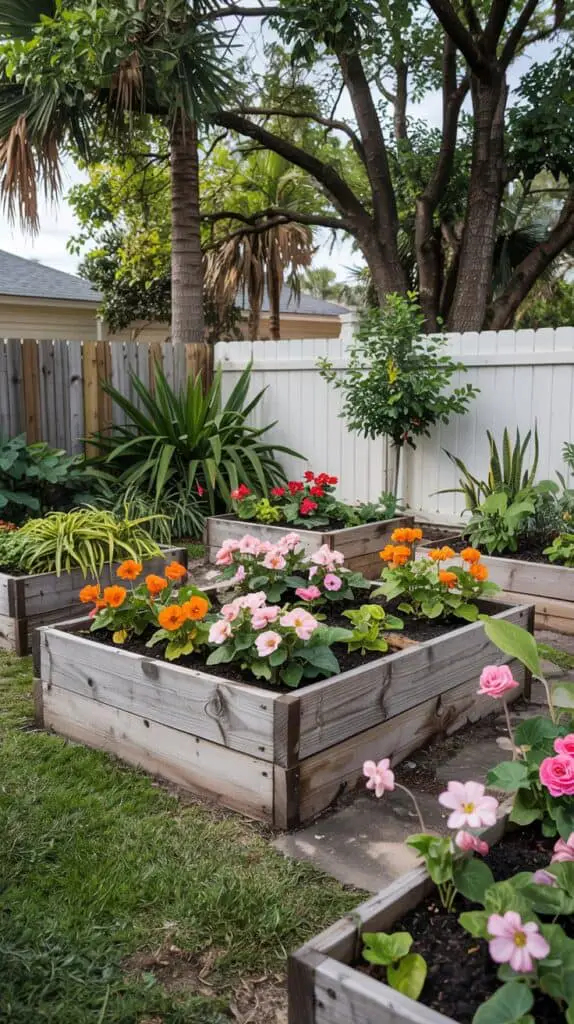
The goal isn’t just to grow flowers, but to create a yard that feels complete.
Blending raised flower beds with existing landscaping elements helps them feel natural. Surrounding beds with mulch, ground cover, or simple pathways softens edges and ties everything together.
In family yards, raised beds that align with patios, play areas, or walkways feel intentional rather than added on. This integration makes outdoor spaces easier to use and enjoy daily.
Over time, raised beds often become the most reliable and visually satisfying parts of Florida landscapes.
A Calm, Sustainable Approach to Florida Gardening
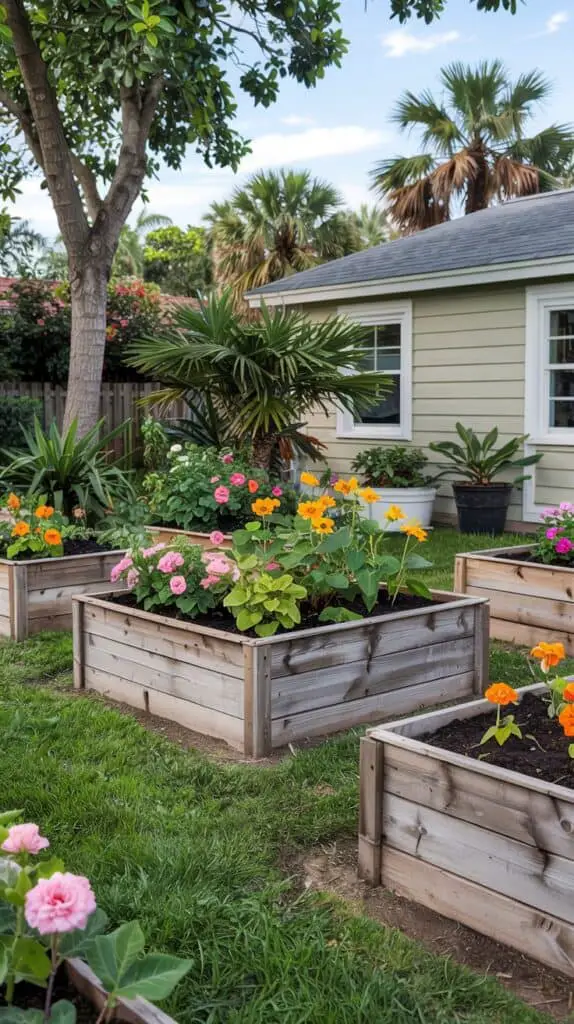
The best raised beds for Florida landscaping aren’t about perfection or constant work. They’re about creating a system that supports plants and people at the same time.
By choosing the right height, materials, placement, and planting approach, raised beds make year-round blooms more achievable without overwhelming effort. For families, renters, and beginners alike, they offer a practical way to enjoy color, structure, and life in the yard through every season.
With thoughtful planning, raised beds don’t just grow flowers. They create spaces that feel lived-in, balanced, and quietly rewarding in Florida’s unique climate.