
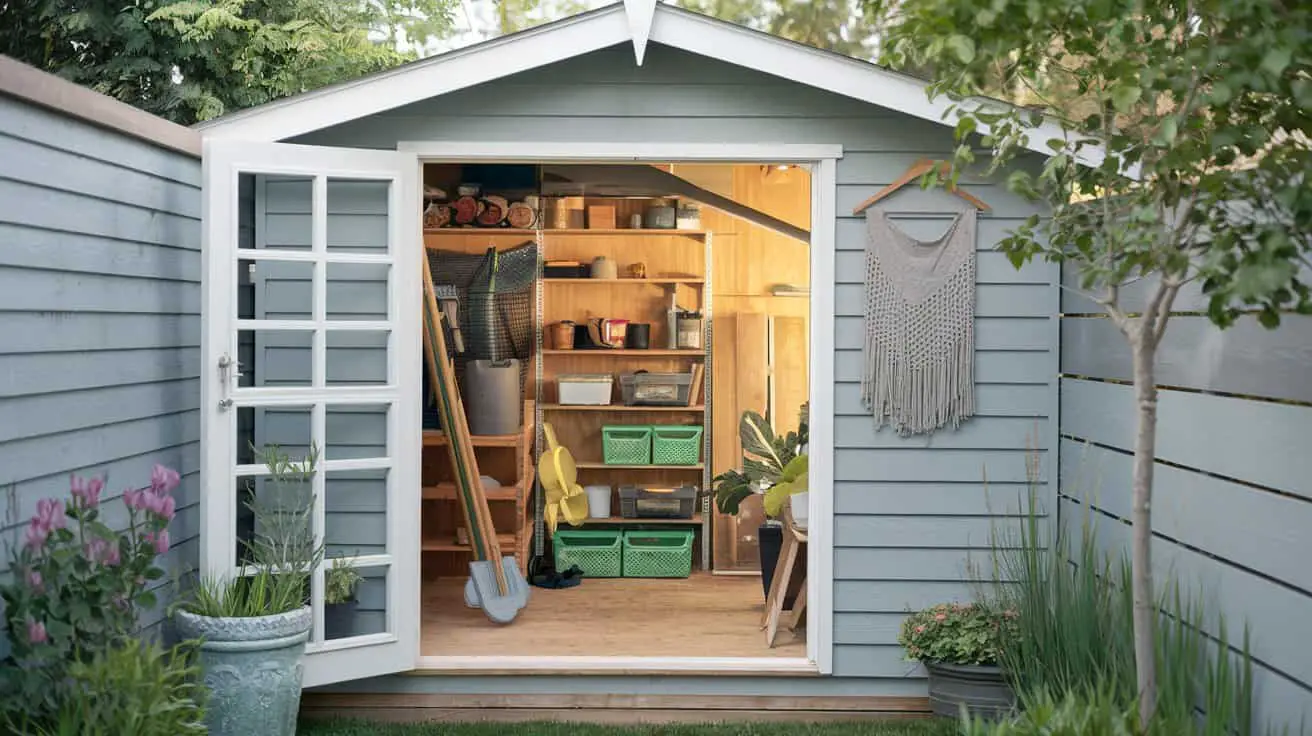
Spring always arrives with good intentions. Seeds get ordered, gloves come back out, and suddenly the outdoor shed becomes the first bottleneck. Tools are buried, bags are half-open, and nothing is where you thought it was last fall. The goal here isn’t a picture-perfect shed or a costly overhaul. It’s about creating a setup that supports spring gardening without stress, overspending, or permanent changes you’ll regret later.
This article focuses on outdoor shed ideas that are low-cost, renter-friendly where possible, and realistic for everyday households. Think simple systems, flexible storage, and a shed that feels calm and usable instead of crammed. The ideas work whether you’re dealing with a small yard shed behind a rental, or a backyard storage shed shared by the whole family.
Pinterest board context: This board is about practical backyard sheds that real people use. The vibe is tidy but lived-in, budget-aware, and focused on making small outdoor spaces work harder without looking cluttered. It’s for people who want their shed to feel intentional and approachable, not showroom-perfect.
Audience: Families, renters, beginners, and casual gardeners who want functional organization without permanent builds or expensive upgrades.
Visual & lifestyle context: These ideas assume a modest suburban or rental backyard with a small to mid-size shed used for gardening tools, kids’ outdoor gear, and seasonal storage. The shed may double as shared space and doesn’t need to look perfect to be useful.
Start With a Seasonal Reset, Not a Full Purge
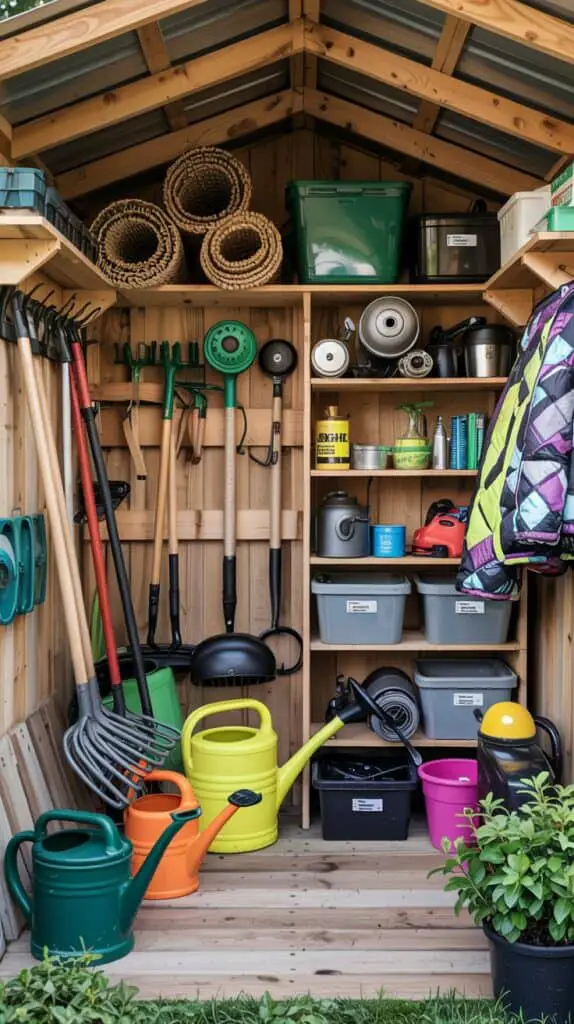
Before adding bins or hooks, the most budget-friendly step is a seasonal reset. Spring gardening season has different needs than fall cleanup or summer play. Instead of purging everything, group items by what you’ll actually reach for in the next three months.
Garden tools, seed trays, watering cans, soil bags, and gloves should move forward. Snow tools, holiday décor, or rarely used equipment can shift to the back or upper shelves. This simple rotation instantly improves access without buying anything.
For yard sheds with limited depth, this step alone can free up surprising space. It also helps prevent over-organizing areas that don’t need attention yet. Think of it as seasonal zoning rather than decluttering.
If you’re working with storage sheds ideas backyard boards on Pinterest, you’ll notice most successful sheds are organized by use, not by object type. That’s the mindset worth copying.
Use Vertical Wall Space With Removable Hooks and Pegs
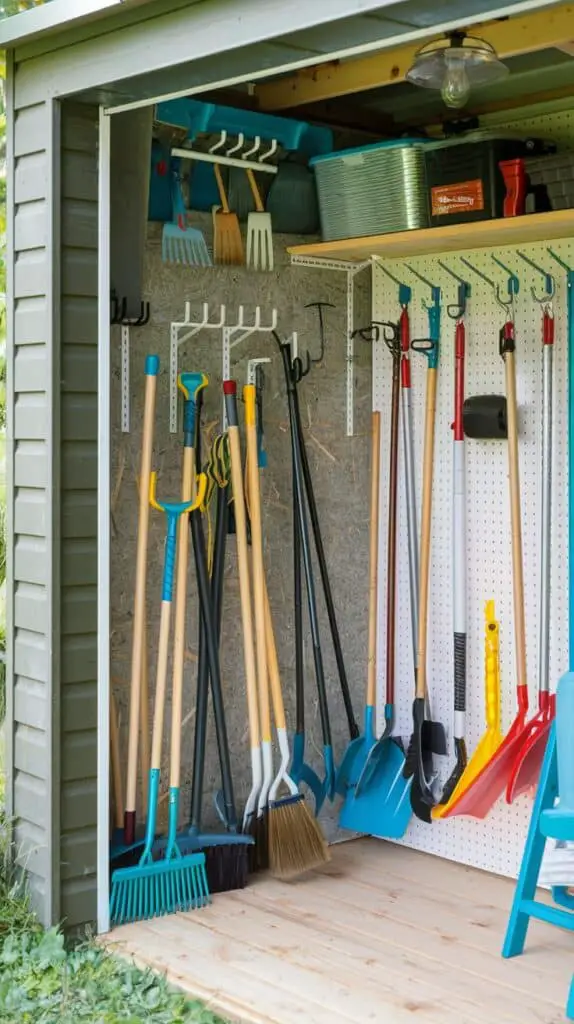
Vertical storage is one of the most practical outdoor shed ideas, especially when floor space is limited. Instead of built-in systems, look for removable hooks, peg rails, or tension-mounted panels that don’t require heavy drilling.
Brooms, rakes, shovels, and hoes take up a lot of floor space but hang easily. Group long-handled tools along one wall so they’re visible and off the ground. This also makes sweeping the shed easier, which matters more than it sounds during muddy spring weeks.
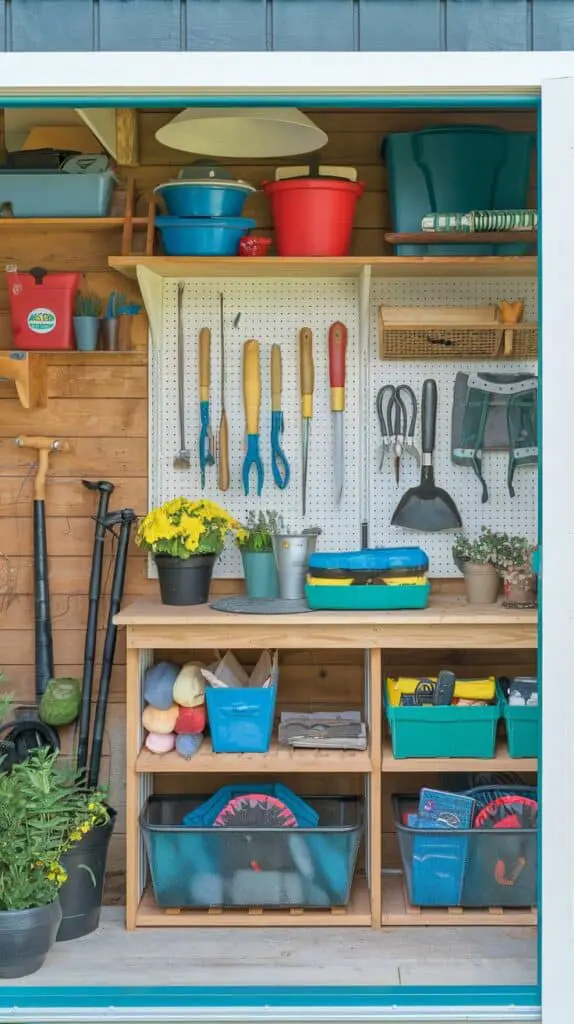
Pegboards can work well in yard sheds, but only if you keep them simple. A few sturdy hooks for hand tools is better than trying to hang everything. Overloaded pegboards quickly become visual clutter.
This approach fits both DIY outdoor shed setups and rental situations where you want to avoid permanent changes.
Repurpose Everyday Containers for Open Storage
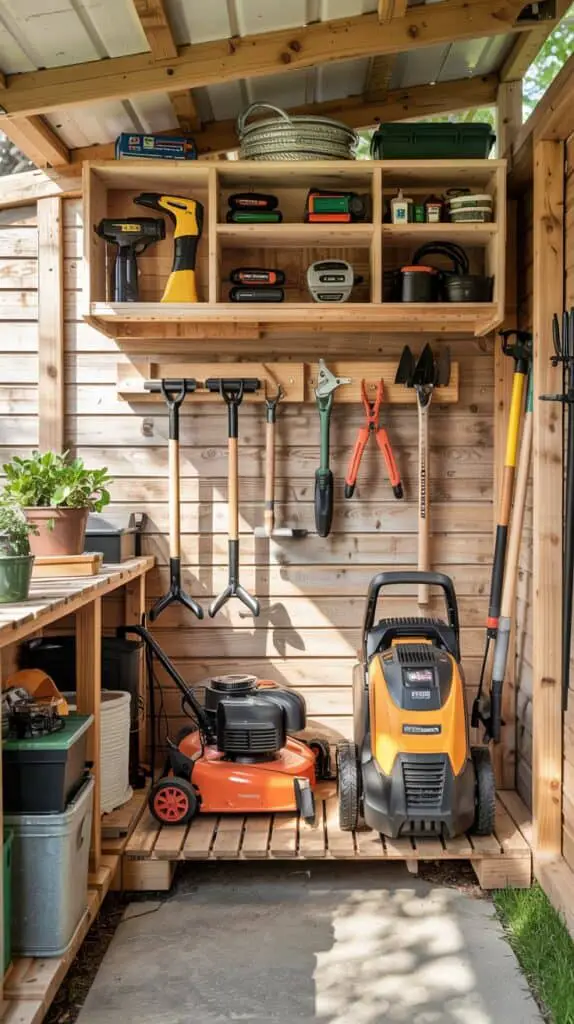
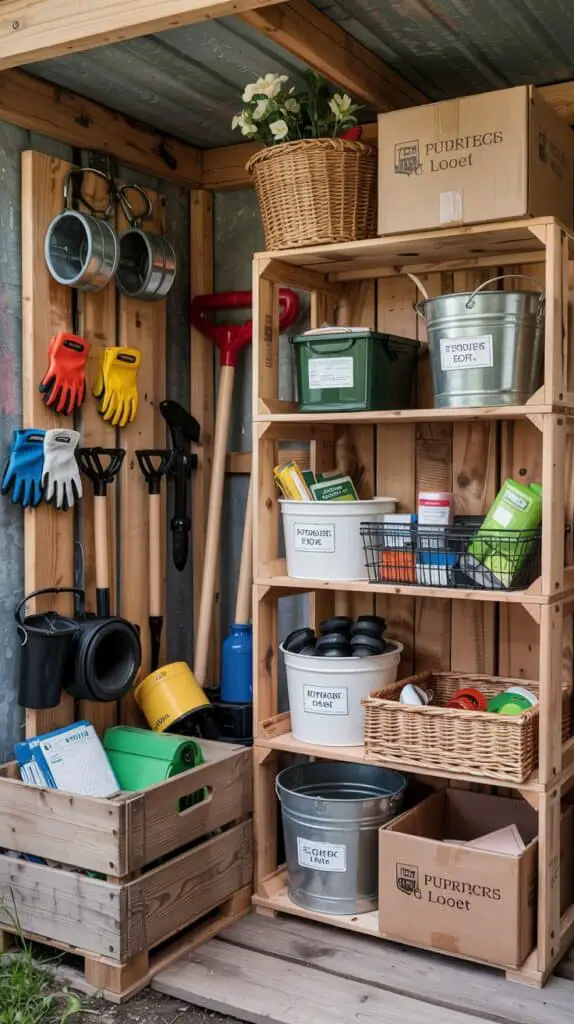
Not everything needs a matching bin. One of the easiest ways to stay budget-aware is to repurpose what you already have. Buckets, baskets, old crates, and sturdy cardboard boxes can all become functional storage when used intentionally.
Open containers work especially well for frequently used items like gloves, seed packets, twine, or small hand tools. When everything is visible, you’re more likely to put it back where it belongs.
In storage sheds ideas backyard setups, open storage also reduces the “out of sight, forgotten” problem that leads to buying duplicates each season. Labeling can help, but even grouping similar items together is often enough.
If aesthetics matter to you, stick to one or two container types so the shed still feels calm and organized without extra cost.
Create a Simple Potting and Prep Zone
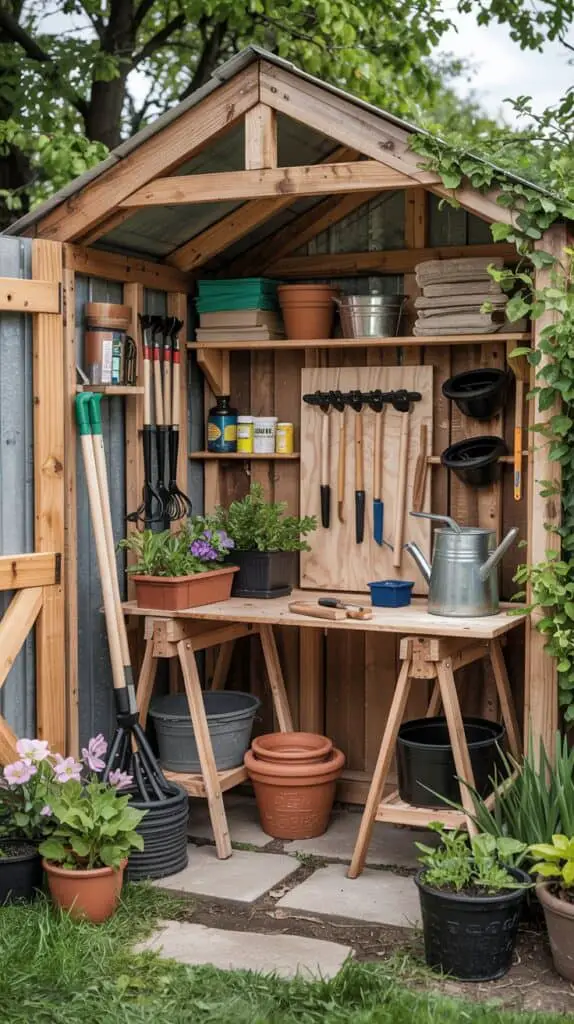
Spring gardening often means bouncing between the shed and the garden repeatedly. Creating a small prep zone inside the shed can save time and reduce mess elsewhere.
This doesn’t require a built-in workbench. A sturdy shelf, folding table, or even a reclaimed door on sawhorses can work. The key is having one surface dedicated to potting, seed sorting, or tool prep.
Store soil, amendments, and pots directly below or beside this surface so everything you need is within arm’s reach. This setup works well in both larger backyard sheds and compact yard sheds.
From a garden shed ideas exterior perspective, keeping messy tasks inside the shed also helps the surrounding yard look cleaner during spring.
Organize by Frequency, Not Size
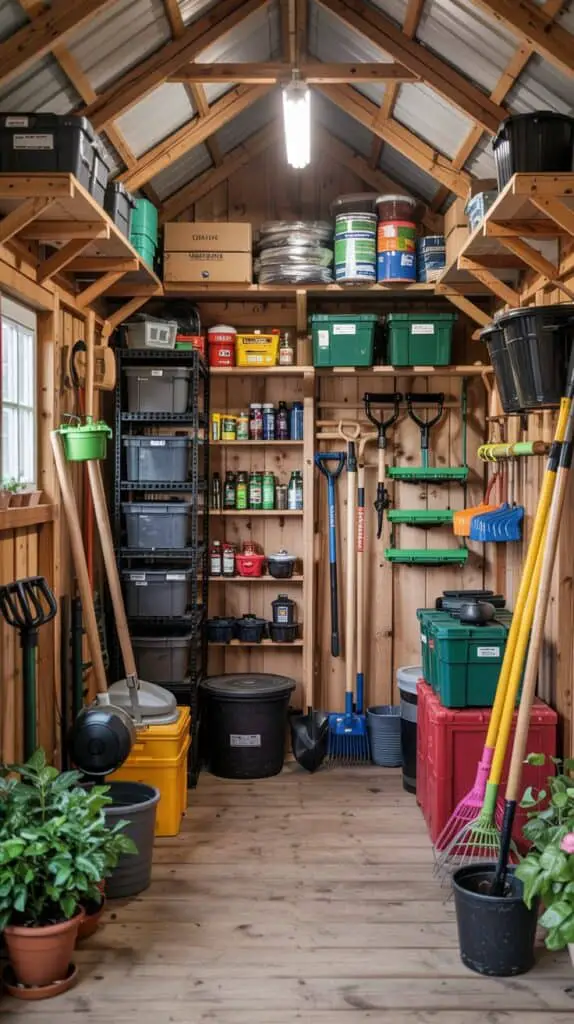
A common mistake in shed organization is storing items based on size alone. Instead, organize by how often you use things during spring.
Daily or weekly items should be stored between waist and eye level. Seasonal or backup supplies can go higher or lower. This reduces frustration and makes the shed feel easier to use, especially during busy planting weekends.
This approach works particularly well for families sharing a shed. When everyone can quickly find the most-used items, the system is more likely to last.
Outdoor shed ideas that prioritize frequency over symmetry tend to stay functional longer, even if they don’t look perfect.
Use Clear or Lightly Labeled Bins for Small Items
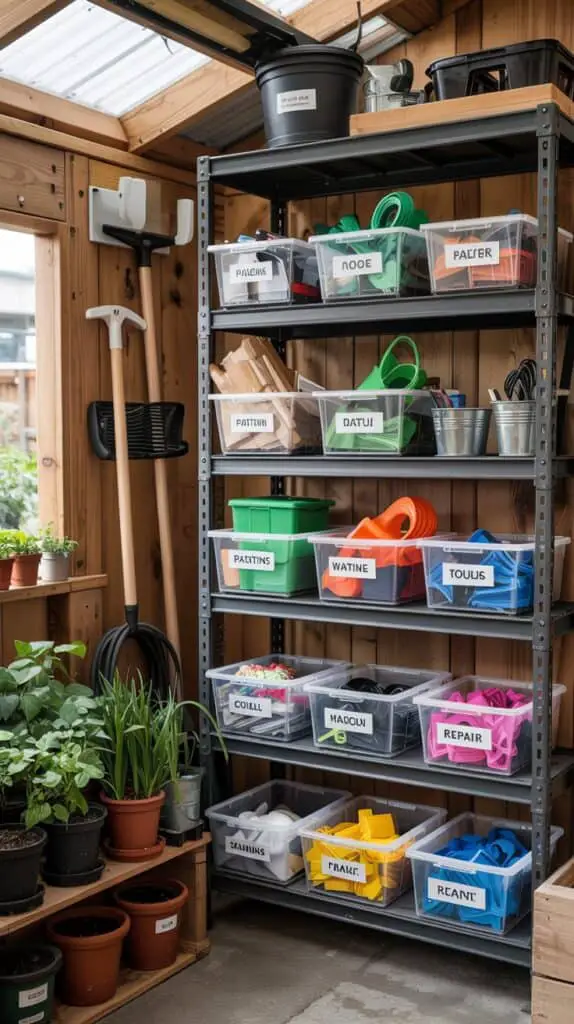
Small items are often what make a shed feel chaotic. Seeds, gloves, ties, plant labels, and repair parts pile up quickly.
Clear bins or lightly labeled containers help you see what you have without digging. You don’t need a full labeling system. Simple categories like “planting,” “watering,” or “repairs” are usually enough.
For renter-friendly setups, stackable clear bins on shelves are ideal. They’re easy to move, adjust, or repurpose later.
In DIY outdoor shed projects, restraint matters. Too many tiny categories can create more work than clarity.
Think About Exterior Flow, Not Just Interior Storage
Garden shed ideas exterior aren’t just about paint color or decor. How you use the space outside the shed matters just as much.
Keep the most-used tools closest to the door. If possible, store watering cans, gloves, or hand tools near the entrance so you can grab them without stepping fully inside.
Adding a small hook or weather-resistant bin just outside the door can help during peak spring use. This works especially well for muddy boots or quick garden runs.
Shed decorating ideas exterior can stay minimal. A clean path, a simple plant nearby, or tidy surroundings often make the shed feel more intentional without added cost.
Use Mobile Storage for Flexible Shed Layouts
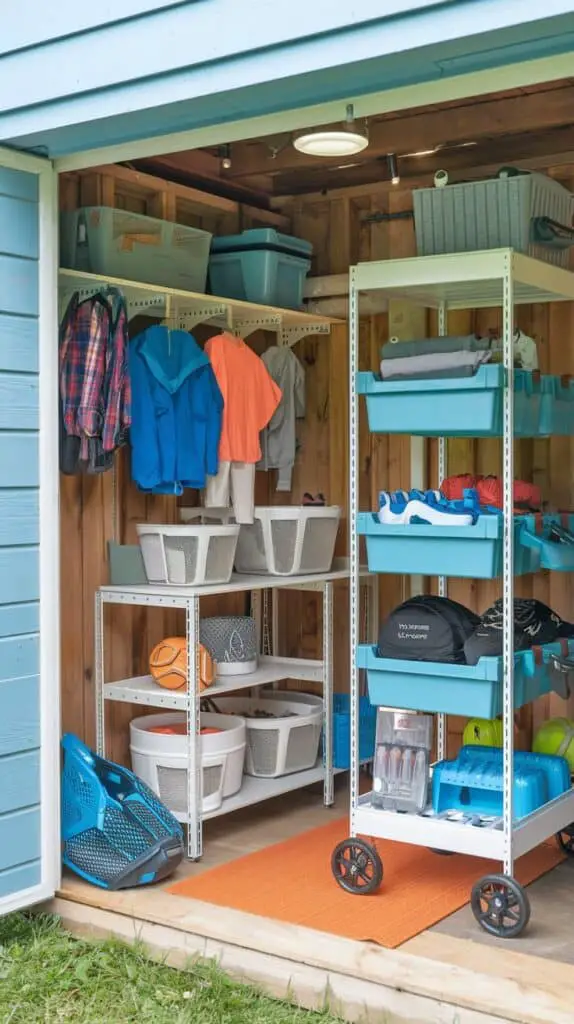
Wheeled carts, rolling bins, or portable shelving units add flexibility, especially in shared sheds. During spring, you can roll gardening supplies forward and push sports gear or off-season items aside.
This approach works well for families where the shed serves multiple purposes. It also helps renters avoid permanent layouts that don’t adapt over time.
Mobile storage supports outdoor shed ideas that evolve with the seasons instead of locking you into one setup.
If your shed has uneven floors, choose sturdy carts with larger wheels or use lightweight bins that can be carried instead.
Keep Decor Simple and Functional
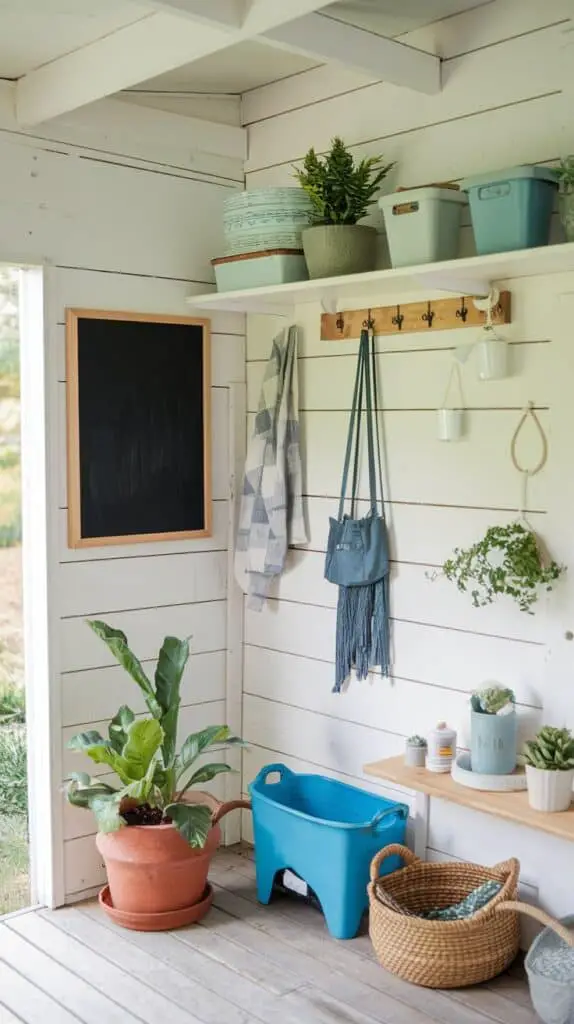
Shed decorating ideas exterior and interior don’t need to feel forced. A shed that’s easy to use already feels better.
If you want to add personality, focus on functional decor. A chalkboard for planting notes, a simple hook rail that looks intentional, or coordinated containers can add warmth without clutter.
Avoid decorative items that don’t serve a purpose. In small yard sheds, every object should earn its place.
Pinterest-worthy sheds often look good because they’re calm and purposeful, not because they’re heavily styled.
Build Habits That Support the System
Even the best organization won’t last without simple habits. At the start of spring, commit to one or two rules that keep the shed functional.
Put tools back in their designated spot. Keep the prep surface clear at the end of the day. Do a five-minute reset after big planting sessions.
These habits matter more than perfect storage solutions. Outdoor shed ideas work best when they’re supported by realistic routines.
Adapt Ideas to Your Space, Not the Other Way Around
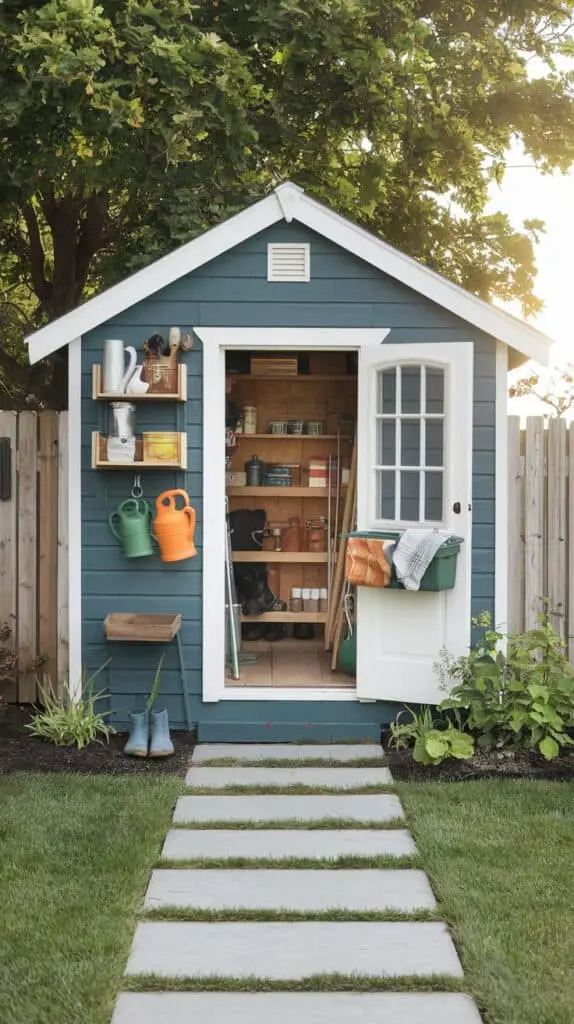
Not all backyard sheds are the same. Some are narrow, some are shared, and some are temporary. The goal isn’t to copy a perfect layout but to adapt ideas to what you actually have.
Storage sheds ideas backyard setups should reflect your lifestyle, not Pinterest pressure. A slightly messy but functional shed is better than an organized one you avoid using.
DIY outdoor shed organization works best when it stays flexible. Leave room for change as your gardening habits grow.
Conclusion
Spring gardening season doesn’t require a full shed makeover or expensive storage systems. With a seasonal reset, thoughtful use of vertical space, and a focus on frequency and flow, your shed can support your gardening goals without stress.
These outdoor shed ideas are meant to be realistic, budget-friendly, and adaptable for real homes. Whether you’re working with a small yard shed or a shared backyard space, simple organization choices can make spring feel calmer and more enjoyable, one tool at a time.