
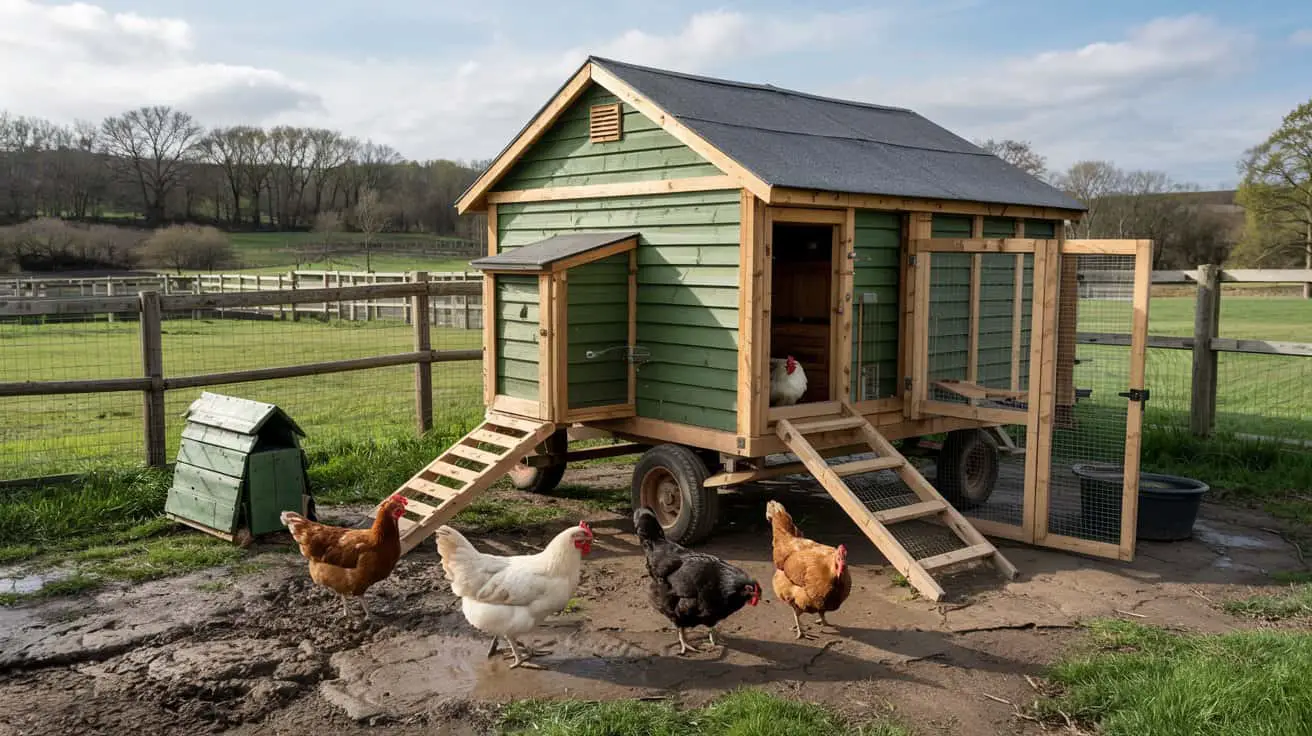
A muddy chicken run keeps showing up the same way: wet boots at the back door, soggy bedding that never quite dries, and birds that track grit everywhere. If you’re looking for chicken coop and run ideas that feel doable for real life, mud control is one of the biggest “quality of daily chores” upgrades you can make.
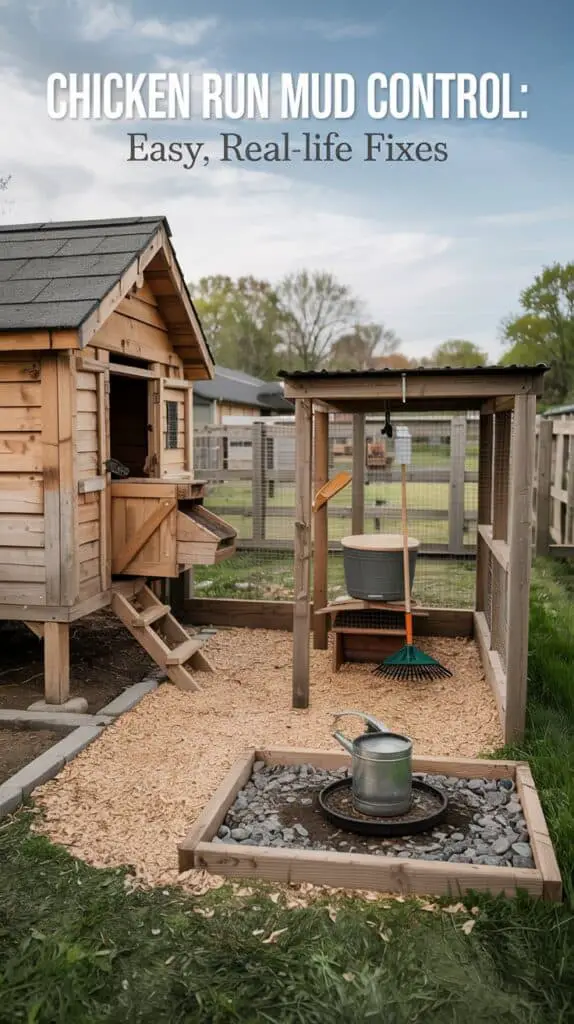
The good news is you don’t need a perfect yard, a huge budget, or a full rebuild to get there. With a few smart changes to drainage, footing, and how you place your coop, you can keep the run drier, reduce odors, and make cleanup quicker. The ideas below are meant for typical at-home chicken coop setups—suburban yards, small homesteads, and even renter-friendly situations where you want improvements that can be removed later.
Start with the “why” of your mud (and map the wet spots)
Before buying anything, walk your run after a rain and notice where water sits, where it flows, and where chickens scratch down to slick soil. Most mud problems are a mix of three things: poor drainage, bare earth, and high traffic in the same zones (under the waterer, at the coop door, and along the fence line).
A simple “mud map” helps you decide what to fix first:
- The coop doorway area usually needs the toughest footing.
- The water station needs splash control and a surface that doesn’t turn to pudding.
- Low corners or areas along the fence often collect runoff from the yard.
- Shade spots under trees stay damp longer, even if the run is otherwise fine.
This little check-in saves money because you’re not spreading materials everywhere. You’re targeting the problem zones, which is one of the most practical coop and run ideas you can apply right away.
Choose a location and slope that does most of the work for you
If you’re still deciding where to place a coop and run, choose the highest, driest spot you have—even if it’s not the flattest. A slightly higher location with a gentle slope is easier to manage than a low, level area that turns into a basin.
Aim for a run that naturally sheds water away from the coop rather than toward it. If the run sits next to a building, watch for roof runoff. A roof without gutters can pour a surprising amount of water into your run during storms. Adding a basic gutter and extending a downspout away from the run is often one of the cheapest upgrades you can make for chicken coops and pens, and it usually pays off immediately.
If you can’t move the run, you can still work with slope by building up the surface where the birds spend the most time, creating a slightly higher “dry zone” near the coop and feeding area.
Build a “dry entry pad” at the coop door
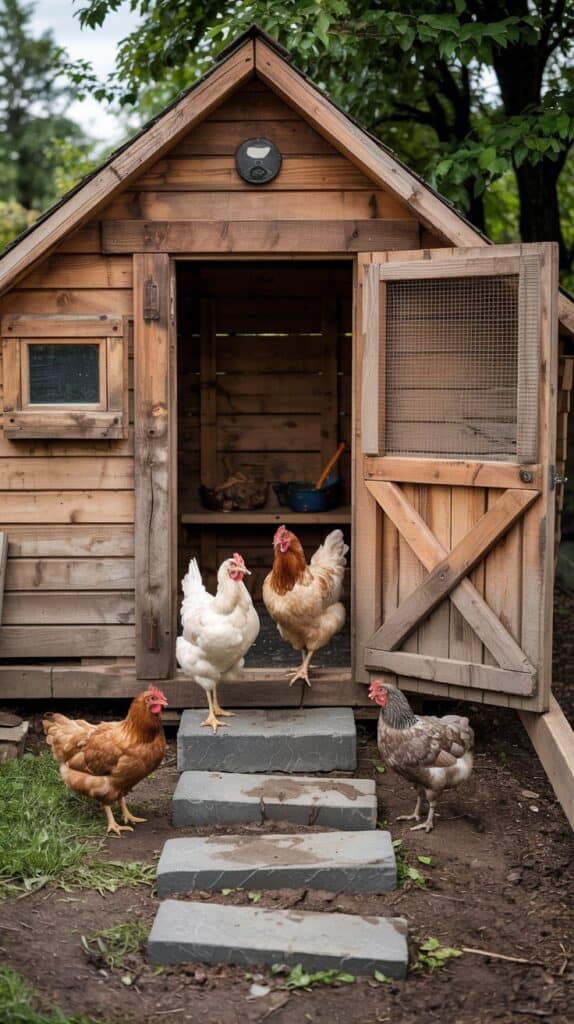
The coop door is ground zero for mud. Chickens stamp in and out all day, and you end up with a churned-up spot that holds water. A dry entry pad is one of those poultry pen ideas that feels small but changes everything.
A simple approach is to:
- Lay down landscape fabric to slow weeds and keep materials from sinking into soil.
- Add a layer of coarse gravel as a base.
- Top with something comfortable for chicken feet and easy to rake—like a thin layer of sand, small gravel, or wood chips depending on your climate.
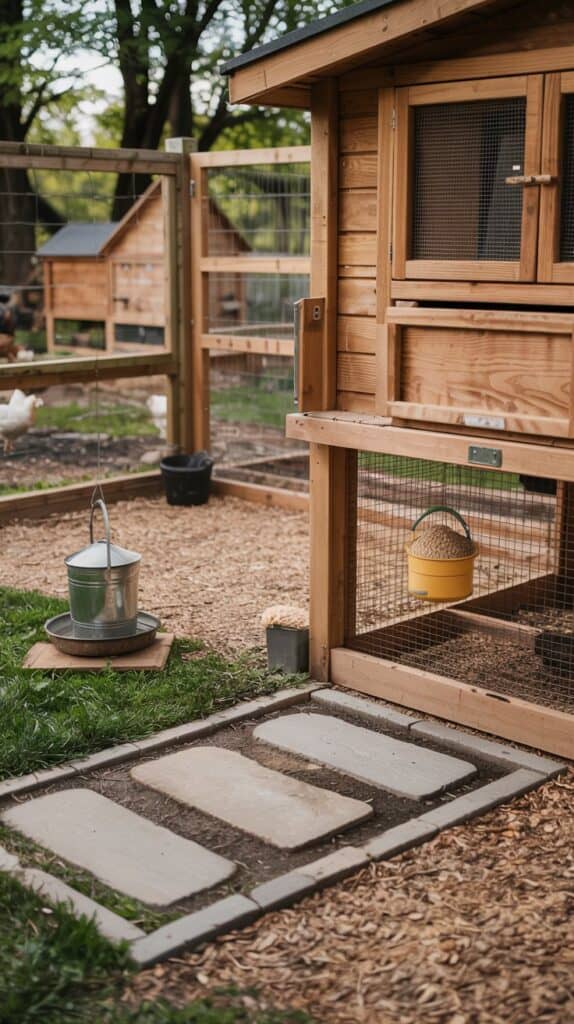
If you want something even easier, use a few large pavers or flat stones right at the coop threshold, then surround them with your chosen run footing. Pavers give you a firm, scrapeable surface that doesn’t become a hole over time.
This is also a good place to add a small overhang or roof extension if your coop allows it. Keeping rain off the doorway area reduces the amount of water you’re fighting.
Create a water station that can’t flood the run
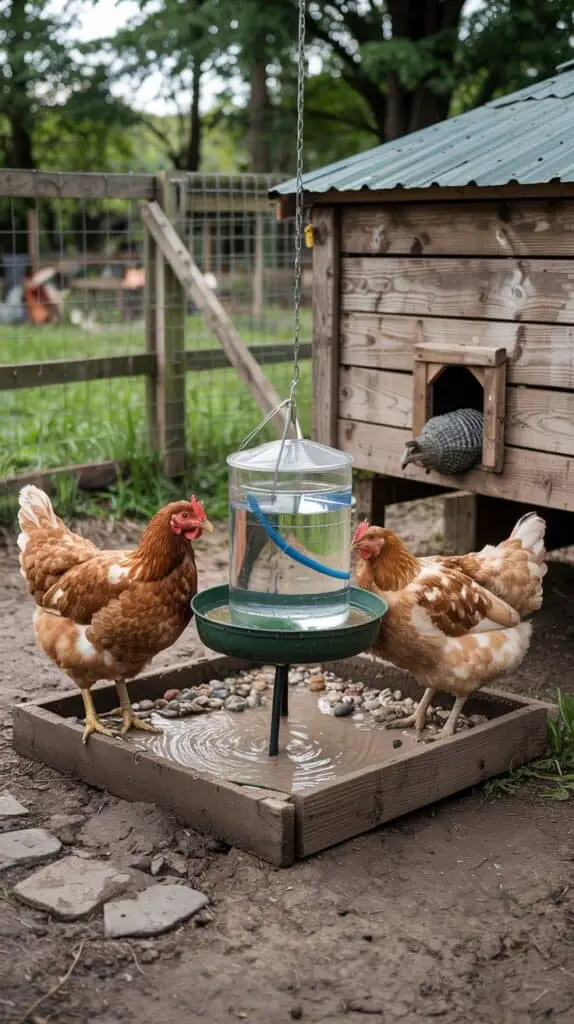
A waterer in the dirt is basically an invitation to mud. Chickens spill, splash, and drip, and then they stand in it. Moving your water setup onto a dedicated base is one of the most effective hen run ideas for mud control.
Try one of these easy options:
- A rubber stall mat cut to size
- A paver patio (a few pavers in a tight grid)
- A shallow tray filled with pebbles under nipples or cups
- A small gravel pad with edging to keep it contained
If you’re using a hanging waterer, hang it low enough for comfortable drinking but high enough that birds aren’t scratching directly into the base. If your water station has to be in the run, choose a spot that gets at least some sun so it dries faster.
For at home chicken coop setups, keeping the water station tidy is also a “less smell” win—wet areas mixed with droppings are where odors start.
Use the right footing for your climate (not one-size-fits-all)
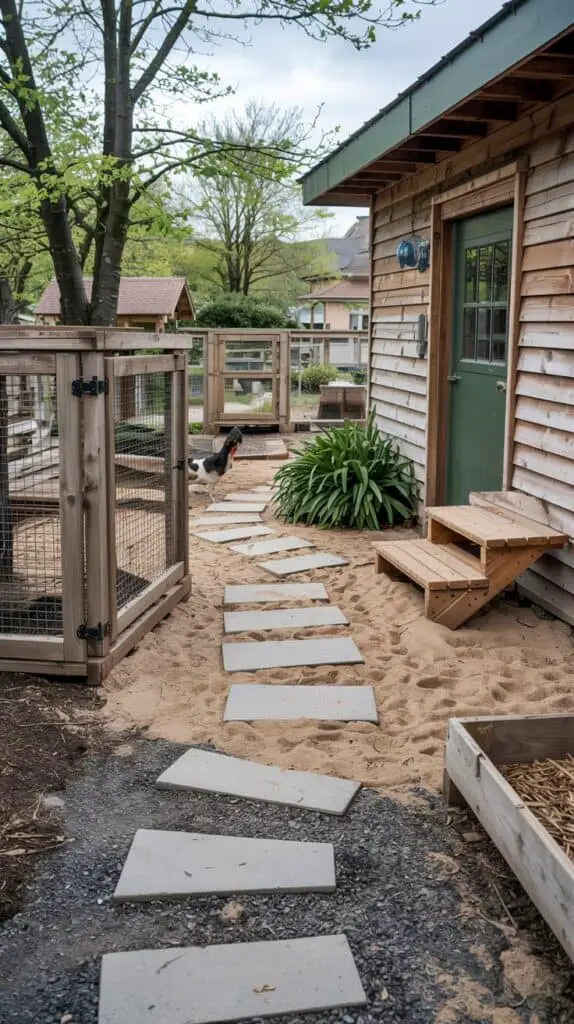
Footing is where most people spend money without getting lasting results, because the best surface depends on your weather and your run style. Here’s a grounded way to choose:
- Sand drains well and is easy to rake, but it needs a base that doesn’t mix with mud and it can wash away if water is flowing through the run.
- Wood chips are comfortable and absorbent, but they break down over time and need topping up. They work best where water isn’t constantly pooling.
- Gravel is great as a base layer and in high-traffic zones, but sharp gravel can be hard on feet if it’s the only surface.
- Crushed stone fines or stone dust can pack down and shed water when installed correctly, but it can become slick if it stays wet and can be messy if it migrates.
- Straw looks cozy but can become a wet mat quickly in rainy seasons, so it’s better as occasional enrichment than a main run surface.
A practical “real home” approach is to mix surfaces by zone. Use the toughest footing near the coop door and water station, then use a softer, more natural surface in the rest of the run. This keeps costs manageable and prevents the whole run from turning into one big maintenance project.
Layer your run like a simple “drainage sandwich”
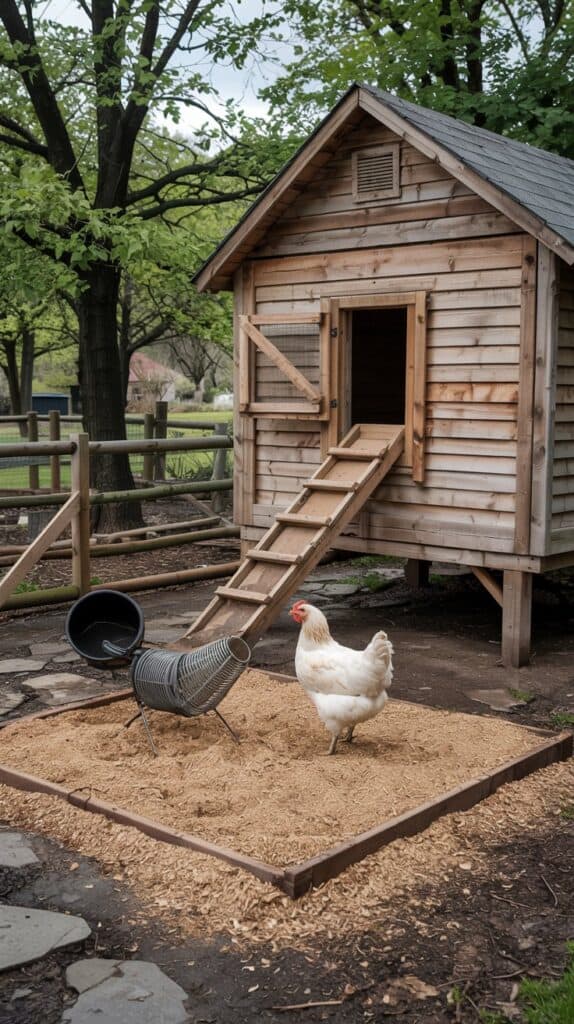
If your run is already mud, adding a thin layer of wood chips on top often disappears into the mess within a week. For longer-lasting results, build in layers where it matters most.
A basic layering method:
- Landscape fabric (or a removable barrier if you’re renter-friendly and want something less permanent)
- Base layer of coarse gravel or crushed stone for drainage
- Comfort layer like sand, chips, or a softer topping depending on what your birds prefer and what your yard can handle
You don’t necessarily have to do this over the entire run. Even creating a large “dry zone” that covers the coop door, feeder, water, and a dust bath area can keep the whole space feeling cleaner, because chickens spend so much time in those spots.
This method also pairs well with chicken coop ideas moveable, because you can build a portable dry pad for the areas that travel with your coop, then refresh it as needed.
Add a roofed run section (even a small one)
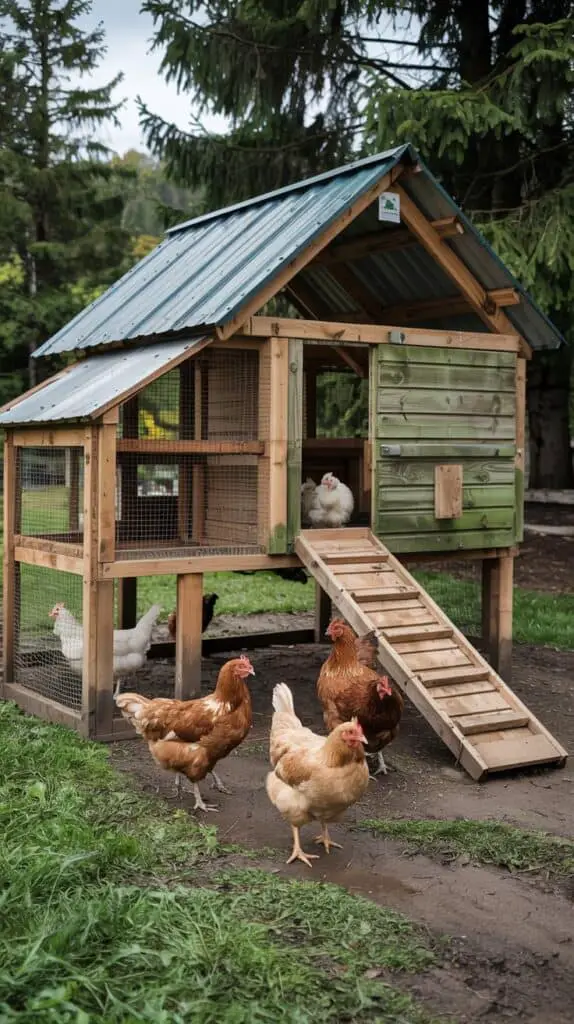
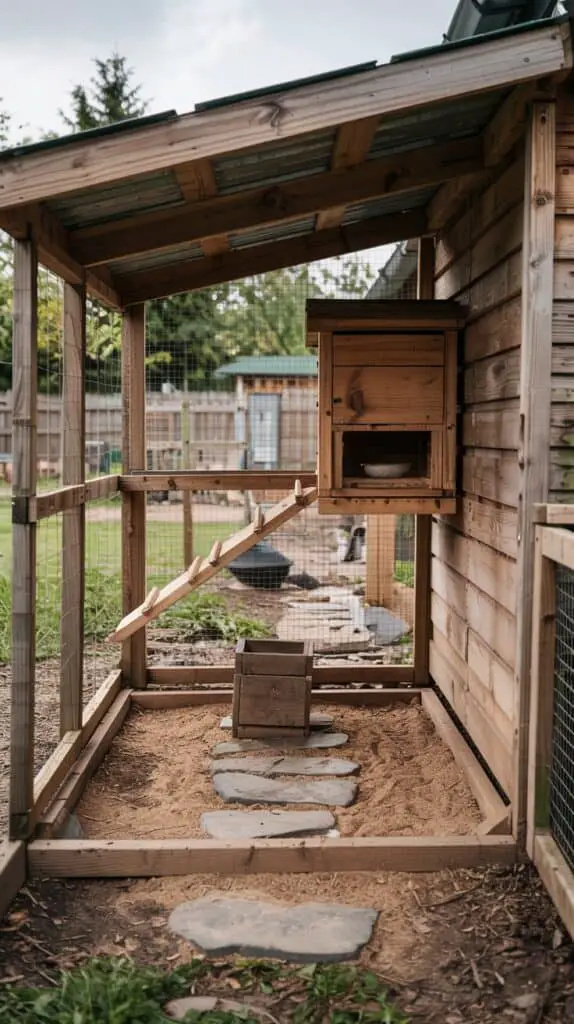
If you only do one bigger upgrade, a roofed section is the one that pays off in the wet seasons. It doesn’t have to be fancy. Even covering part of the run gives your flock a place to scratch and dust bathe when everything else is soaked.
A simple covered run can be:
- A lean-to style roof attached to the coop
- A separate shelter panel over a corner of the run
- A tarp setup on a sturdy frame (best as a temporary option, anchored well)
What matters is that the roof directs water away from the run, not into it. If you can angle it toward a drainage area or into a rain barrel system, even better.
Covered space is especially helpful for small chicken coop and run ideas, where chickens don’t have a lot of alternative “dry ground” to choose from.
Control runoff with shallow swales and easy edging
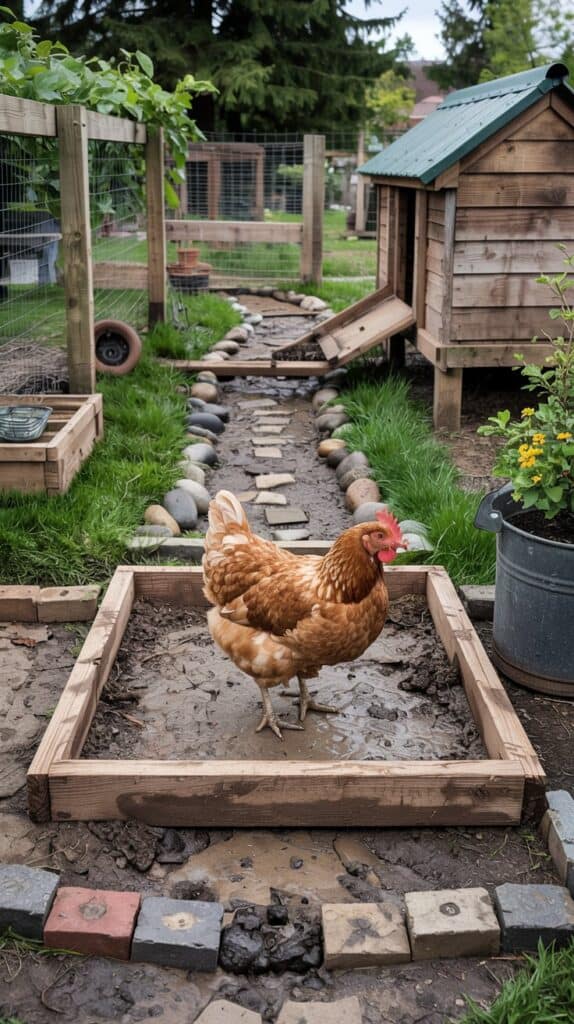
If water is flowing into your run from the yard, you can often redirect it without major digging. Think gentle shaping rather than trenches.
A shallow swale (a slightly lowered channel) can guide water around the run. You can also add edging to keep your footing materials from washing out. Some simple edging options:
- Pressure-treated boards
- Paver borders
- Reused bricks
- Metal landscape edging
- A row of larger stones
Edging makes raking easier and keeps your surface layers where they belong. It also gives your run a more intentional look, which matters if your goal is a clean, Pinterest-friendly space that still feels practical.
Set up “sacrificial zones” you can refresh quickly
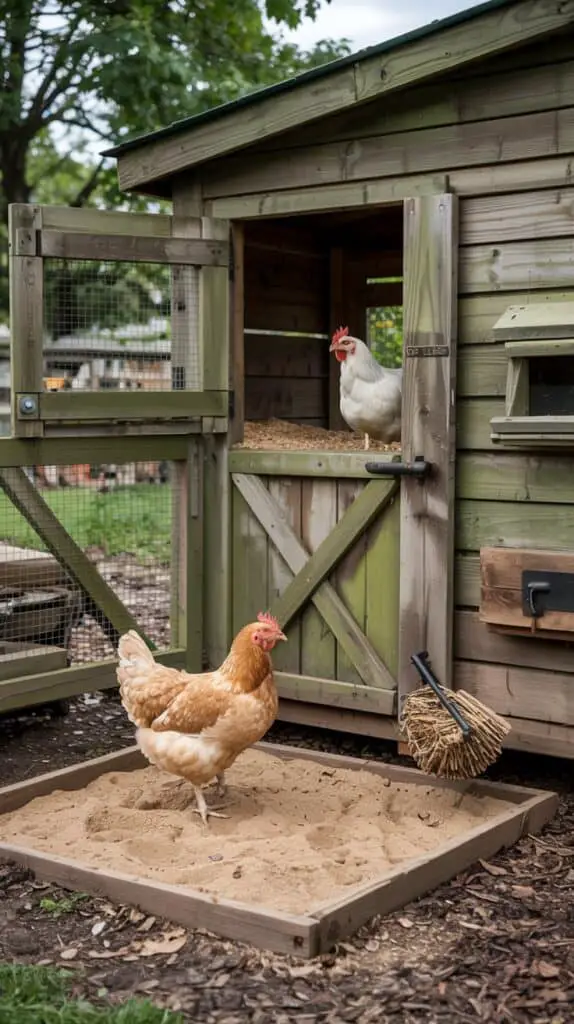
Even the best run will have areas that get hammered—usually by the gate, the coop door, and any spot where treats are tossed. Instead of trying to make every inch perfect, plan for a few zones that you refresh on purpose.
A sacrificial zone might be:
- A small area of chips you top off monthly
- A sand patch you rake and occasionally replace
- A gravel pad that stays firm and doesn’t care about traffic
The mental shift is helpful: you’re not failing if one corner looks worn. You’re choosing where wear happens so the rest of the run stays stable. This is one of those chicken coops and pens habits that keeps maintenance light over time.
Make droppings easier to manage with smart roost placement
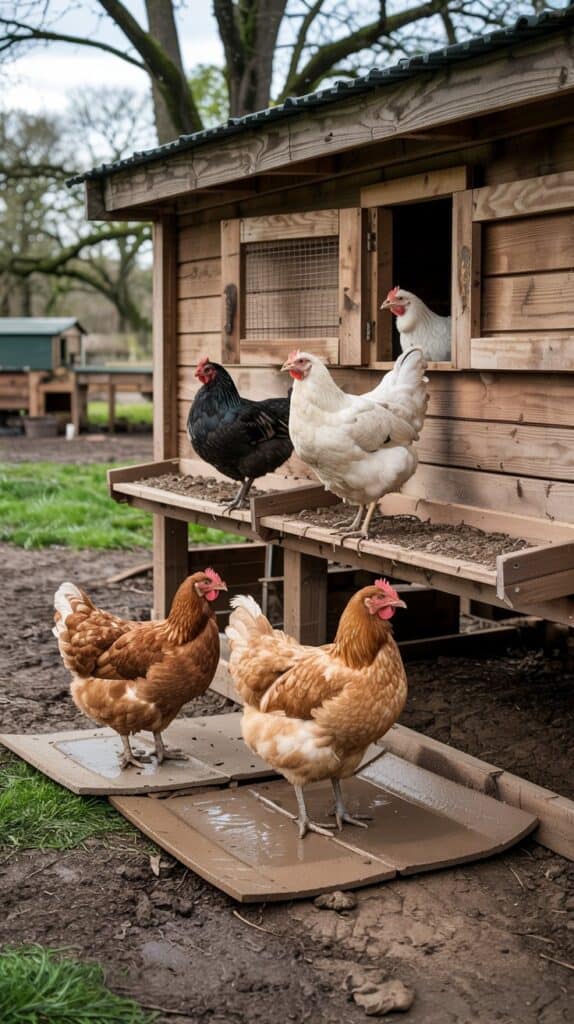
Mud control isn’t only about water. Droppings turn wet areas into odor quickly, and a poorly placed roost can make the run messier than it needs to be.
If you’re exploring chicken run roost ideas, here’s the practical version: roosts in the run can work in certain setups, but they need careful placement and easy cleanup underneath.
If you want chicken roosts in run areas, keep these in mind:
- Place outdoor roosts under cover so droppings don’t get rained into the footing.
- Keep roosts away from the water station to avoid turning that area into a wet mess.
- Add a scrapeable surface underneath (pavers or a mat) so you can clean quickly.
- Avoid placing roosts directly over your “best” footing, like sand you want to keep clean.
Many coops already have interior roosts, so outdoor roosts are optional. If your run is muddy, it’s usually better to focus on dry ground and enrichment (like a covered dust bath) before adding more poop zones.
Include a dust bath area that stays dry on purpose
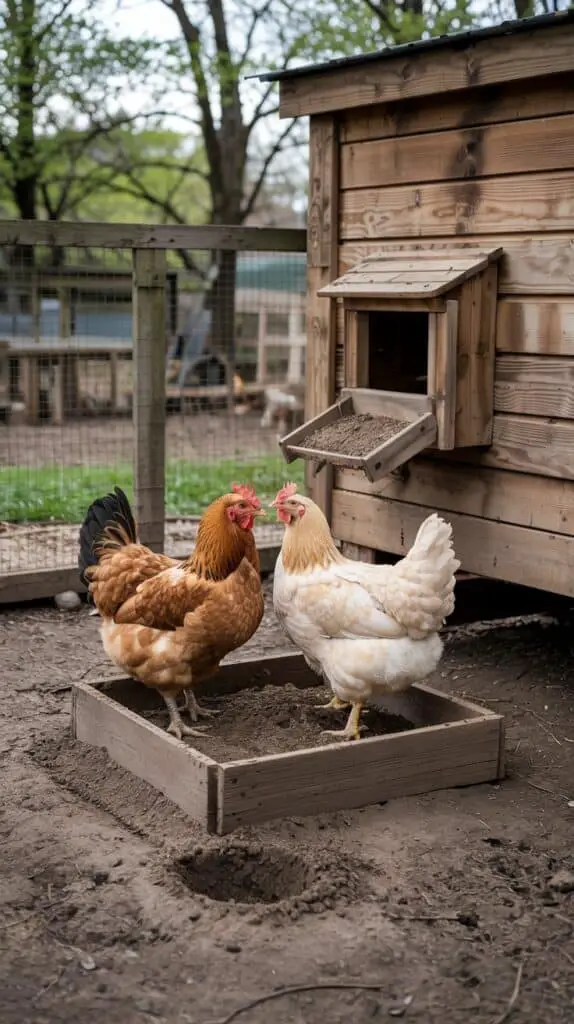
Chickens will dust bathe in the driest material they can find… even if that means digging a hole and making your mud problem worse. Giving them a dedicated dust bath reduces random craters and helps keep run footing more even.
A simple dust bath setup:
- A low tub, wood frame, or repurposed planter
- A mix of dry soil, sand, and a bit of wood ash (if you use it)
- A roof or cover so it stays usable after rain
Place it in your covered area if you have one. If not, tuck it against the coop wall under an overhang or add a small shelter panel above it. This is a very “lived-in” improvement that keeps the flock happier and the run less torn up.
Use moveable strategies to let the ground rest
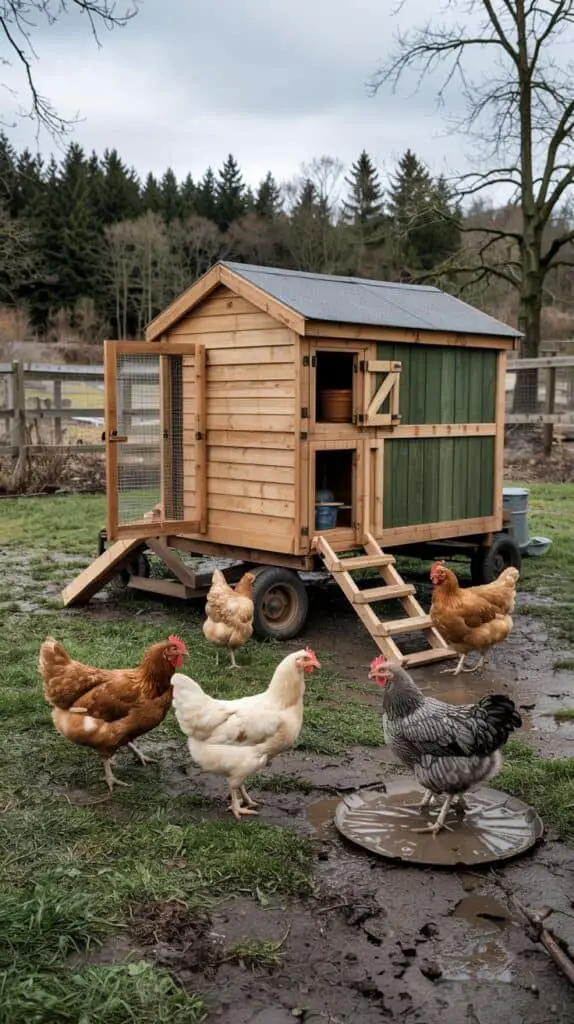
If you like chicken coop ideas moveable but don’t want a full mobile coop build, you can still use “moveable thinking” to reduce mud.
A few ways to do that:
- Rotate temporary fencing so birds aren’t using the same patch year-round.
- Move the feeder and water station periodically to spread traffic.
- Create a portable shade panel so chickens don’t congregate in one muddy spot.
- Use a small tractor-style run for part-time grazing, even if the main coop stays put.
Resting ground is underrated. Even a few weeks of reduced traffic can let soil firm up and grass recover, especially in shoulder seasons.
These strategies are especially helpful for at home chicken coop setups with limited space, where you’re trying to avoid turning the only run into a permanent mud pit.
Keep the run visually simple so it’s easier to maintain
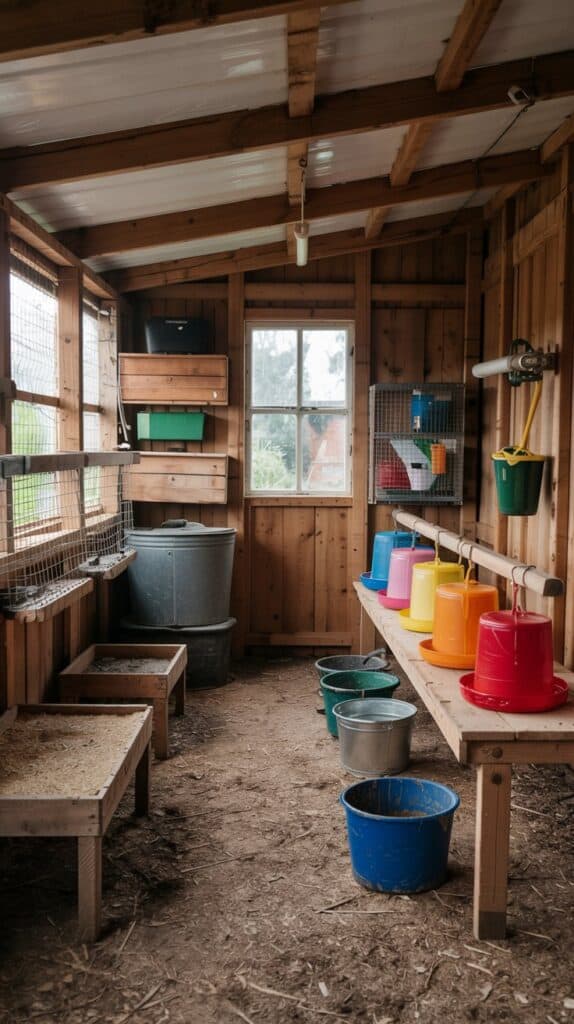
Runs get cluttered fast: extra buckets, half-used feed bags, random boards “for later,” and loose tools that end up soaked in mud. A calmer run is easier to keep clean, and it photographs better too—if you’re pinning your own setup or creating content.
A few simple habits:
- Store feed in a sealed bin off the ground.
- Keep one tidy hook rail or small shelf for essentials.
- Use two or three purposeful enrichment items rather than ten random ones.
- Choose one or two surface materials and keep them contained.
This approach aligns with the most useful poultry pen ideas: not complicated, just thoughtful. When everything has a place, cleanup is quicker, and it’s easier to notice when a problem is starting.
Plan a simple seasonal reset so mud doesn’t sneak back in
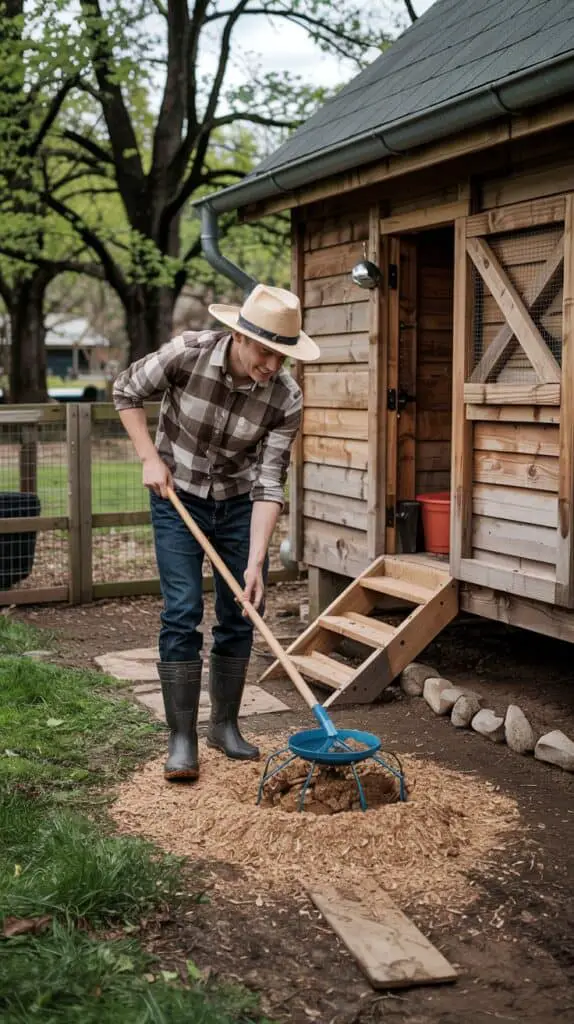
Mud control isn’t a one-time fix, especially if you live somewhere with a wet season. The goal is to make the “reset” easy.
A realistic seasonal checklist:
- Rake and level run footing, especially in high-traffic zones.
- Top off chips or refresh sand where it’s thin.
- Check gutters or downspouts that protect the run area.
- Clear any drainage channels or swales of leaves and debris.
- Move the water station base if it’s getting worn.
- Add extra dry material before long stretches of rain.
If you plan for a small reset a couple times a year, you avoid suggests-you’re-rebuilding-the-run energy. It stays manageable, which is the whole point of practical chicken coop and run ideas.
Conclusion
A muddy run can feel endless, but it’s usually a few fixable trouble spots rather than a hopeless yard problem. Start by protecting the coop door and water station, then work outward with drainage and layered footing where it matters most. Add a little covered space if you can, keep roost placement sensible, and lean on simple routines that make cleanup quick. With these hen run ideas, you can keep your chicken coops and pens drier, calmer, and easier to live with—season after season.