
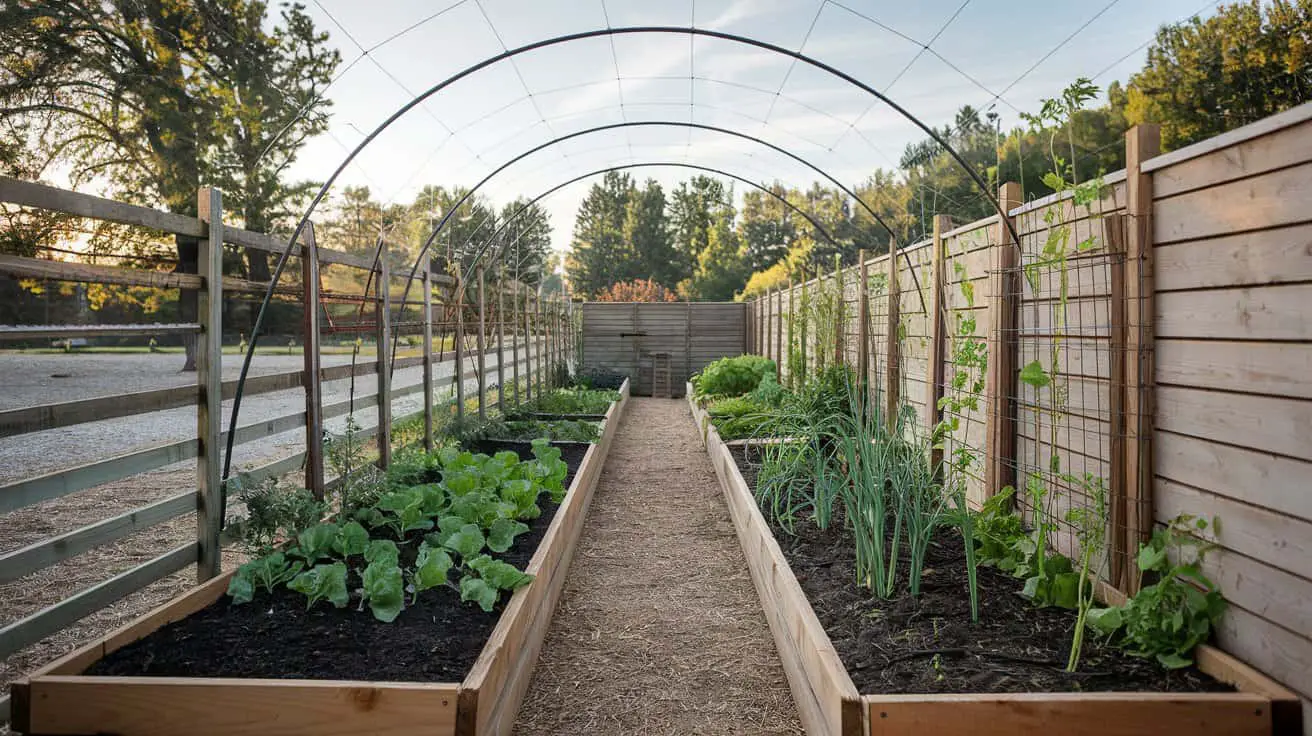
There’s something quietly comforting about an old-fashioned kitchen garden. Not fancy, not fussy—just a tidy, hardworking space where herbs brush your ankles as you walk, paths stay clean enough for slippers, and dinner ingredients are always within arm’s reach. When you build your homestead design around that same idea—functional beauty first—you end up with a layout that supports real life: kids running through, pets tagging along, and the daily rhythm of watering, harvesting, and resetting for tomorrow.
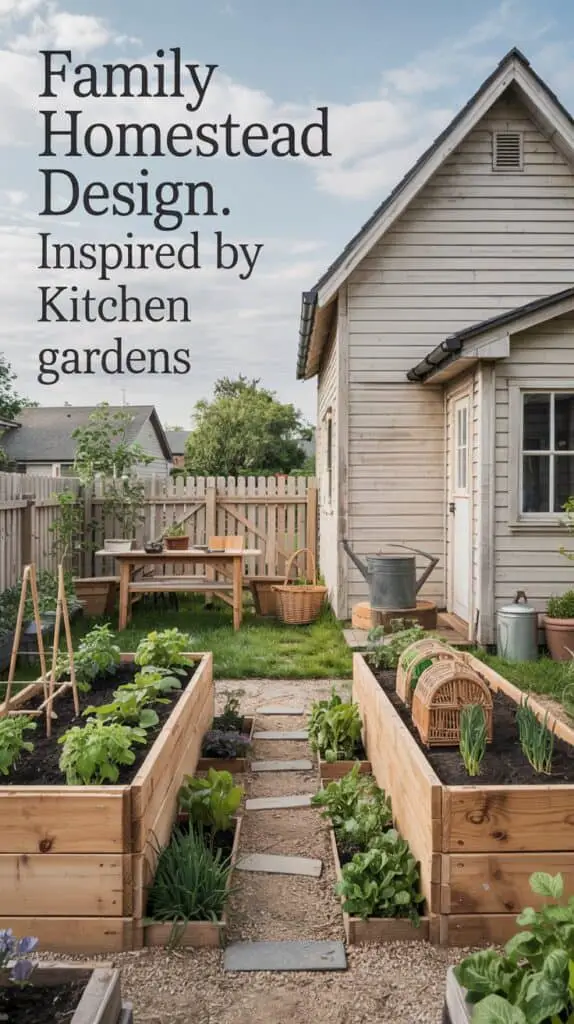
This kind of setup works whether you’re on a small homestead, in a suburban family backyard, or renting a place where you can’t go full “dig up the whole yard.” The goal is simple: a kitchen garden that feels close, calm, and easy to maintain, with classic details that make everyday growing feel natural instead of like one more chore.
Start with a “back door to bowl” layout
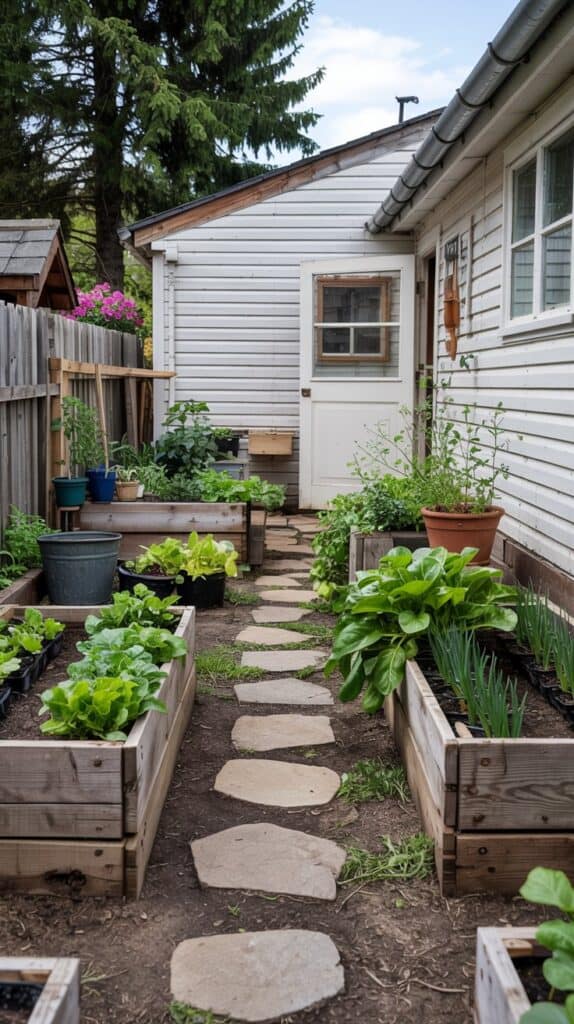
Old kitchen gardens were designed for speed and ease: you stepped outside, grabbed what you needed, and went back inside. That’s still the best guiding principle for a family homestead. Place your most-used edible plants as close to the house as you reasonably can—especially herbs, salad greens, and the vegetables you cook with weekly.
If you have even a small patio, side yard, or narrow strip along a fence, you can build a simple kitchen garden zone there. Think of it as your everyday harvest route. Keep it obvious and accessible: one main path, raised beds or containers on either side, and no awkward squeezing past thorny plants or wobbly pots.
For families, this layout helps in small ways that add up. You can harvest quickly while a toddler’s shoes are being found. You can step out during a five-minute break and clip herbs without turning it into a full garden session. And if you’re a renter, concentrating your growing space near the house means you can do more with less ground disturbance—containers, fabric grow bags, and modular raised beds all fit naturally into this style.
Build raised beds that feel like furniture, not construction
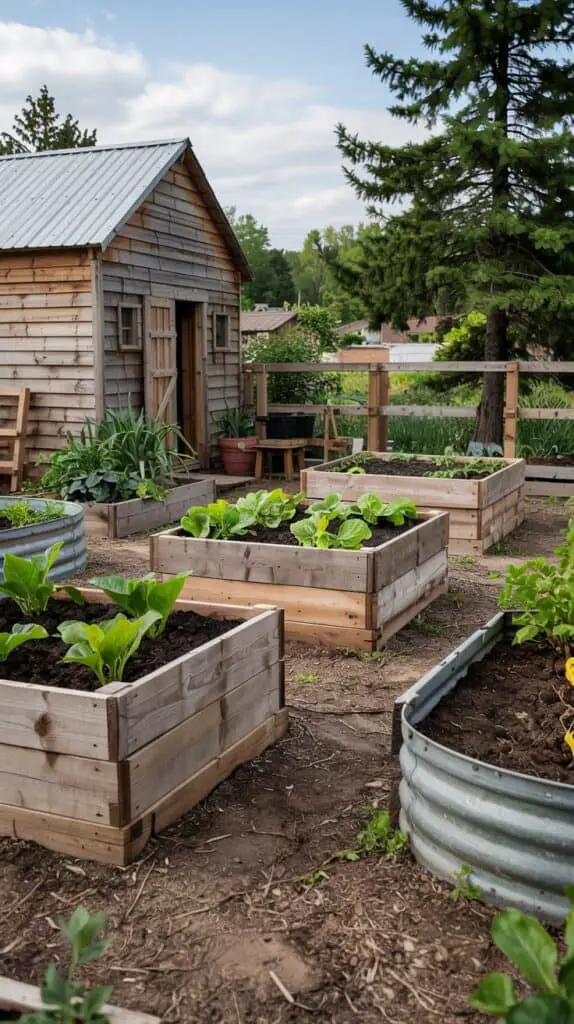
Raised beds are one of the easiest ways to make a vegetable garden feel intentional and “kitchen garden classic,” especially when your homestead design leans practical. They define the space, reduce weeds, and make planting and harvesting comfortable. For a family homestead, they also create natural boundaries—kids can learn where to step, and pets are less likely to barrel through seedlings.
For a small homestead, stick to bed sizes that are easy to reach across: about 3–4 feet wide, with any length that fits your yard. If bending is hard or you want true “easy access,” go taller rather than wider. Even 18–24 inches high can change how the garden feels day-to-day.
To keep things budget-aware, use what’s simple and durable in your area: untreated cedar if possible, galvanized stock tanks if you can find them secondhand, or modular kits if you need a renter-friendly option that can move with you. If the yard is uneven, consider placing beds on a base of cardboard and mulch instead of digging—this can be surprisingly tidy and less disruptive for rentals.
A small detail that makes raised beds feel old-fashioned in the best way: align them neatly, leave consistent spacing, and repeat materials. Matching bed heights and a unified path width instantly calm the visual noise.
Make the paths the “secret sauce” of a tidy kitchen garden
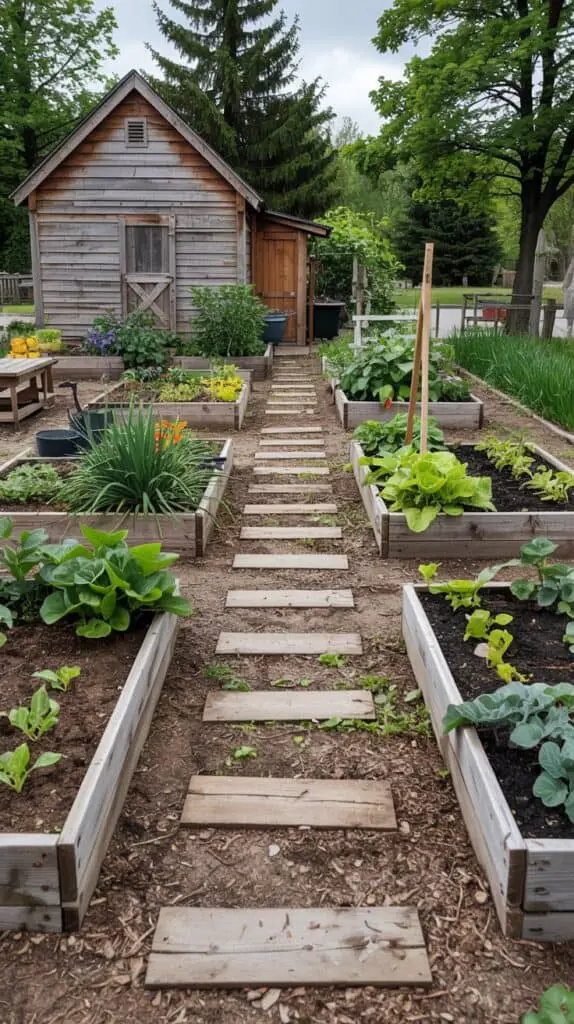
If you’ve ever looked at a kitchen garden photo and thought, Why does that look so peaceful?, it’s usually the paths. Clean paths make everything feel more organized, even when the plants are wild and abundant.
For homestead design that supports real family use, prioritize paths that stay walkable in wet weather, work with strollers or wheelbarrows, and don’t turn into muddy trenches. A simple recipe that works in many yards: cardboard or landscape fabric (if needed for weeds), topped with compacted gravel, decomposed granite, or wood chips.
Wood chips are often the most budget-friendly, and they’re forgiving if you shift beds around. Gravel looks crisp and lasts longer, but it can be harder on bare feet and less fun for toddlers who want to sit in it. If you have pets, choose path materials that don’t cling too much to paws—larger-chip mulch tends to track less than fine, dusty options.
To keep a classic kitchen garden feel, think in clear lines. One main path through the center, and smaller side paths that create simple rectangles. If space is tight, even one clean path with beds on both sides gives you that “orderly and old-fashioned” look without needing a huge footprint.
Use herb borders to soften edges and add everyday usefulness
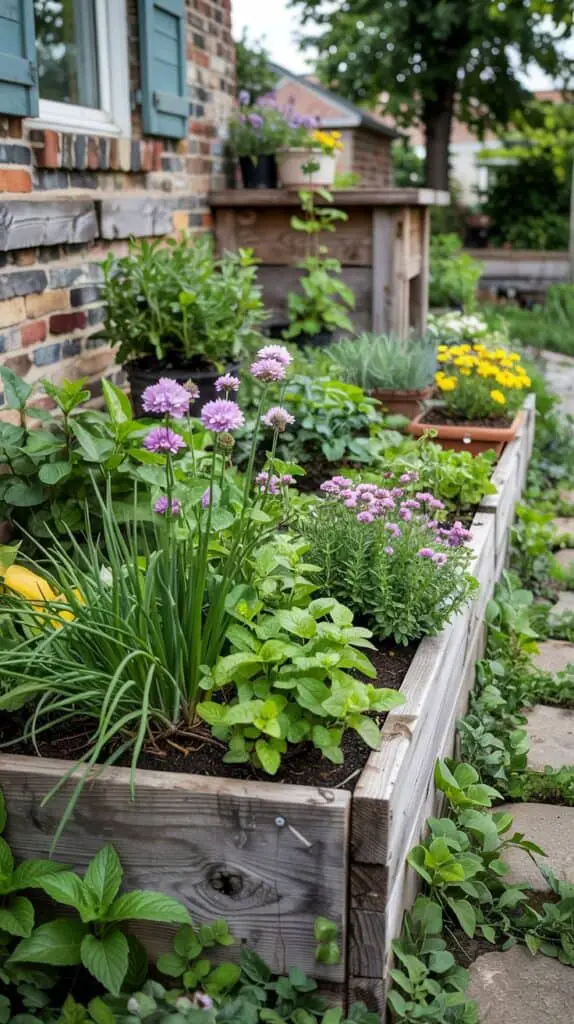
Herb borders are one of the most charming old-style kitchen garden details because they’re both practical and pretty. They outline your beds, soften the hard lines, and keep key flavors within reach.
In a family homestead, herbs also solve a common problem: patchy, awkward edges where weeds like to sneak in. Instead of fighting those edges, fill them with plants that can handle frequent harvesting and still look good—chives, thyme, oregano, sage, rosemary (if your climate allows), and parsley.
If your homestead design is renter-friendly, herb borders can live in long planters or window boxes along a path. That still gives you the same visual structure, and it’s easy to move if you relocate.
A gentle warning that saves headaches: mint is lovely, but it wants to own your entire kitchen garden. Keep mint in a pot, tucked into a corner where you can enjoy it without watching it spread. The same goes for lemon balm in some climates.
To keep herb borders looking tidy, harvest a little often. Think of it as grooming rather than “big harvesting.” A quick snip while you walk by is usually enough.
Add a small “work zone” that keeps tools from taking over
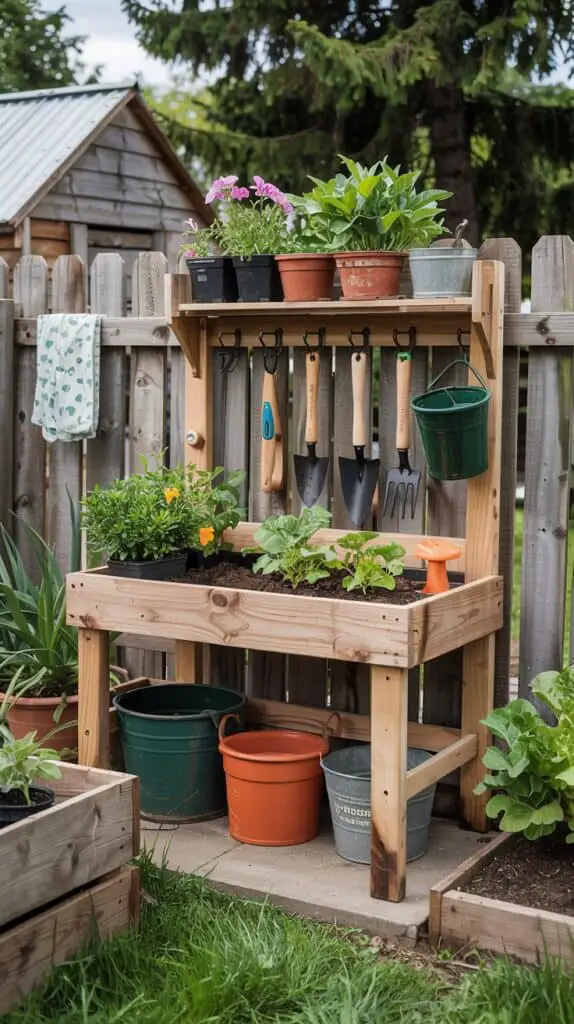
Old-fashioned kitchen gardens were working spaces, and the reason they looked tidy is that everything had a place. If you want your vegetable garden to stay calm-looking in a busy family backyard, build in a simple work zone from the start.
This doesn’t have to be a big shed setup. A small bench, a hook rail for hand tools, a bucket for clippers and gloves, and a lidded bin for potting soil can be enough. Place it near the kitchen garden but not directly in the main view if clutter stresses you out. If you’re renting, make it portable: a weatherproof deck box, a rolling cart, or a tall storage cabinet that can move later.
The key is to stop tools from living “wherever they land.” When tools drift, the garden starts feeling messy, and then it’s easier to put off the quick five-minute jobs that keep everything thriving.
If you have kids, you can include a tiny kid-sized basket or hook for their gloves and a small trowel. It’s a small invitation that helps them feel included without turning the space into a toy area.
Design for pets and kids without sacrificing the calm look
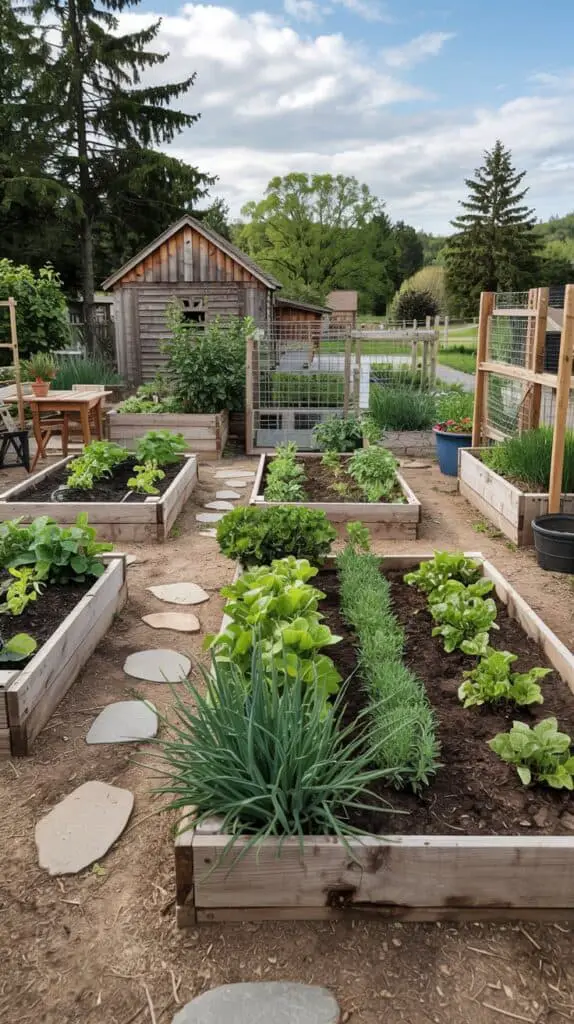
A family homestead doesn’t need to choose between practical and pretty. You can absolutely design a kitchen garden that looks intentional while still accommodating scooters, muddy boots, and a dog who wants to supervise everything.
One approach is to “assign routes.” Give kids a clear path that runs alongside the beds rather than through them. If you have space, add a small turning area—like a wider section of path—where they can pause without stepping into plants. For pets, create a predictable perimeter route with a durable surface (mulch or gravel) so they’re less tempted to cut through beds.
Raised beds help here, but so do simple visual cues: a low border (wood, stones, or a thin edging), repeating planters, or even a line of herbs that naturally guides traffic. You’re not building a fortress—you’re just making the “right way” obvious.
If you’re worried about dogs digging, consider taller beds, denser edging, or placing a few sturdy containers at corners where pets tend to pivot. For new gardeners, it’s also okay to protect the most fragile crops with lightweight mesh covers, especially in early spring. That’s not being precious—that’s being realistic.
Choose seasonal planting that stays manageable
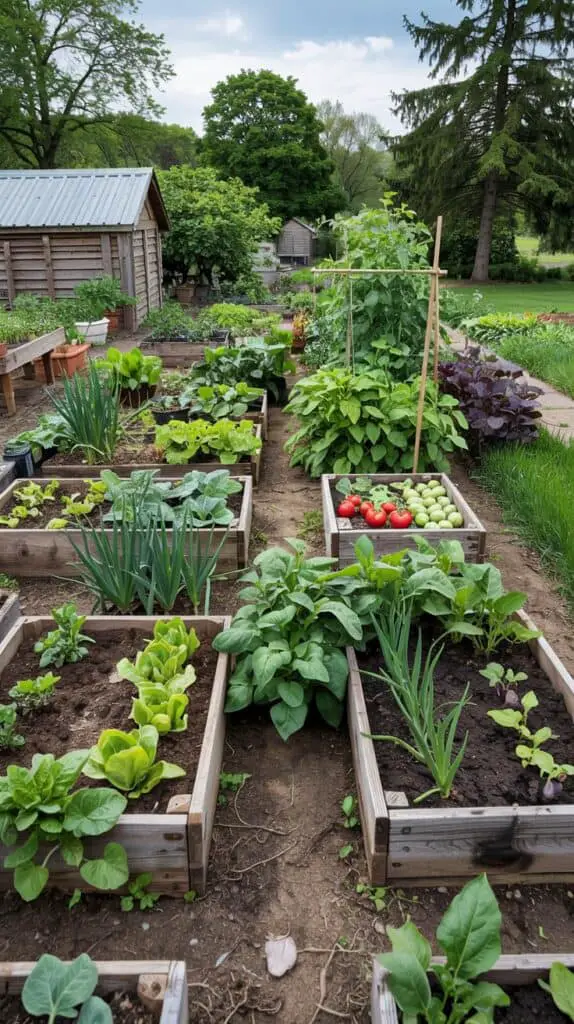
A kitchen garden shines when it’s planted in a way that looks good across the seasons, not just for one dramatic summer moment. For a small homestead and busy family schedules, the best seasonal planting plan is one you can actually maintain.
Start with reliable “daily harvest” crops: salad greens, cherry tomatoes, herbs, green beans, and a few compact peppers. Add one or two space-hog crops only if you genuinely love them—maybe one squash or a small patch of potatoes, not five sprawling vines that swallow the path.
A simple seasonal rhythm that works well:
- Early spring: greens, peas, radishes, herbs waking up
- Late spring: tomatoes, peppers, beans, cucumbers in trellised spots
- Summer: steady harvest, keep paths clean, mulch heavily
- Late summer/fall: replant greens, add carrots or beets if you like, tidy beds
- Winter (where possible): cover crops, garlic, or simply mulched beds resting
In a classic kitchen garden, repetition is calming. Plant the same categories in the same general places each year. It makes planning easier and gives the garden a familiar structure, which is especially helpful if you’re learning.
If you’re renting and don’t want to invest heavily in soil each year, focus on adding compost, mulching, and rotating crops in containers or modular beds. You can keep the soil healthy without digging the yard at all.
Add simple trellises and vertical growing to save space
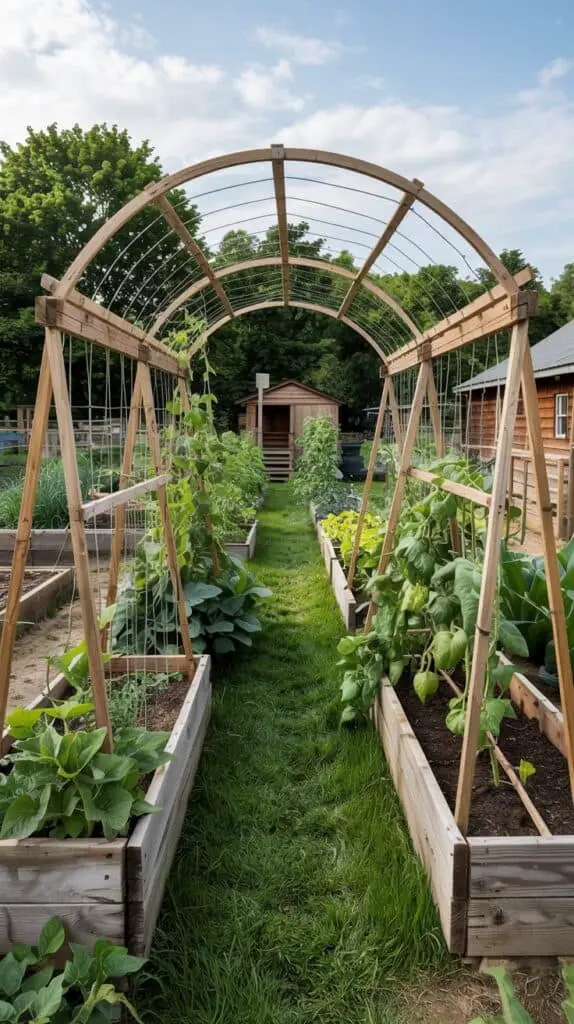
Vertical growing is one of the easiest ways to make a vegetable garden feel abundant without expanding your footprint—perfect for a small homestead, side yard kitchen garden, or renter-friendly setup.
Use trellises that match the style of your space: cattle panels arched over a path, wooden A-frames, or simple strings on a sturdy frame. The old-fashioned look comes from materials that feel honest—wood, metal, twine—not plastic that flaps around and looks temporary.
Place your vertical crops where they won’t shade out sun-loving beds. If your garden runs north to south, put taller trellises on the north side so they don’t block light. If you’re not sure, just watch where the afternoon sun hits and keep trellises from casting long shadows over tomatoes and peppers.
Good vertical candidates: peas, pole beans, cucumbers, and even small melons if your structure is strong. This keeps pathways clearer too, which helps the whole kitchen garden feel more orderly.
Include “classic homestead details” that are useful, not fussy
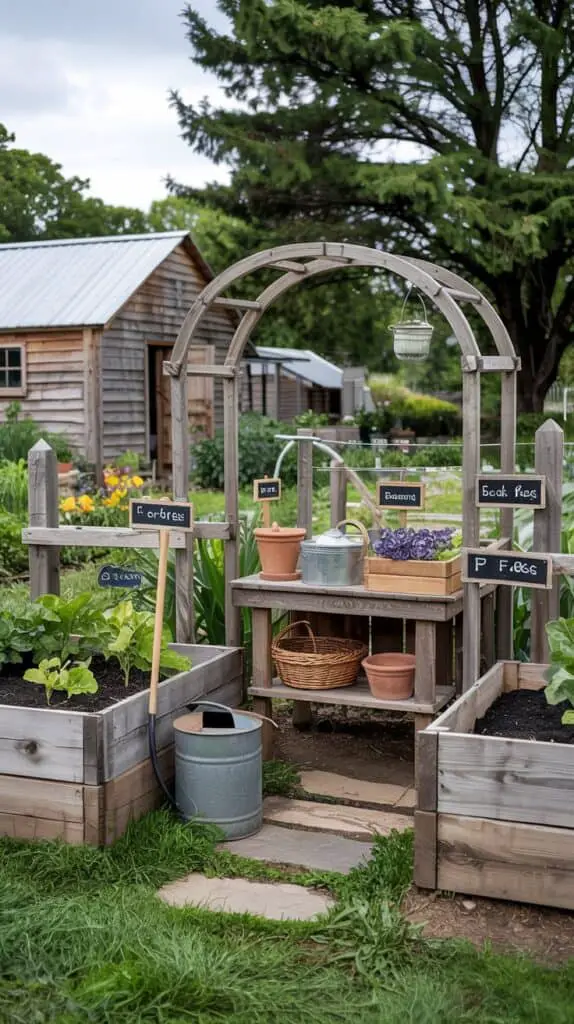
The details that make old-style kitchen gardens feel timeless are usually practical things that also happen to be beautiful. For homestead design that stays grounded, pick details you’ll actually use.
A few that work in most spaces:
- A simple arbor or arch at the entrance to the kitchen garden (even a small one)
- A water source nearby: a hose reel, rain barrel, or watering can station
- Labels that look neat: wooden stakes, slate tags, or painted markers
- A small table or flat surface for setting baskets, harvest bowls, or seed trays
- A compost corner that’s screened or contained so it doesn’t dominate the view
For renters, these details can be portable. A freestanding arch, a rolling potting table, a compact compost system, and attractive containers still give that classic feel without permanent installation.
Try not to add too many “decor” elements. The kitchen garden itself is the visual feature. When you keep the structure simple, the plants do the talking.
Create a layout that looks intentional even in the messy middle
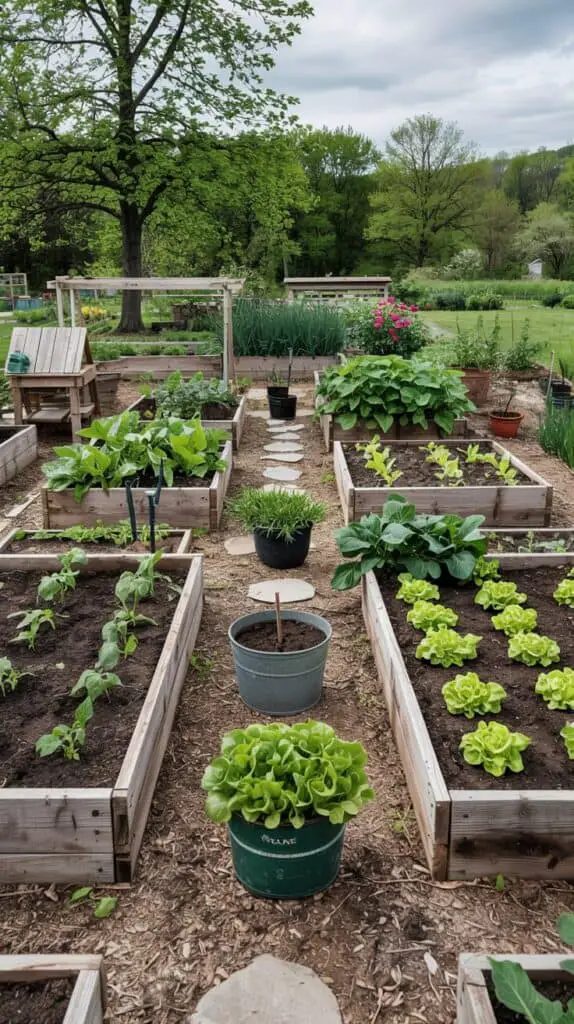
Every garden has messy weeks—seedlings in odd places, half-harvested beds, a surprise heat wave, a vacation gap. The trick is designing a family homestead garden that still feels okay during those times.
This is where structure matters more than perfection:
- Keep bed edges clear and straight
- Maintain one main tidy path
- Mulch consistently (it hides chaos)
- Repeat a few key containers or materials to unify the look
- Limit “random stuff” in view (store tools, empty pots, spare stakes)
If you only have energy for one thing, tidy the paths. A swept gravel path or freshly topped mulch makes everything look calmer immediately, even if your tomato bed is leaning sideways and your lettuce has bolted.
And if you’re a beginner, give yourself permission to learn in public. A kitchen garden is supposed to be lived in. The goal isn’t a magazine spread—it’s a vegetable garden that supports your daily life and grows better each season.
Conclusion
A kitchen garden-inspired homestead design is less about copying a perfect old photograph and more about borrowing the smartest parts: close-to-the-house convenience, tidy paths, raised beds that make work easier, and a layout that stays calm in real family life. Start small, build structure first, and let the details you choose be useful as well as beautiful. Over time, your kitchen garden becomes the heart of the family homestead—one harvest, one season, and one simple path at a time.