
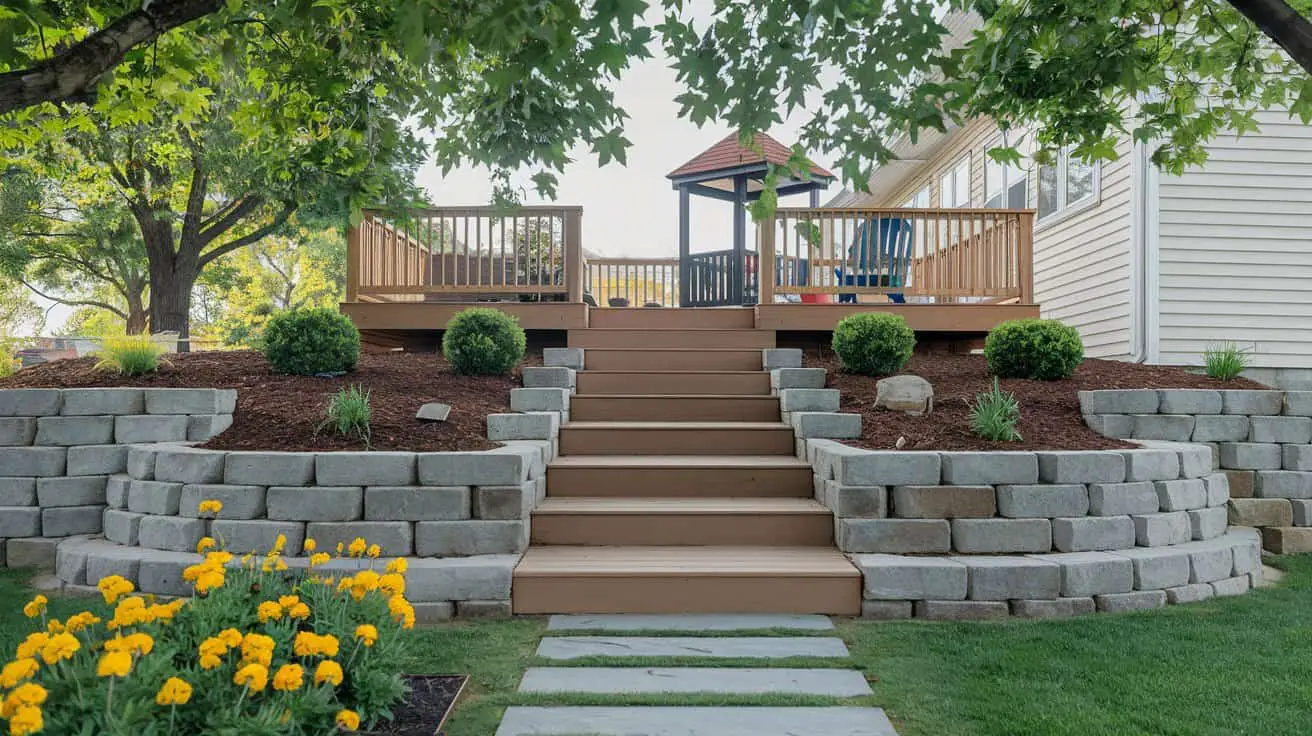
Building a play space on a sloped yard can feel intimidating, especially if you’re working with limited time, a tight budget, or a home you don’t plan to stay in forever. But a slope doesn’t have to be a problem. With some thoughtful planning and basic power tools, it can actually become one of the most engaging parts of a kids yard. This guide walks through practical kids outdoor play ideas designed specifically for uneven ground—ideas that prioritize safety, flexibility, and real-life usability over perfection.
This article is written for families who want a backyard playground that feels calm and intentional, not crowded or overbuilt. Whether you’re creating outdoor play areas for toddlers or a shared space that grows with your kids, the goal is to work with the land you have, not against it.
Understanding Your Slope Before You Build Anything
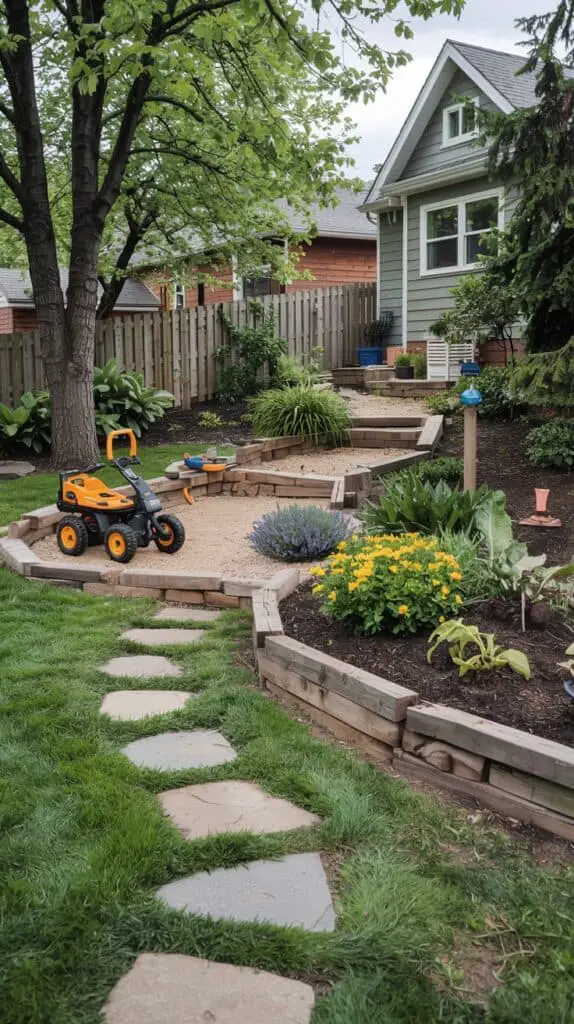
Before thinking about structures or tools, spend time understanding the slope itself. Not all slopes behave the same way. Some are gentle and consistent, while others dip, level out, and drop again. Walk the yard after a rain to see where water flows and pools. Notice which areas feel stable underfoot and which feel slippery or compacted.
For families and beginners, this step matters more than any design inspiration. A safe kids backyard playground starts with knowing where leveling is necessary and where it isn’t. In many cases, you don’t need to flatten the entire yard. Partial leveling or terracing can create functional zones while keeping costs down and reducing permanent changes.
Use simple measuring tools alongside power tools later on. A laser level or long straight board can help you understand height differences without guesswork. Mark out potential play zones using stakes or spray paint so you can visualize scale before committing.
Choosing Play Concepts That Work With Gravity
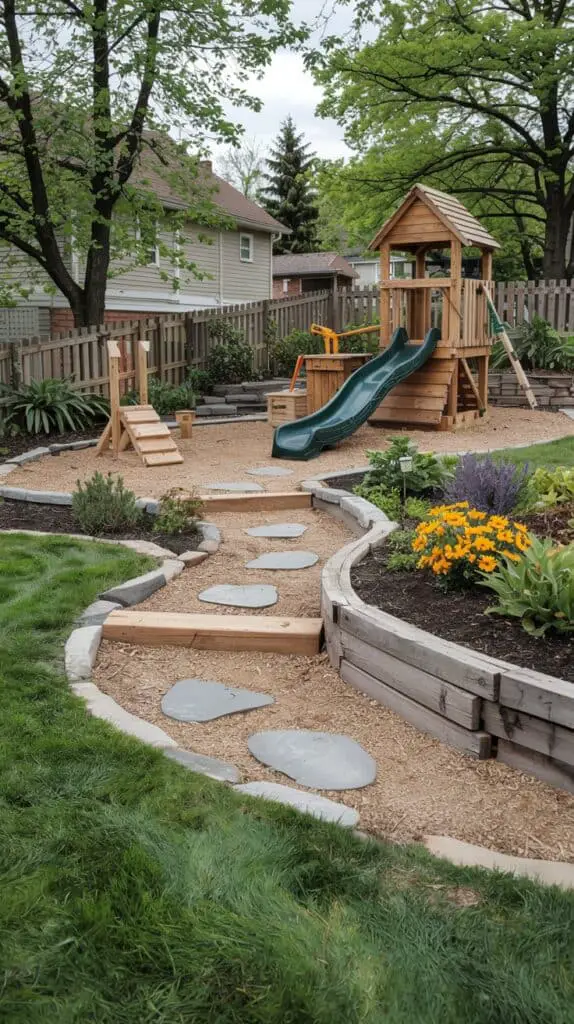
Sloped yards naturally invite movement. Instead of forcing everything into flat rectangles, lean into play ideas that benefit from elevation changes. Slides, climbing paths, stepping logs, and rolling spaces all feel more intuitive on a slope.
Backyard playground ideas for uneven ground often work best when they’re broken into zones. One lower zone might be for active movement, while an upper zone becomes a quieter outdoor learning space. This separation helps toddlers and older kids share the yard without constant overlap.
Avoid tall, top-heavy structures unless they’re professionally anchored. Low-profile builds feel safer and are easier to modify later. Think wide steps instead of ladders, platforms instead of towers, and pathways instead of single access points.
Basic Power Tools That Make Sloped Builds Easier
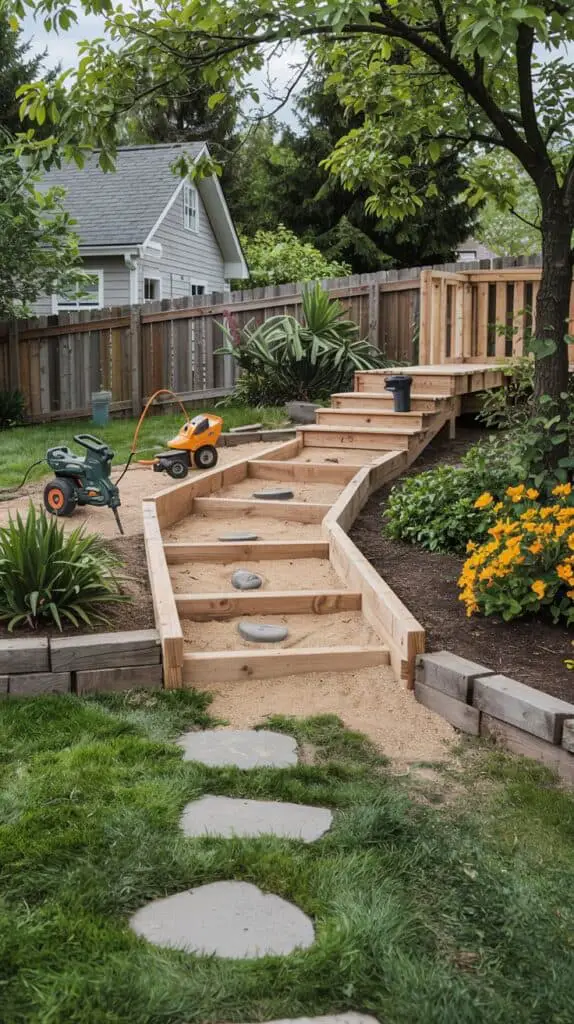
You don’t need a full workshop to build outdoor playscapes, but a few reliable power tools make the process safer and more efficient. A circular saw or miter saw helps create clean, even cuts for steps and platforms. A drill/driver with adjustable torque is essential for controlled fastening, especially when working near edges.
For light grading or removing roots, a compact electric reciprocating saw or oscillating multi-tool can be more precise than hand tools. If you’re renter-friendly or noise-conscious, battery-powered tools reduce cords and limit disruption.
Always build slower than you think you need to. Slopes amplify mistakes, so double-check measurements and dry-fit pieces before securing them permanently.
Creating Terraced Play Levels Instead of One Flat Surface
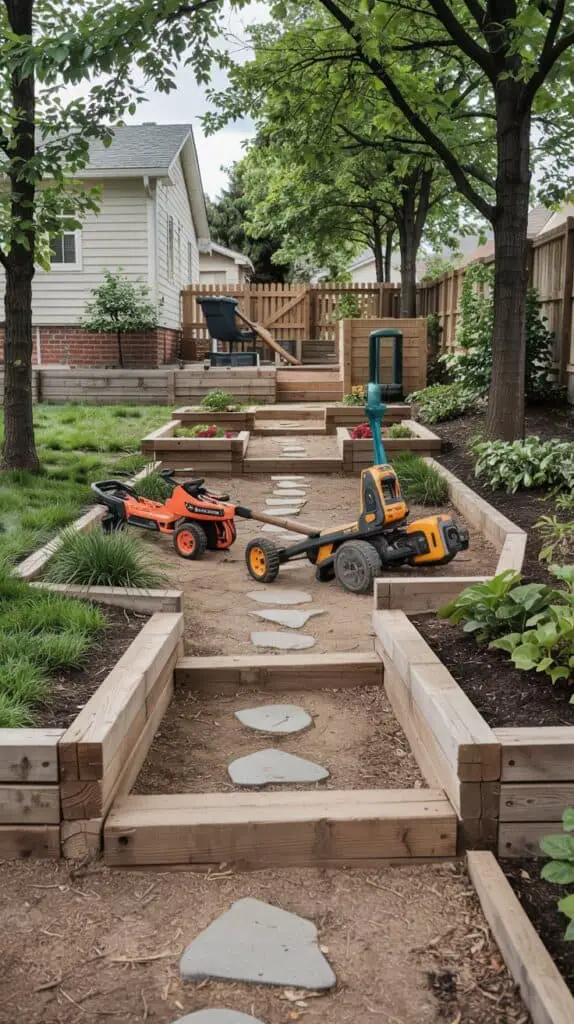
Terracing is one of the most effective ways to transform a slope into usable outdoor play areas for toddlers and older kids alike. Instead of one large retaining wall, create short, shallow tiers that double as seating, steps, or balance features.
Each terrace can serve a purpose. One might hold a sandbox or water table. Another could support a small playhouse or open-ended building materials. By keeping each level under a foot high, you reduce fall risks and make construction more manageable.
Use pressure-treated lumber or rot-resistant wood and anchor each level into the slope using stakes or ground screws rather than deep concrete footings. This approach keeps the build more reversible for renters or families planning future changes.
Building Wide Steps That Double as Play Features
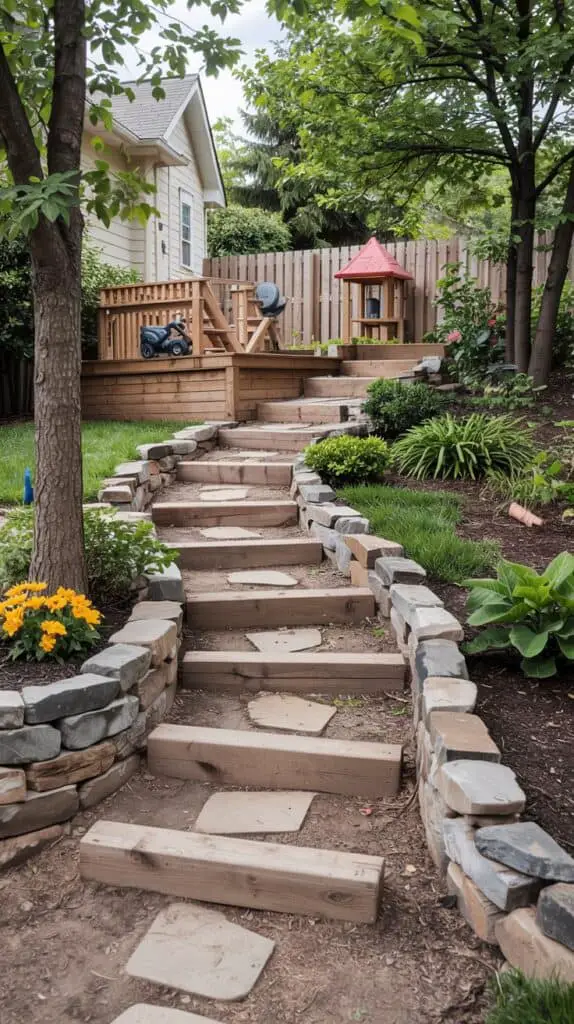
Steps are unavoidable on sloped yards, so they might as well be useful. Extra-wide steps encourage sitting, jumping, crawling, and imaginative play. For toddlers, shallow risers with deep treads feel more accessible and forgiving.
Power tools help keep steps consistent, which matters for safety. Uneven heights can trip kids and adults alike. Use your saw to batch-cut risers and treads so everything matches, then assemble from the bottom up.
These steps can also act as informal outdoor learning spaces. Chalk drawing, sorting games, or storytelling all happen naturally when kids have places to pause and perch.
Using Platforms Instead of Traditional Play Structures
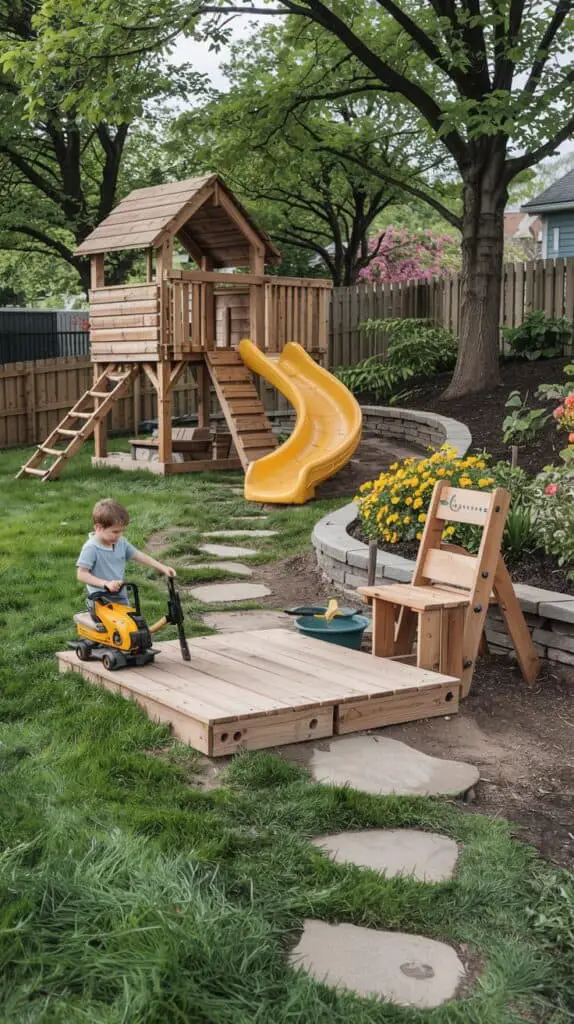
Platforms are an underrated element in kids outdoor play ideas. On a slope, they act as rest points, stages, lookout areas, or bases for future additions. A simple rectangular platform anchored into the hillside can replace bulky playsets.
Platforms should sit low to the ground and be surrounded by soft surfaces like mulch, grass, or rubber mats. Railings aren’t always necessary if heights stay minimal and edges are visible.
Over time, platforms can adapt. Add a slide later, convert one into a mud kitchen, or connect two with a balance beam. This flexibility keeps the kids yard feeling fresh without constant rebuilding.
Incorporating Natural Elements for Balance and Safety
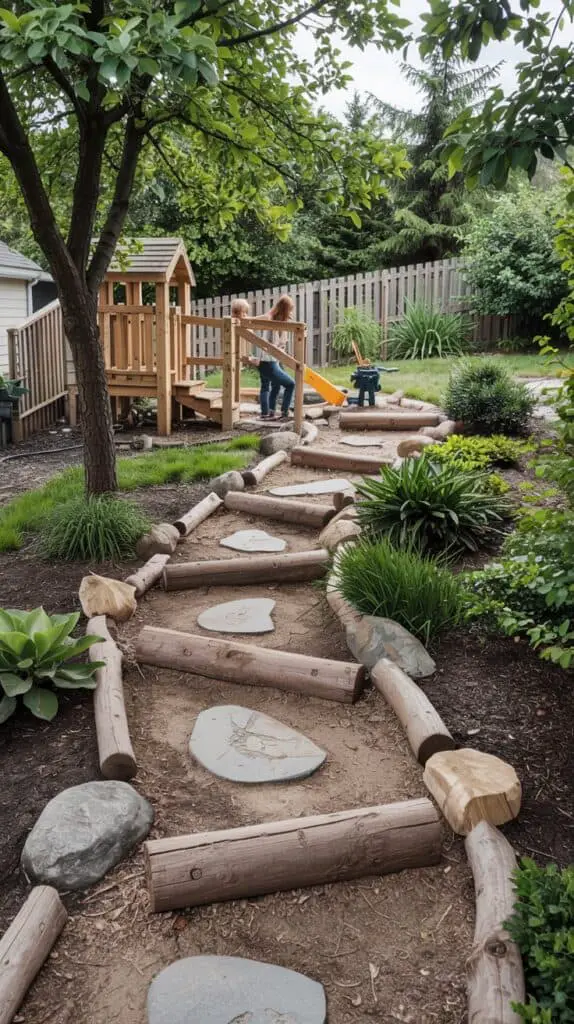
Natural materials work especially well on slopes because they visually soften changes in elevation. Logs, boulders, and compacted dirt paths feel less industrial than plastic or metal and blend into the landscape.
When combined with power tools, natural elements become easier to shape and secure. Trim logs flat on one side so they don’t roll. Pre-drill holes for anchors instead of forcing screws into irregular surfaces.
Natural outdoor playscapes also encourage varied movement. Kids climb, crawl, and balance in ways that fixed equipment can’t replicate, making the space more engaging without adding clutter.
Designing Quiet Zones Alongside Active Play Areas
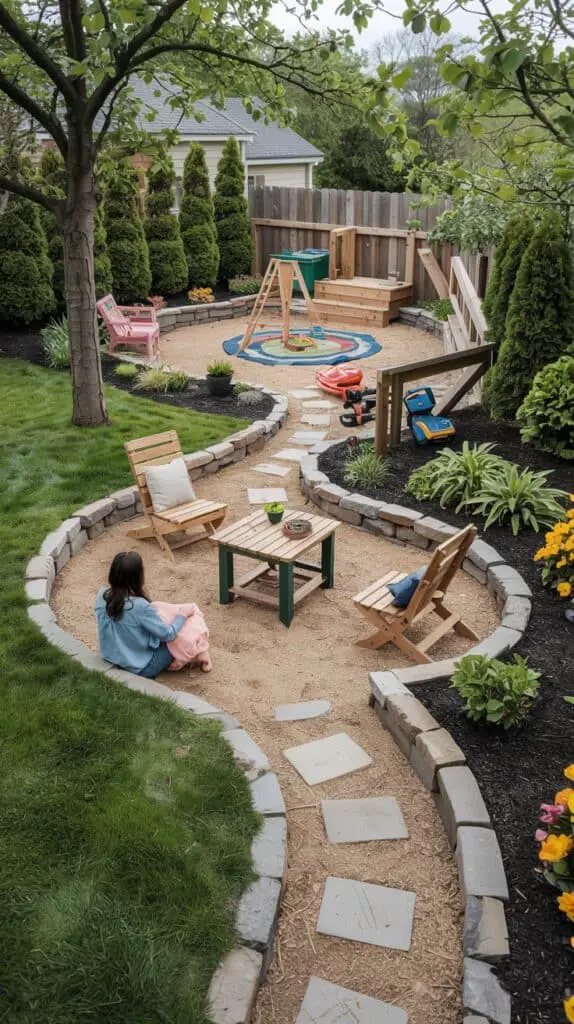
Not every part of a backyard playground needs to be high energy. Sloped yards are ideal for creating tucked-away corners that feel separate from main play paths.
An upper terrace might hold a small table, bench, or outdoor rug for reading and crafts. These outdoor learning spaces give kids a break from constant motion and help siblings of different ages coexist.
Power tools help here too. Build simple shade frames, low fencing, or storage benches that define the space without enclosing it completely. The goal is a sense of place, not isolation.
Making the Space Renter-Friendly and Adjustable
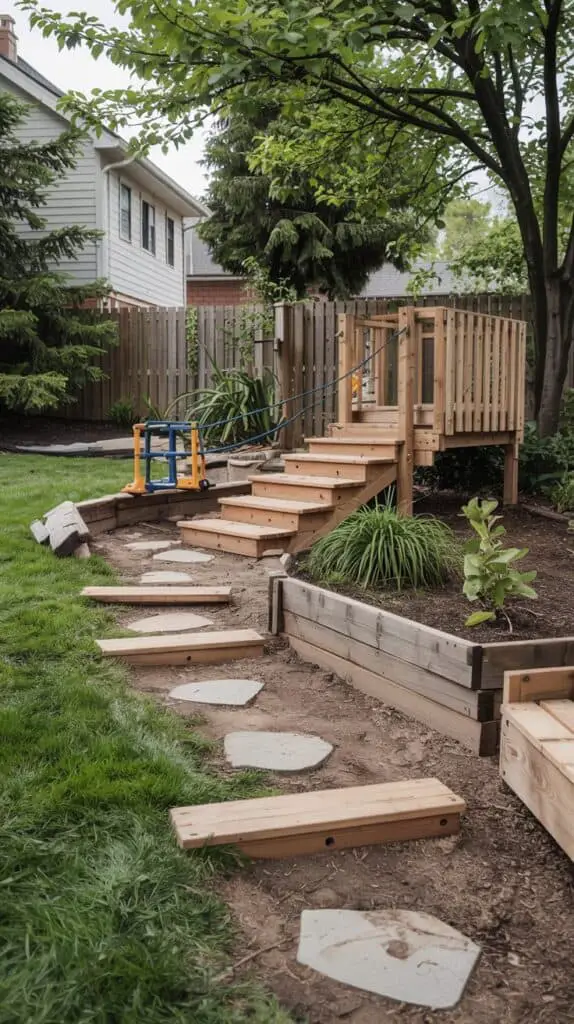
Many families hesitate to invest in backyard play spaces because of rental restrictions or future moves. The key is choosing builds that rely on weight, friction, and shallow anchors instead of permanent foundations.
Freestanding platforms, modular steps, and surface-mounted rails can often be removed with minimal impact. Avoid cutting into existing trees or pouring large concrete pads unless you’re confident the space is long-term.
Design everything so it can shift. As kids grow, a toddler-focused zone can become a climbing area or seating space. This adaptability makes the initial effort feel worthwhile.
Keeping Visual Calm in a Busy Play Yard
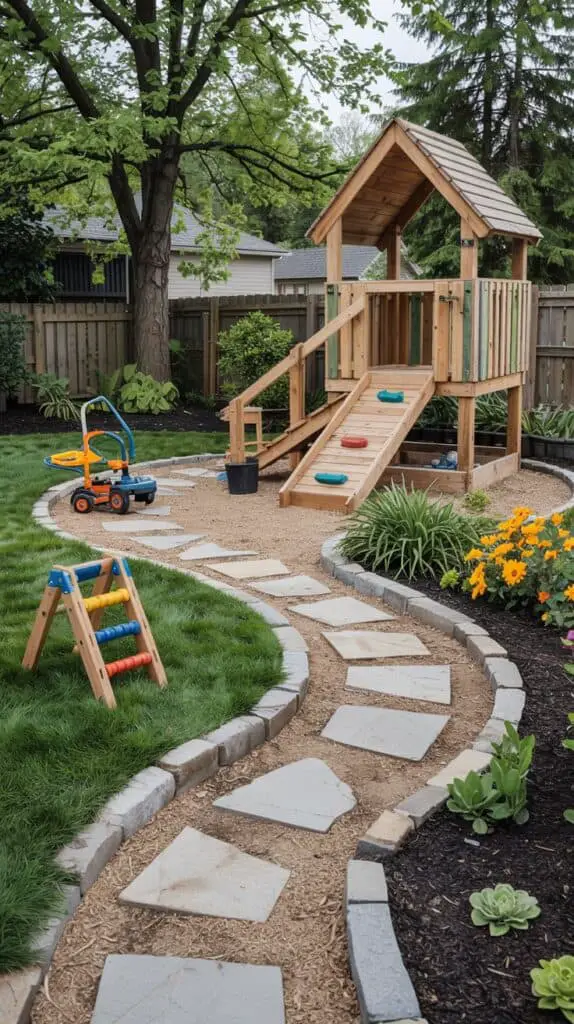
Sloped yards already have visual complexity, so restraint matters. Choose a limited color palette and repeat materials across zones to create cohesion. Too many textures or bright colors can make the space feel chaotic.
Store toys out of sight when possible. Built-in benches with lift-up lids or under-platform storage keep the kids yard usable without constant mess.
A visually calm backyard playground feels more inviting to adults too, which means it gets used more often by the whole family.
Planning for Supervision and Sightlines
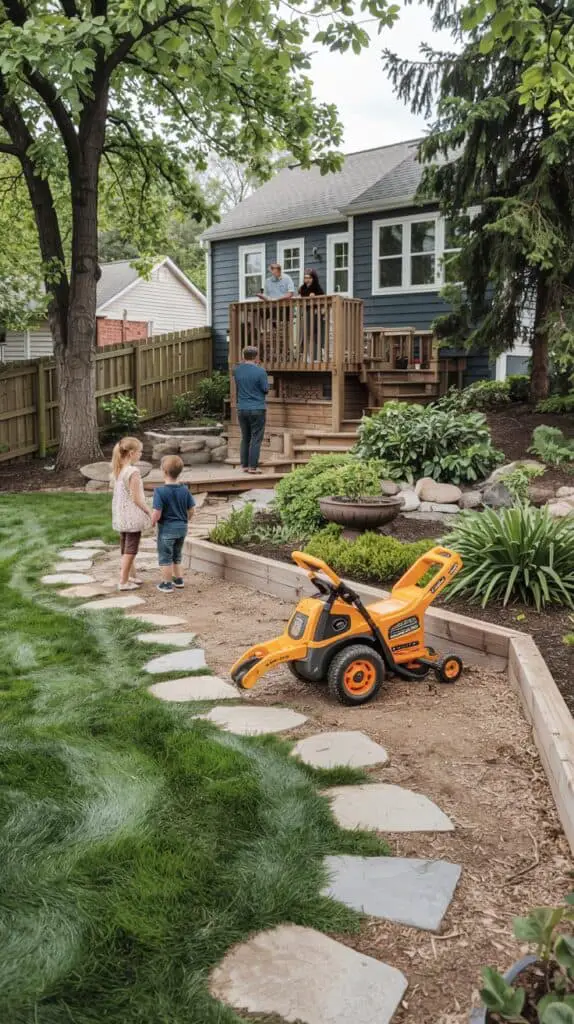
One overlooked aspect of backyard playground ideas is adult visibility. On a slope, it’s easy for kids to disappear behind levels or structures.
When laying out zones, stand where you’re most likely to supervise—inside the house, on a patio, or near a seating area. Make sure key play spots are visible from at least one common vantage point.
Avoid placing tall elements directly in front of each other. Staggering platforms and steps improves sightlines and airflow, making the space safer and more comfortable.
Managing Drainage and Wear Over Time
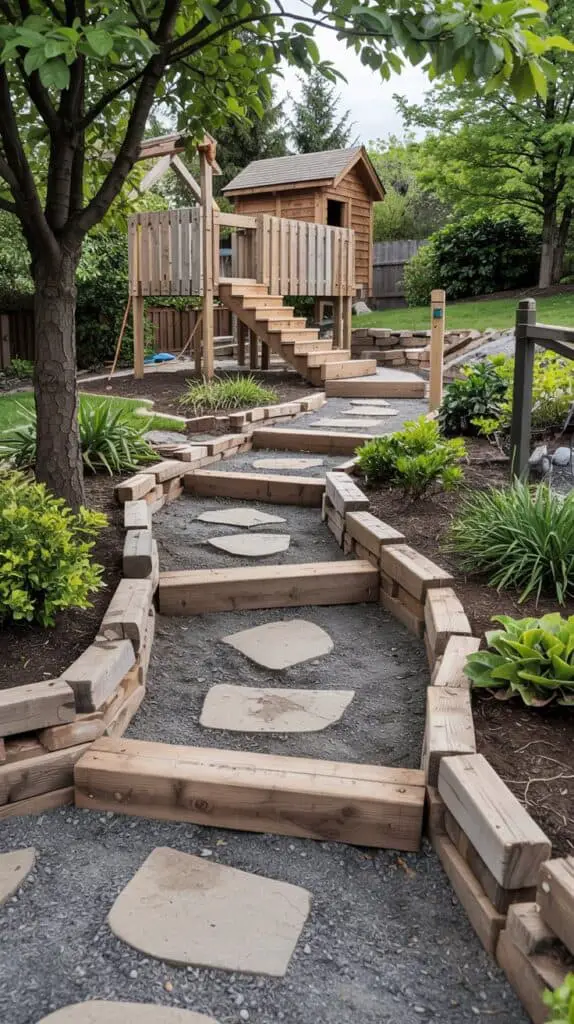
Slopes and water are closely linked. Even the best-built play area can fail if drainage is ignored. Use gravel under steps and platforms to prevent pooling. Angle surfaces slightly so water runs off instead of sitting.
Check high-traffic areas regularly. Kids tend to follow the same paths, which can lead to erosion. Reinforce these routes with stepping stones, compacted gravel, or wooden edging before they become muddy channels.
Ongoing maintenance is part of having outdoor play areas for toddlers and older kids. Small adjustments each season prevent bigger repairs later.
Letting the Play Area Evolve With Your Family
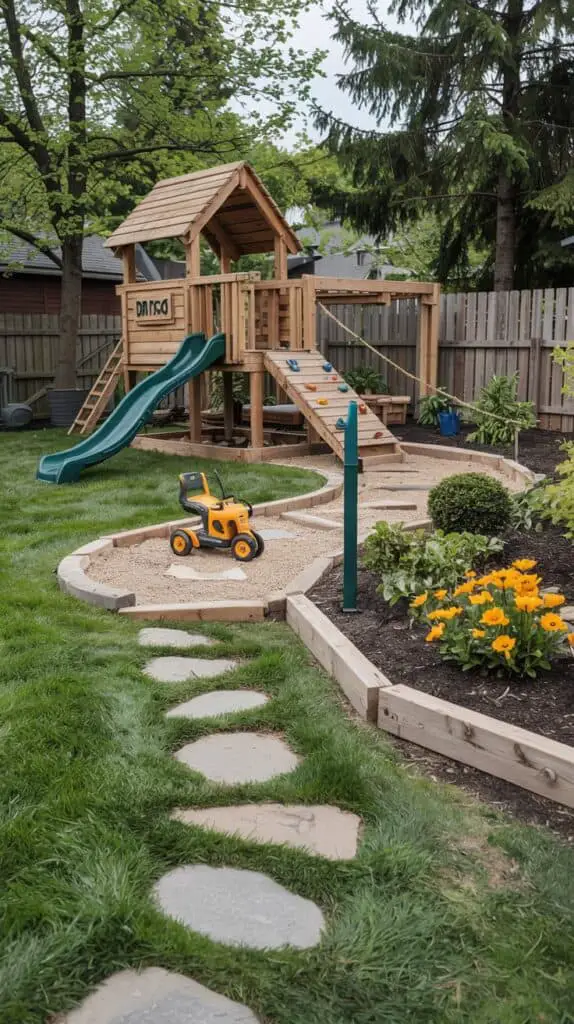
The most successful kids backyard playgrounds are never truly finished. They respond to how children actually use them, not how they looked in the plan.
Start simple. Build the core structures first and live with them for a while. Notice where kids linger and where they rush through. Add features gradually, using power tools to refine rather than overhaul.
This slower approach keeps costs manageable and ensures the space grows in a way that feels natural.
A Realistic Ending to a Real Backyard Project
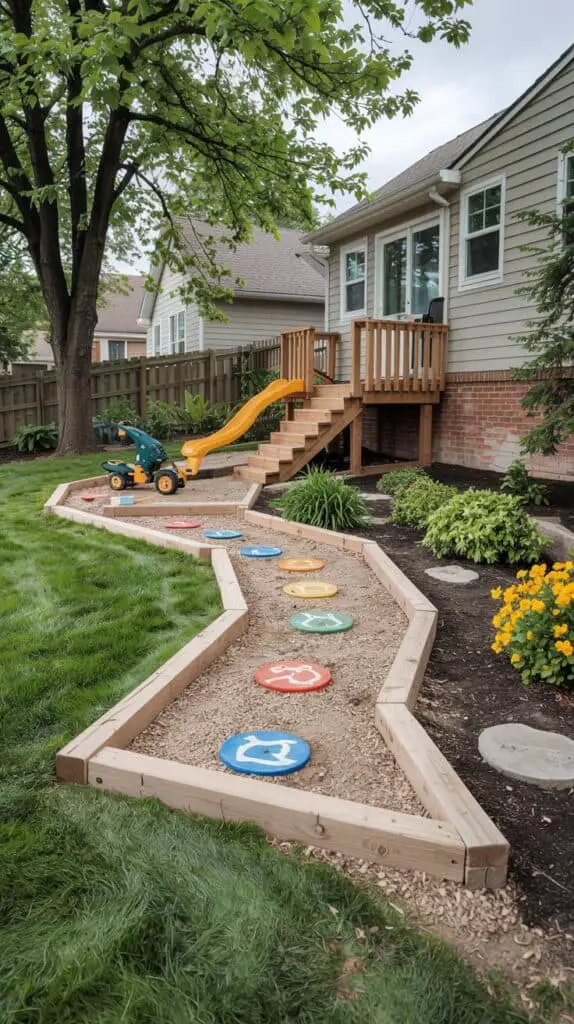
A sloped yard doesn’t need to be flattened or ignored. With thoughtful design, basic power tools, and a focus on how kids move and play, it can become one of the most interesting parts of your home.
These kids outdoor play ideas aren’t about building a showpiece. They’re about creating outdoor playscapes that feel safe, flexible, and grounded in everyday family life. Start where you are, build what you need, and let the space change along with your kids.