
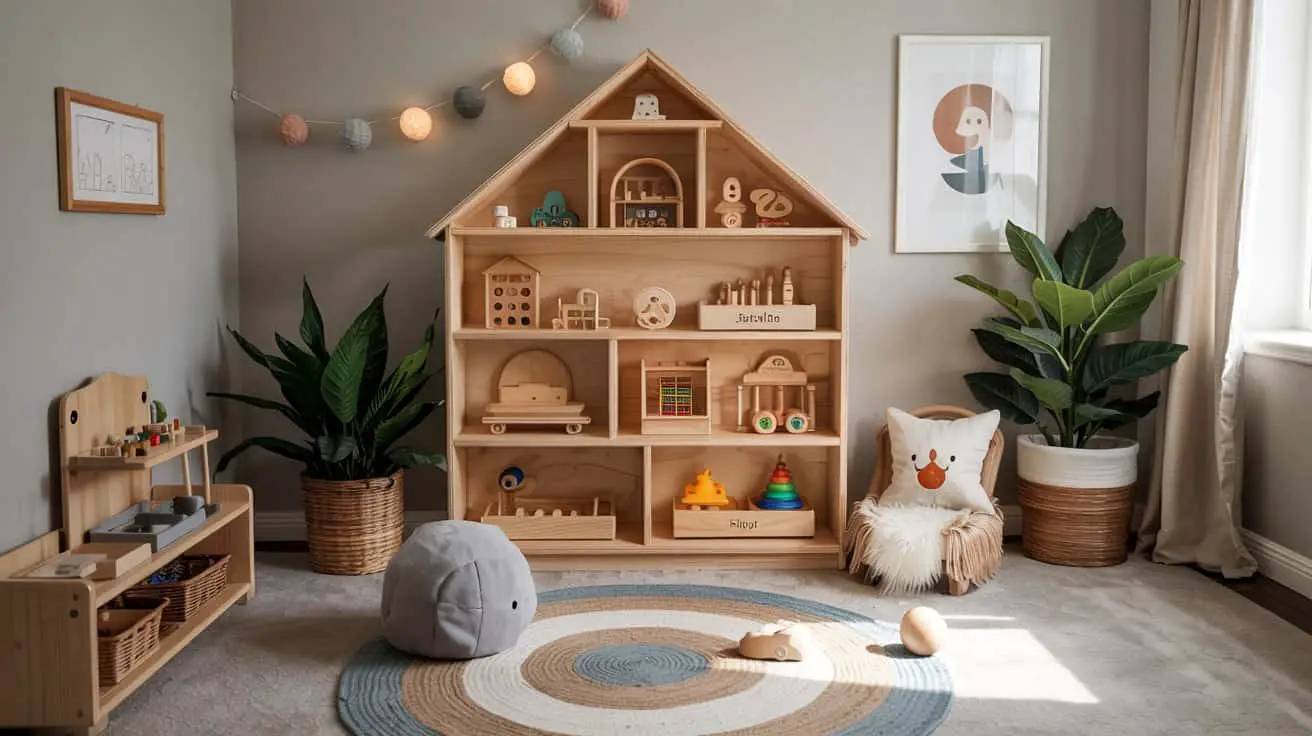
There’s a funny kind of chaos that comes with parenting — the kind where your living room suddenly turns into a toy explosion zone, and no matter how many baskets or bins you buy, the floor is never clear. I remember once tripping over a toy kitchen set while carrying coffee, and that was the day I decided: we need a system. Not a perfect Pinterest playroom, just something simple that fits real life.
Creating a playroom doesn’t mean building an entire kid-only space. It’s about carving out a small, organized area where your child can play independently — so you can finally drink that coffee in peace. The secret? It’s less about the stuff and more about the setup. Even the tiniest corners can work wonders when designed thoughtfully.
This guide is for the parents who don’t have time for constant toy rotation or fancy color-coordinated bins. It’s about small, functional spaces that look calm, encourage creativity, and actually work for real families. Whether your home’s the size of a dollhouse or you’re just done with clutter, these simple playroom ideas are here to make your life easier (and your floors visible again).
Cool Playroom Ideas That Don’t Feel Overwhelming
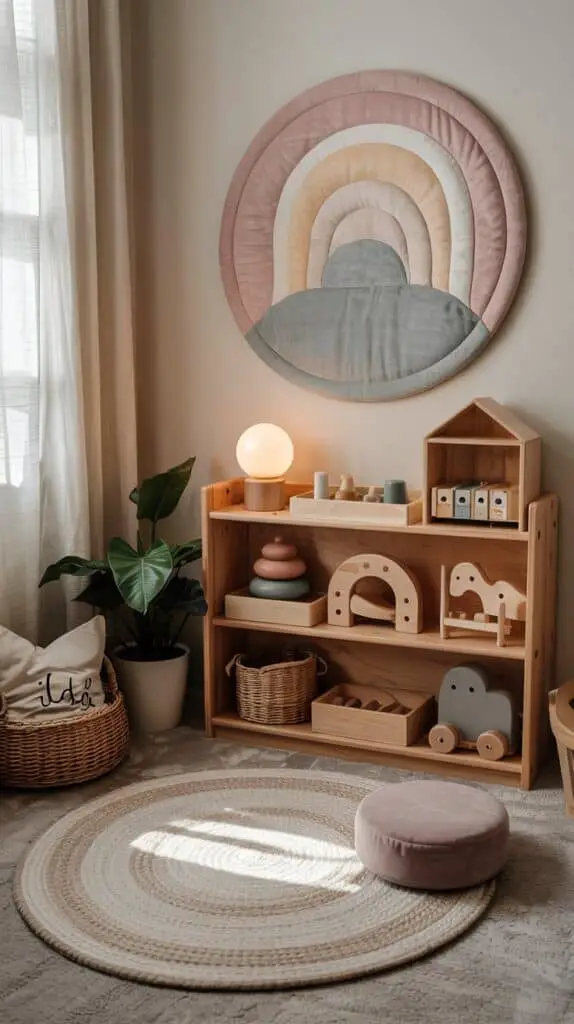
A cool playroom doesn’t need neon walls or ten different toy themes. In fact, the “cool” comes from simplicity and cleverness. Choose a few design details that make the space feel intentional — like a pegboard wall for hanging dress-up clothes or a cozy floor nook under a canopy.
Stick to neutral colors with one or two fun accents, like mustard yellow or forest green. The goal is to make the room feel calm yet playful. Add textures — woven rugs, soft floor mats, or even an Ikea play tent tucked in the corner. It’s the kind of setup that feels thought-out but still easy to live with.
If your kids are older, consider a small reading zone with beanbags or modular seating. For toddlers, a single low shelf with open baskets works wonders. Cool doesn’t mean complicated; it just means creating a space that reflects your family’s rhythm, not chaos.
Modular Playroom Ideas for Real Homes
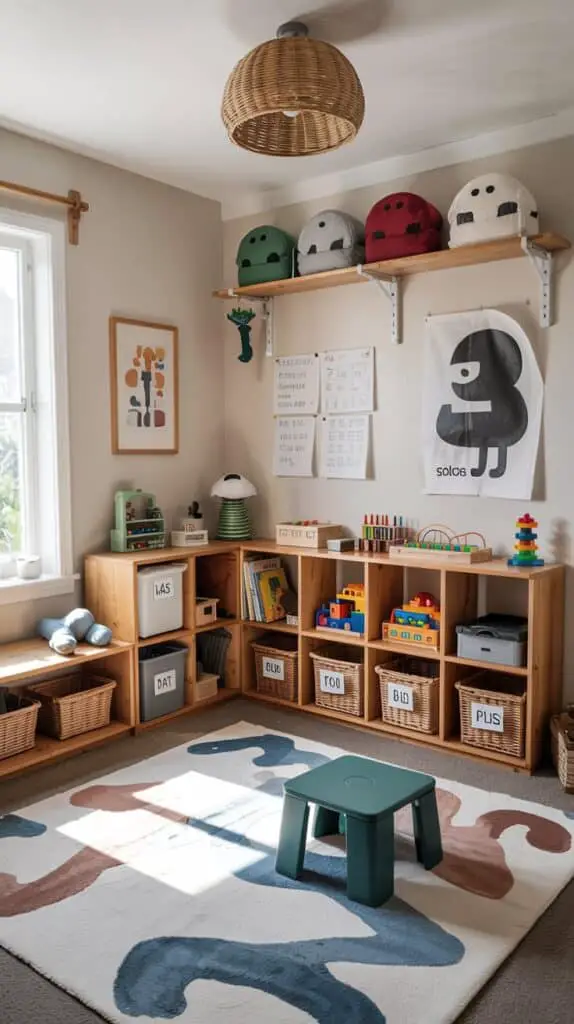
If you’ve ever walked into a home store and thought, “This setup could actually save my life,” you’re not wrong. Modular furniture and simple storage units are a game-changer for busy parents who want a playroom that’s functional without the stress. Think open shelving that doubles as benches, low tables for crafts, and lightweight storage cubes that make cleanup quick and painless.
Use labeled baskets or boxes — one for blocks, one for art, one for puzzles — so kids know exactly where things go. Modular pieces work beautifully in small playrooms because they’re flexible and easy to rearrange as your child grows. Add a little personality with a soft area rug, framed prints, or colorful wall decals that can be swapped out seasonally.
You can even repurpose furniture from other rooms: a short bookcase becomes the perfect toy display, and a sturdy stool doubles as a play surface. The best part? Everything has its place, the room feels calm, and your mornings start just a little bit smoother. It’s simple, minimal, and made for real family life.
Small Playroom Design That Maximizes Every Inch
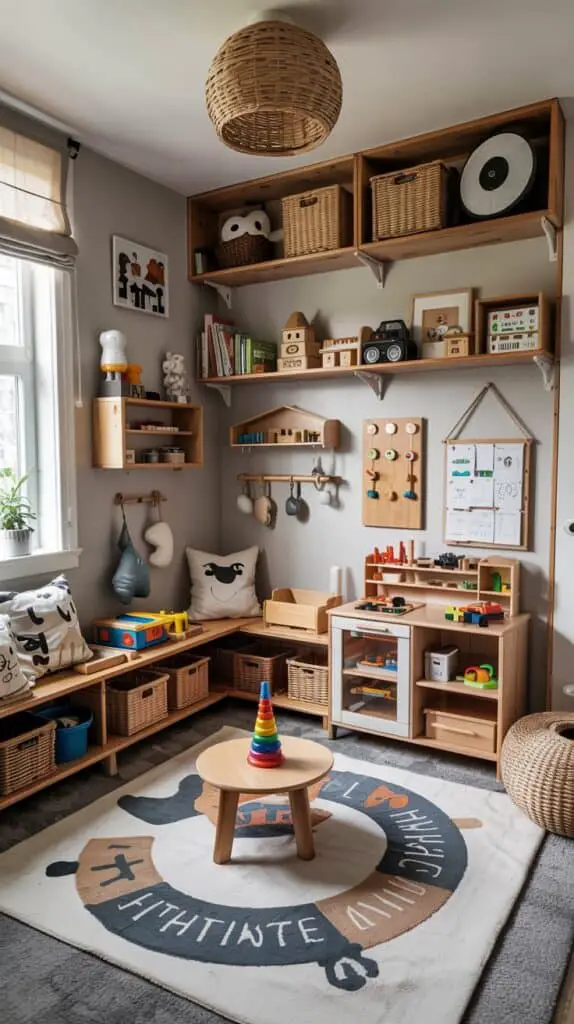
Small homes demand creativity. You don’t need a separate room — just a defined corner that works hard. Focus on vertical space: wall shelves, hooks for hanging toys, and magnetic boards for art. Use low furniture so your child can reach everything, and let storage double as seating when possible.
Mirrors make a small space feel larger, and rugs help zone off the play area visually. Choose a few multi-functional toys like stacking sets or a wooden kitchen that doubles as a learning tool. Keep the layout open enough for movement, and don’t overfill — small rooms look bigger when they breathe.
A trick I love? Match toy storage to your existing furniture palette. If your living room is light wood and beige, keep the play corner cohesive. That way it feels like part of your home, not an invasion of plastic chaos.
Montessori Playroom That Encourages Calm and Curiosity
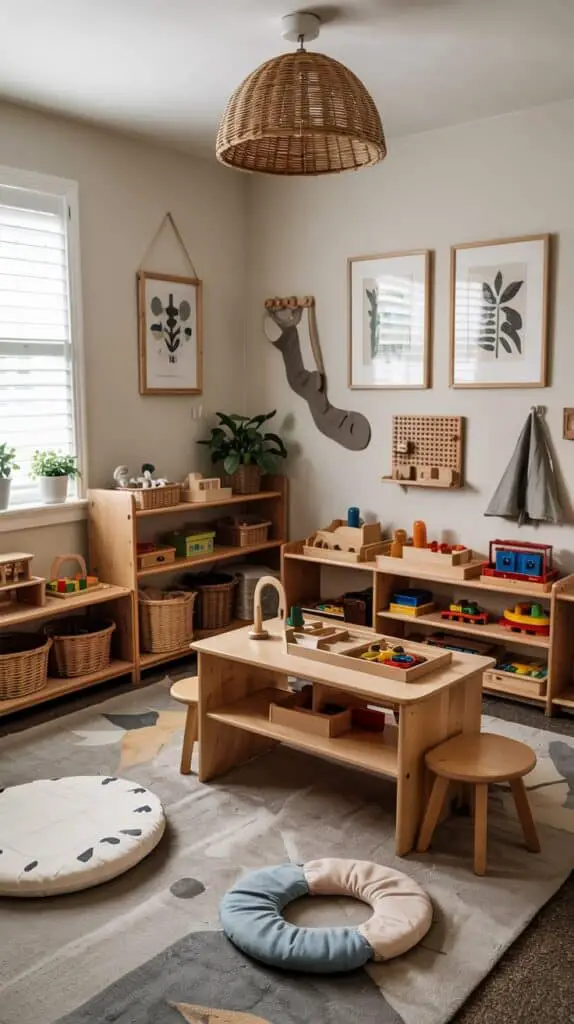
The Montessori approach to playrooms is simple — fewer toys, more purpose. Focus on open shelving, child-height access, and natural materials. Keep only a handful of toys visible, and store the rest away to rotate every few weeks.
Opt for Montessori-inspired furniture like low tables, floor cushions, and soft rugs that invite movement. Avoid flashy colors; stick to earth tones and materials like wood, rattan, and cotton. This kind of playroom works beautifully for both toddlers and preschoolers because it encourages focus and independence.
If you’re short on space, merge it with another room — a Montessori play corner in the living room or a small nook in a bedroom. Add simple wall art or nature prints to tie it all together. It’s peaceful, timeless, and surprisingly easy to maintain.
Cute Playroom Ideas That Still Feel Practical
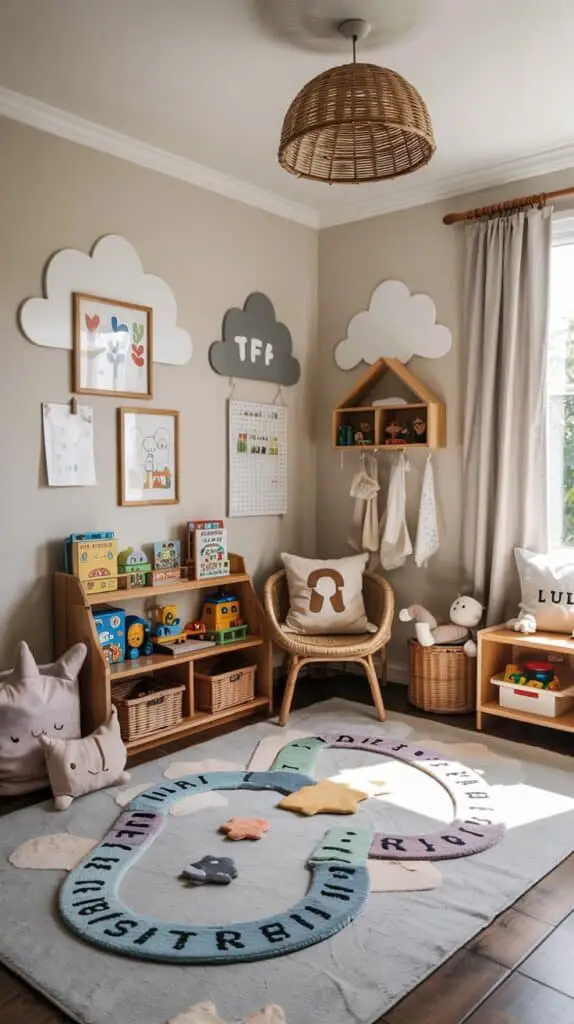
If you love a bit of charm, cute playroom ideas can be both stylish and simple. Think soft pastels, whimsical prints, and cozy corners. Add a mini gallery wall of your child’s artwork or a cloud-shaped shelf for books. A small play rug in a fun pattern can instantly brighten the space without cluttering it.
Choose one statement piece — maybe a teepee, a rattan chair, or a bold toy shelf — and keep everything else subtle. Cute doesn’t have to mean busy. A neutral backdrop with a few pops of personality feels cozy and intentional.
For families with younger kids, soft textures are everything. Think plush floor cushions, fabric bins, and natural light. Cute playrooms feel lived-in and loved, not overly staged. They’re the kind of spaces your kids will remember — simple, happy, and full of warmth.
Baby Playroom Ideas for Small Spaces
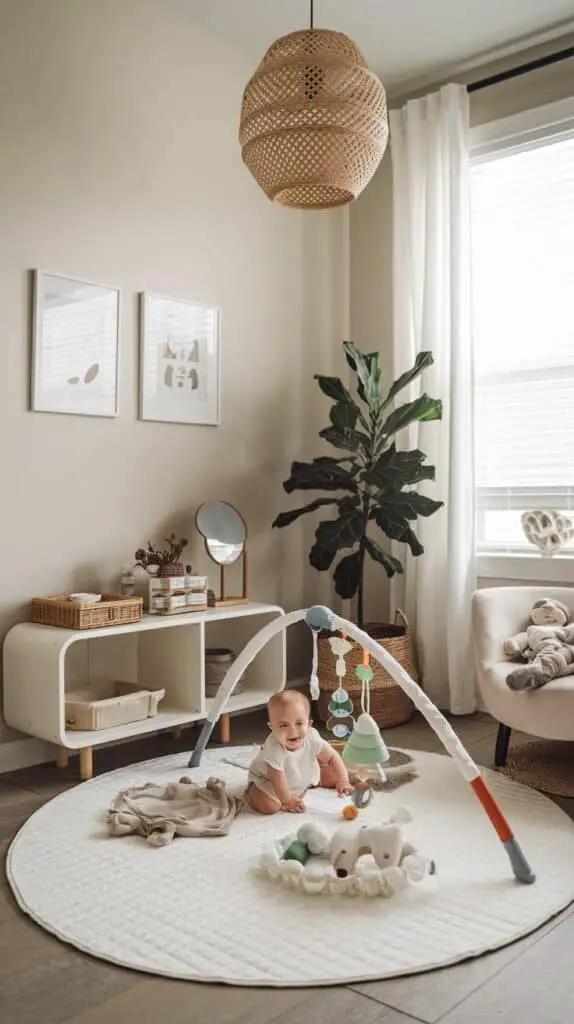
Even the tiniest apartment can fit a baby play area. Focus on safety and softness — a foam play mat, a low shelf, and a few sensory toys are enough. Add a baby mirror, a mobile, or soft hanging toys within reach.
If space is tight, try a foldable mat you can pack away when needed or a small play gym that fits under a window. Neutral tones help the area blend into your home without feeling like a daycare center.
For parents, this setup means less tidying and more connection time. A simple, organized play corner encourages your baby to explore independently while you relax nearby. It’s practical, affordable, and perfect for real family life.
Final Thoughts
Creating a simple playroom isn’t about perfection — it’s about balance. A space that looks good, works well, and gives your kids freedom to play. Whether you’re using IKEA hacks, Montessori ideas, or a cute corner in your living room, what matters most is that it fits your family.
Busy parents don’t need more things — they need smarter spaces. And once you set up a calm, organized play zone, something amazing happens: playtime becomes peaceful, your home feels lighter, and yes — you might even find your living room floor again.