
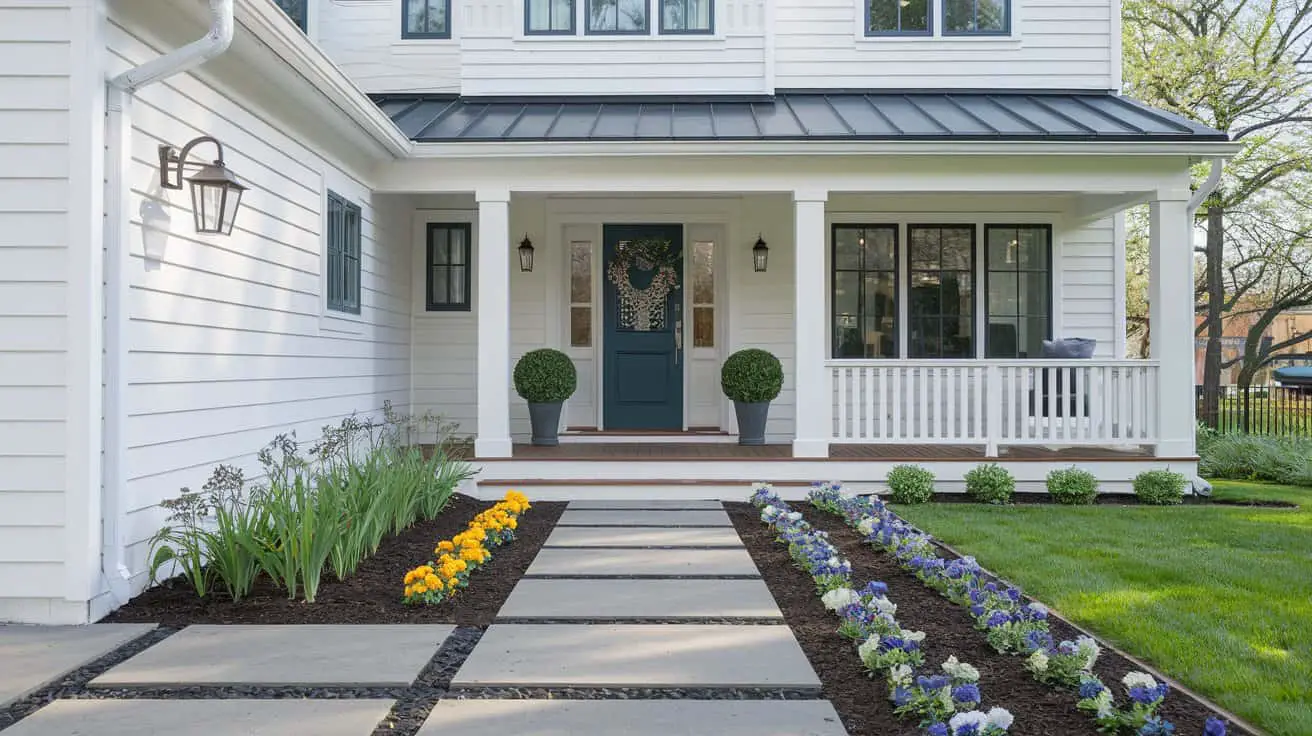
Spring has a way of making the yard feel like it’s calling your name. The tricky part is that family life doesn’t pause for a landscaping project, and budgets don’t magically expand just because the sun came out. If you’re trying to make a family garden feel more usable, more inviting, and easier to maintain without spending a fortune, you’re in the right place.
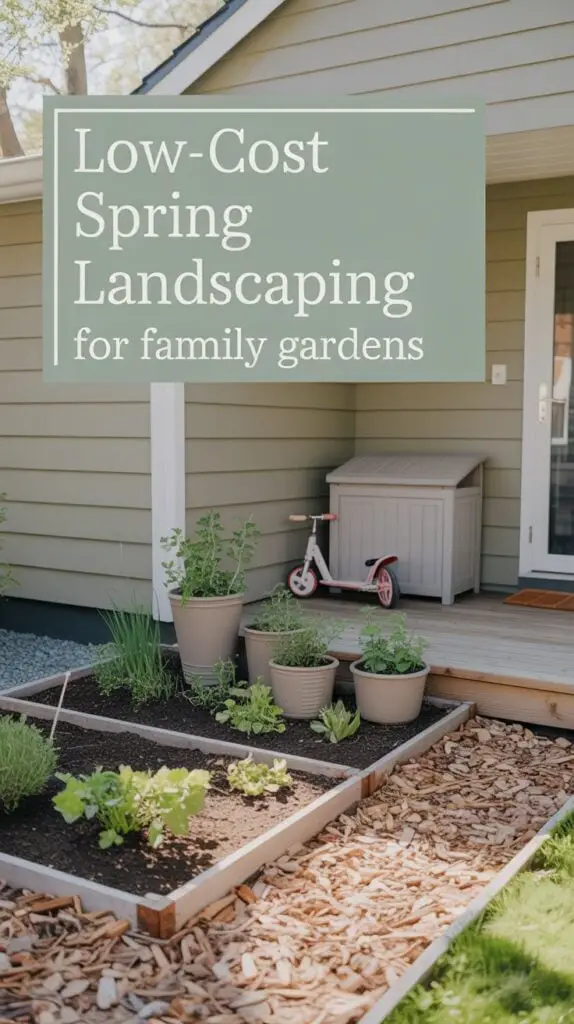
This is budget landscaping for real homes: the kind with bikes leaning by the door, a dog that runs the fence line, and a weekend schedule that’s already full. The goal isn’t perfection. It’s creating garden spaces that feel intentional, function well for kids and pets, and are simple enough to keep up with once spring turns into summer.
Start by defining one “home base” garden area
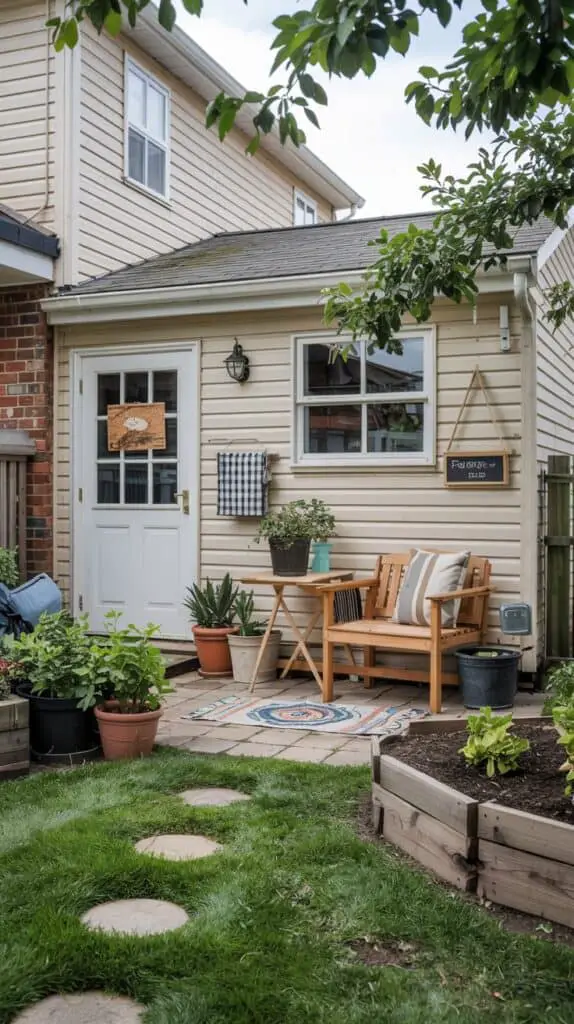
Before you buy anything, pick one spot to become the main garden area. This is the place you want to look “finished” first, even if the rest of the yard takes longer. For families, that home base usually works best where you already pass by: near the back door, beside the patio, or along the path to the shed or trash bins.
Defining a home base does two helpful things for budget landscaping. First, it keeps you from spreading money thin across the whole yard. Second, it gives you momentum—when one area looks pulled together, the rest feels more doable.
Keep it simple: measure the space, take a quick photo, and decide what it needs most. Seating? A safe play zone? A spot for pots and herbs? When you’re clear on the purpose, you spend less on random “maybe this will help” items.
Use “clean edges” as your cheapest visual upgrade
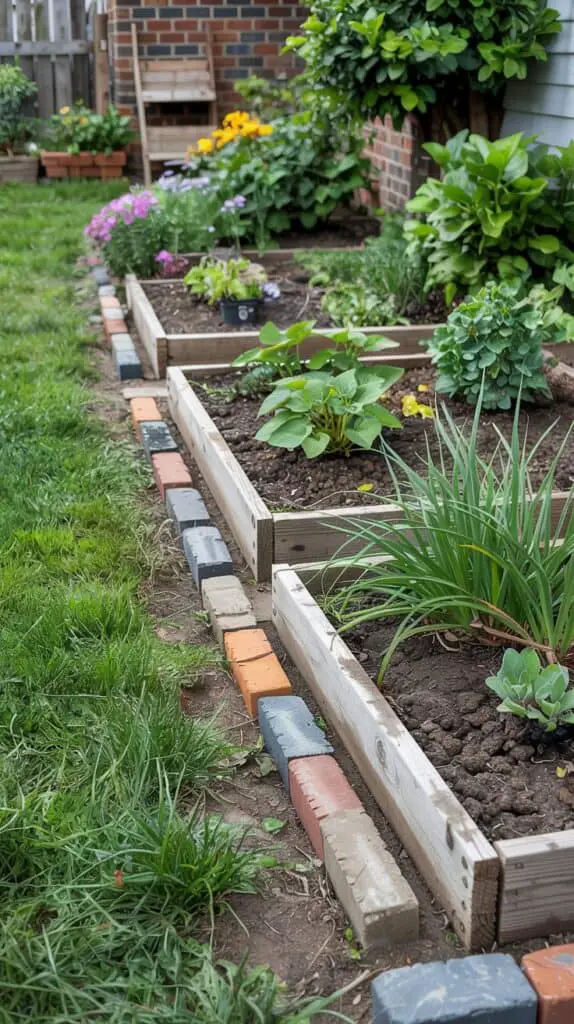
If you want the fastest improvement for the least money, tidy edges are it. Crisp borders make garden spaces look planned, even when the plants are still waking up.
You don’t need fancy materials. Pick one edging approach and repeat it:
- A shallow spade-cut trench between lawn and beds
- Bricks or pavers laid flat (often cheap or free on local listings)
- Short sections of reclaimed wood (sealed or kept off wet soil)
- Simple metal edging if you find it secondhand
For a family garden, edging also has a practical side: it helps keep mulch in, keeps grass out, and creates a clearer “don’t run through this” line for little kids. If you do nothing else this weekend, clean the edges around one bed and notice how much calmer the whole area feels.
Mulch strategically instead of trying to cover everything
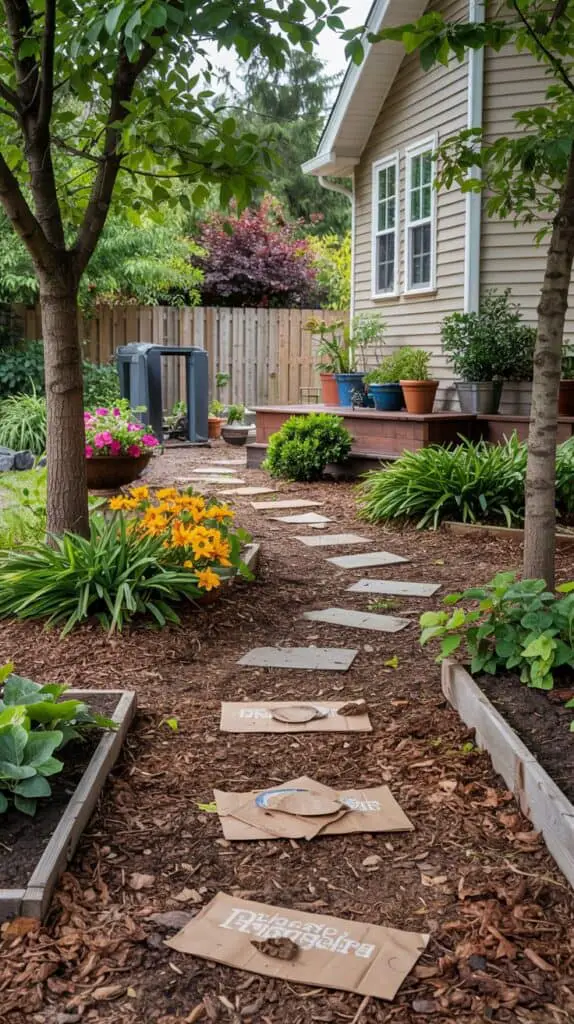
Mulch is one of those costs that adds up fast if you try to do the entire yard at once. The budget-friendly move is to mulch only where it makes the biggest difference: around the main garden beds, along paths, and in high-visibility spots near the house.
A few ways to keep mulch costs low:
- Buy in bulk if you have a way to transport it (often cheaper than bags)
- Check for free or low-cost municipal mulch programs
- Use fallen leaves as a “brown” layer in less visible areas
- Use cardboard under mulch to reduce weeds and stretch coverage
If you’re working around kids and pets, choose mulch with comfort and safety in mind. Avoid anything sharp or splintery where kids might sit or where pets like to dig. Keep it contained with edging so it doesn’t migrate into play zones.
Build a simple path that protects your plants and your patience
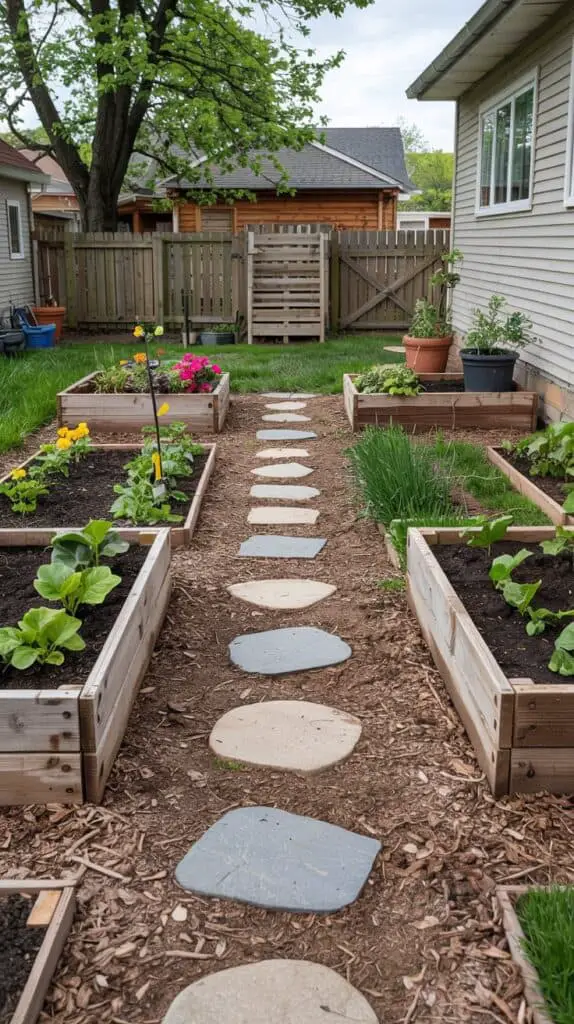
In spring, the yard gets muddy, the kids cut corners, and suddenly your new seedlings are being stepped on. A clear path solves more problems than it gets credit for.
Budget path ideas that still look intentional:
- Wood chips or mulch path with a defined edge
- Stepping stones spaced for adult strides (kids will hop anyway)
- Salvaged pavers mixed with gravel
- “Grass path” where you just commit to mowing a strip and keeping beds off-limits
If you’re renting, a mulch path is especially renter-friendly—easy to install, easy to refresh, and reversible. If you’re building family garden ideas around how you actually live, a path is what makes the garden area feel usable instead of precious.
Create one kid-friendly zone that doesn’t fight the garden
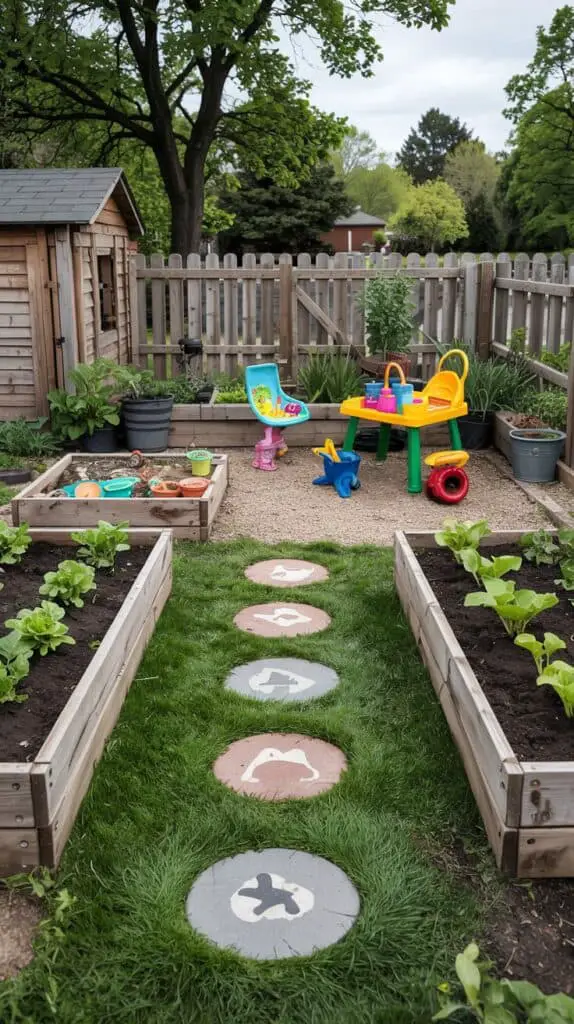
The best family gardens don’t pretend kids won’t be kids. They plan for it. Instead of trying to keep the entire yard “nice,” set up one spot where digging, playing, and dropping toys is allowed.
Low-cost kid zone options:
- A small gravel patch with a few outdoor toys and a storage bin
- A “mud kitchen” made from a thrifted table and old pots
- A stepping-stone hop path that keeps feet out of beds
- A mini plot where kids can plant fast-growing seeds
If you give kids a place to be, they’re less likely to invent a place in the middle of your lettuce. And when the kid zone is near the garden area, you can actually weed or water without feeling like you’re abandoning everyone inside.
Choose plants that feel lush without costing much
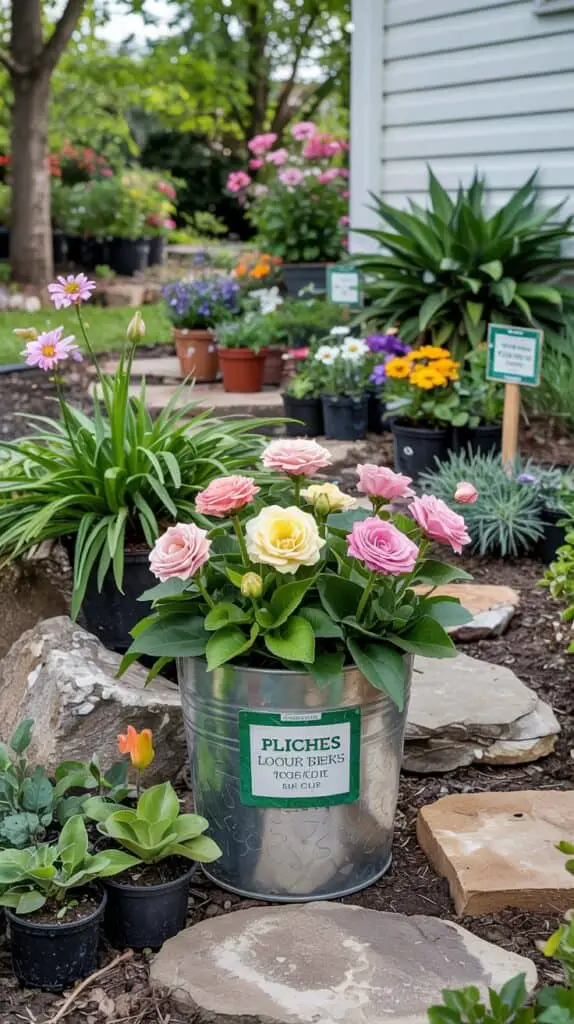
Spring landscaping can get expensive when you buy everything as big, mature plants. To keep budget landscaping realistic, focus on a mix: a few anchor plants, plus low-cost fillers that spread.
Look for:
- Perennials sold in small pots (they catch up)
- Divisions from friends or neighbors (hostas, daylilies, herbs)
- Seeds for quick annual color (marigolds, zinnias, sunflowers)
- Groundcovers that reduce weeding over time (check your region)
The secret is repetition. Even inexpensive plants look cohesive when you plant in small groups instead of one of everything. Pick two or three “workhorse” flowers and repeat them around your garden spaces so it reads as a plan, not a collection.
If pets are part of your household, consider pet-safe options and keep anything questionable out of reach, especially in areas where dogs like to nibble or where toddlers explore.
Make containers pull double duty in a small garden area
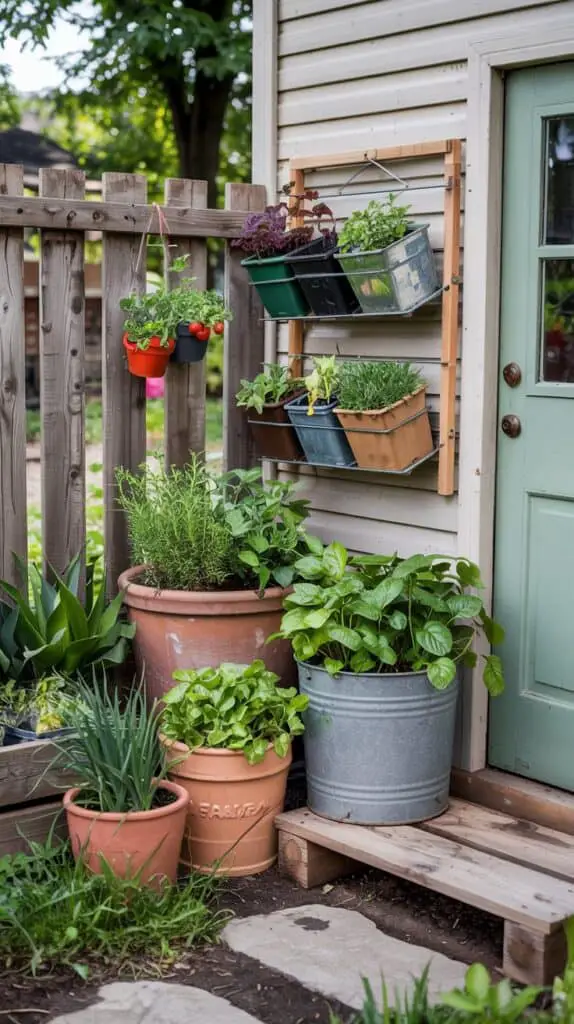
Containers are one of the most flexible family garden ideas because they adapt to renters, patios, and tiny yards. They also let you control soil quality without rebuilding beds.
To keep it low-cost:
- Use food-safe buckets, stock tanks, or sturdy storage bins with drainage holes
- Watch for end-of-season pot sales and reuse year after year
- Group containers in threes or fives for a more intentional look
- Stick to one pot color family so it doesn’t feel cluttered
Containers are great for “high-touch” plants you use often: herbs, salad greens, strawberries, or a cherry tomato that kids can snack on. Place them near the door to make watering easier and harvesting more likely.
If your garden area gets chaotic, containers also help you keep one corner looking tidy even when the rest of the yard is in progress.
Upcycle what you already have before buying “garden decor”
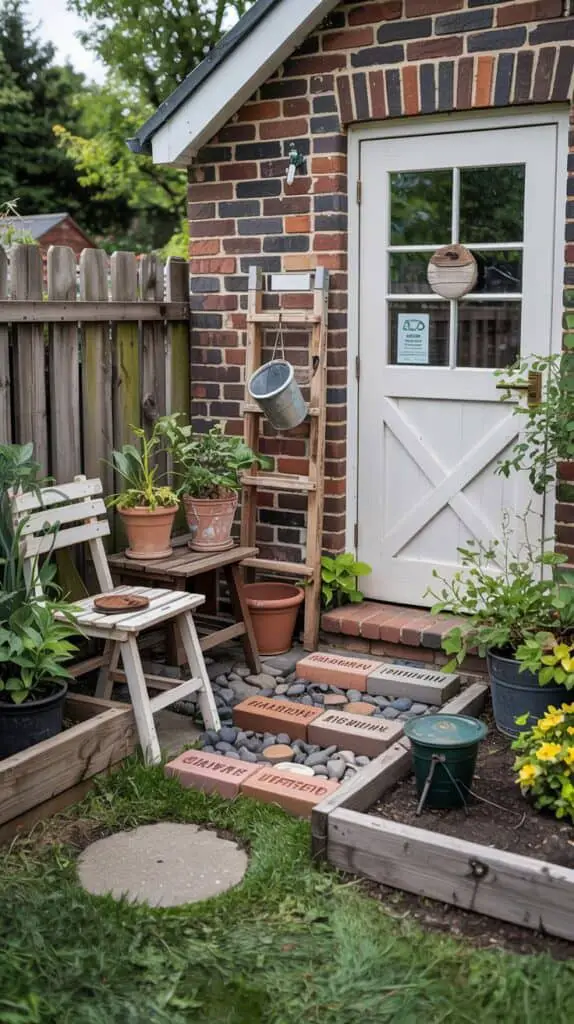
It’s easy to spend money on cute garden accessories that don’t actually improve daily life. A budget landscaping approach asks one question first: will this help the space function better?
Often, what you need is already somewhere in your house or garage:
- Old bricks become edging or stepping stones
- A broken ladder becomes a trellis
- Leftover lumber becomes a low raised border
- Mismatched chairs become a garden seating set with a quick clean and paint
If you want the cozy “garden spaces” look without buying new, focus on just one or two details that read as intentional: a small bench, a hook for tools, a simple container grouping, a tidy storage bin. When you keep the visual elements limited, the whole space feels calmer.
Add vertical growing to increase “garden” without increasing footprint
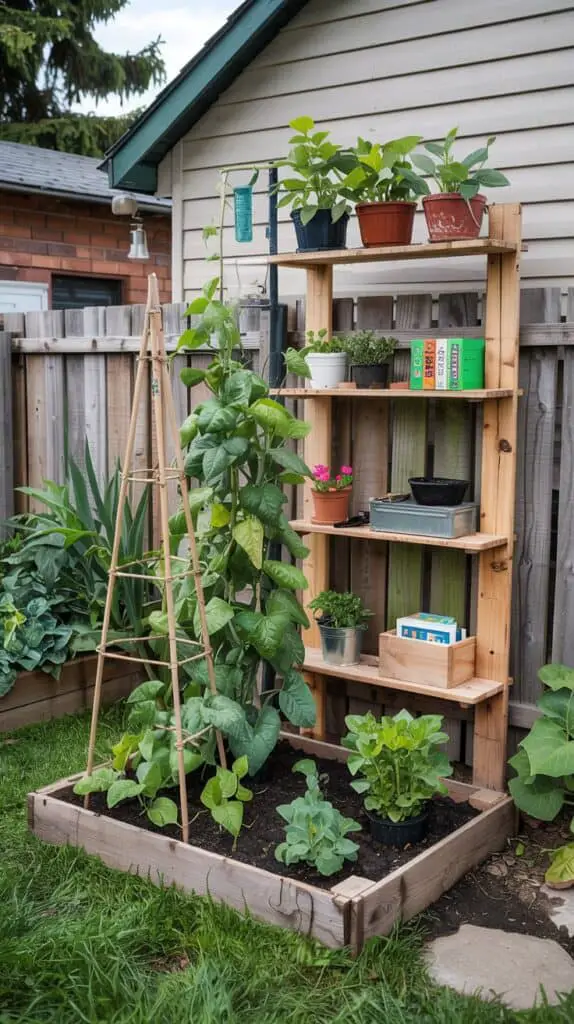
If you’re working with a small yard, shared outdoor space, or a rental patio, vertical growing is how you get more garden without taking away play space.
Low-cost vertical options:
- Cattle panel or wire mesh attached to posts (great for beans)
- Bamboo stakes tied into a teepee
- A simple string trellis from a fence or railing
- A repurposed bookshelf (outdoor-safe) for small pots and supplies
Vertical growing is also kid-friendly because it makes the garden feel like a space to explore. Beans and peas climbing up a trellis are more interesting than plants hugging the ground. And when you grow upward, you keep pathways clearer and reduce accidental stepping.
Use “zones” to make family garden ideas feel organized, not crowded

When a yard feels messy, it’s usually not because there’s too much stuff—it’s because there’s no clear organization. Zoning fixes that. Think of your outdoor space like rooms:
- A garden area for planting and harvesting
- A play zone for kids
- A pet path or potty zone (if needed)
- A sitting spot for adults
- A storage corner for tools and bins
Even if each zone is small, the separation makes everything feel more intentional. You can create zones with nothing more than mulch, a line of pots, a change in ground material, or a simple border.
This is especially helpful for renters, because zones can be created without permanent changes. A few containers and a defined path can reshape how the whole yard functions.
Refresh the front edge of the house with “small but visible” changes
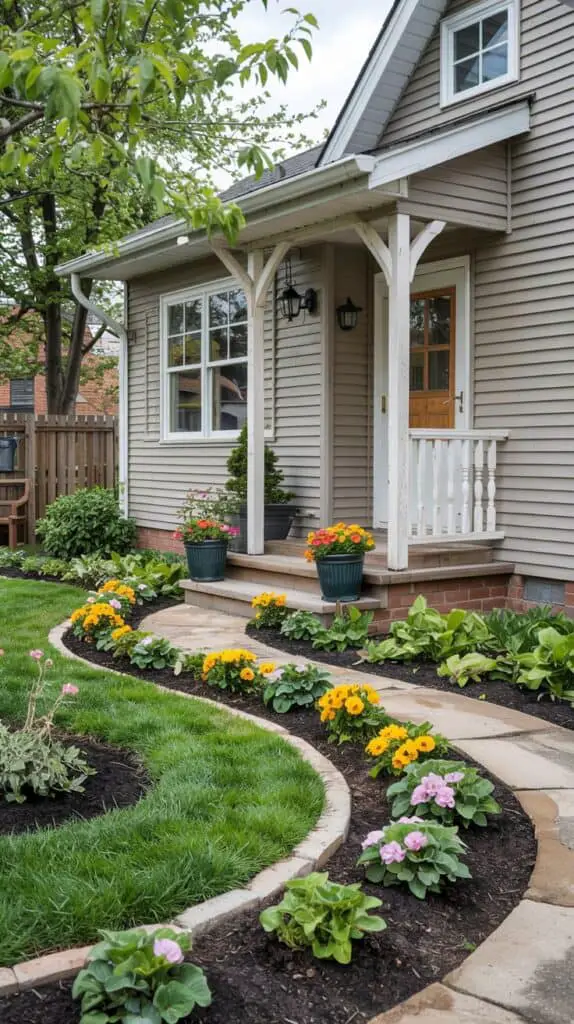
If your goal is a spring refresh that feels satisfying, focus on the first thing you see. Often that’s the front edge of the house, the walkway, or the small strip by the porch.
Low-cost upgrades that make a big difference:
- Pull weeds and redefine the bed line
- Add a fresh layer of mulch just in that area
- Plant one repeating row of hardy flowers
- Add two matching containers by the entry (even if they’re secondhand)
You don’t need a full redo. One clean, simple area can carry the whole look. If you’re trying to keep garden spaces visually intentional, this is one of the best places to spend limited time and money.
Keep it realistic with a maintenance plan you can actually do
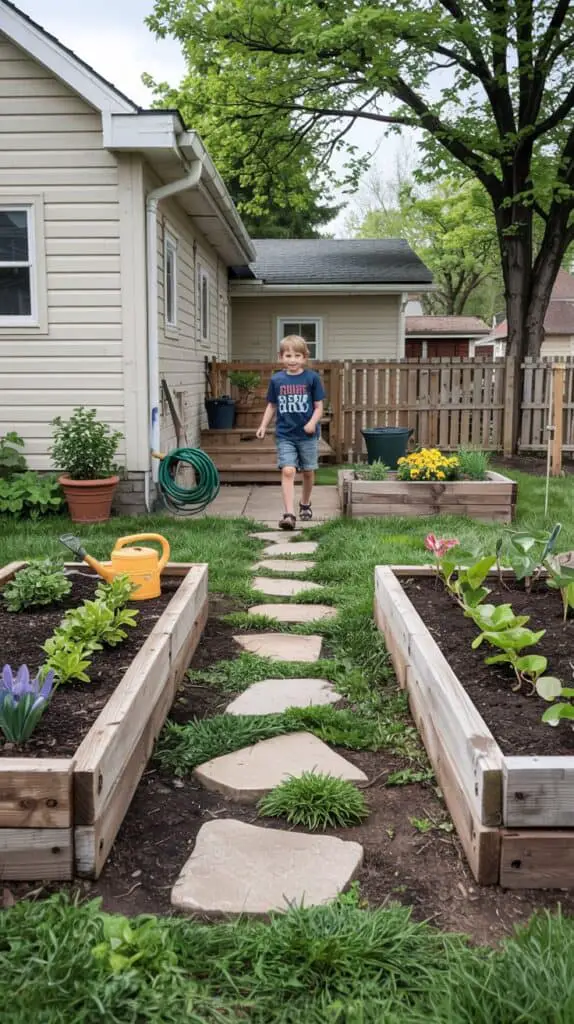
The best budget landscaping idea is the one you can keep up with when spring gets busy. Before you add more beds or more plants, set up a simple routine that fits family life.
A realistic maintenance rhythm might look like:
- Ten-minute tidy after dinner twice a week (pull a few weeds, pick up toys)
- A weekend water-and-check walk with the kids
- One “reset day” per month to refresh mulch, trim, and re-edge
If you want your family garden to stay enjoyable, aim for low-friction systems: a place to store tools near the garden area, a hose that reaches without a fight, a watering can where you’ll actually use it. A little planning here saves money later, because you’ll replace fewer plants and redo fewer projects.
Conclusion
Spring doesn’t need a big budget to feel fresh. With a few smart moves—clean edges, a defined garden area, simple paths, and organized zones—you can create garden spaces that work for kids, pets, renters, and busy schedules. Budget landscaping is really about choosing upgrades that add function and calm, not clutter. Start with one visible area, build from there, and let your family garden grow into the space your life already needs.