
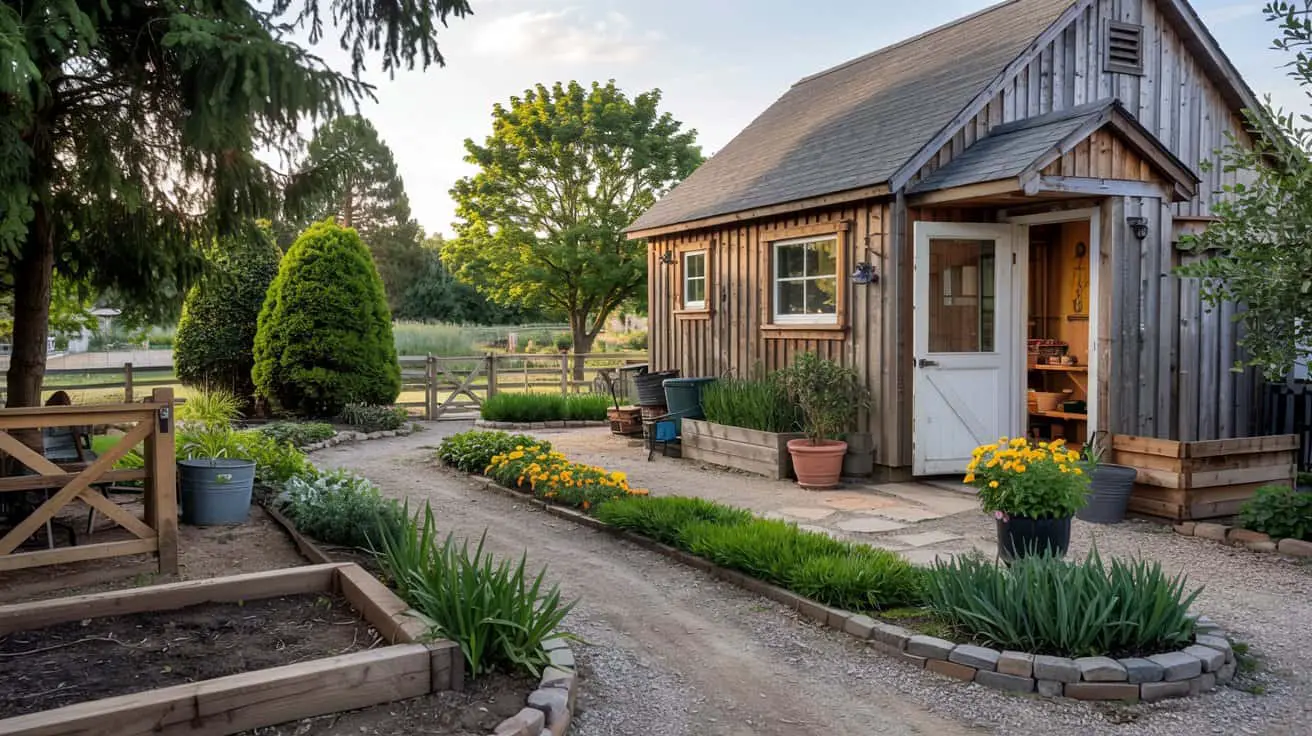
Mediterranean Landscaping can feel like a cheat code for a busy homestead: it looks calm and sun-warmed, but it’s also naturally suited to heat, wind, and “I don’t have time to baby this” seasons. The trick is making that dreamy, slow living aesthetic work with real life—mud near gates, kids running laps, pets digging, animals tracking things everywhere, and the daily back-and-forth between house, garden, coop, and barn.
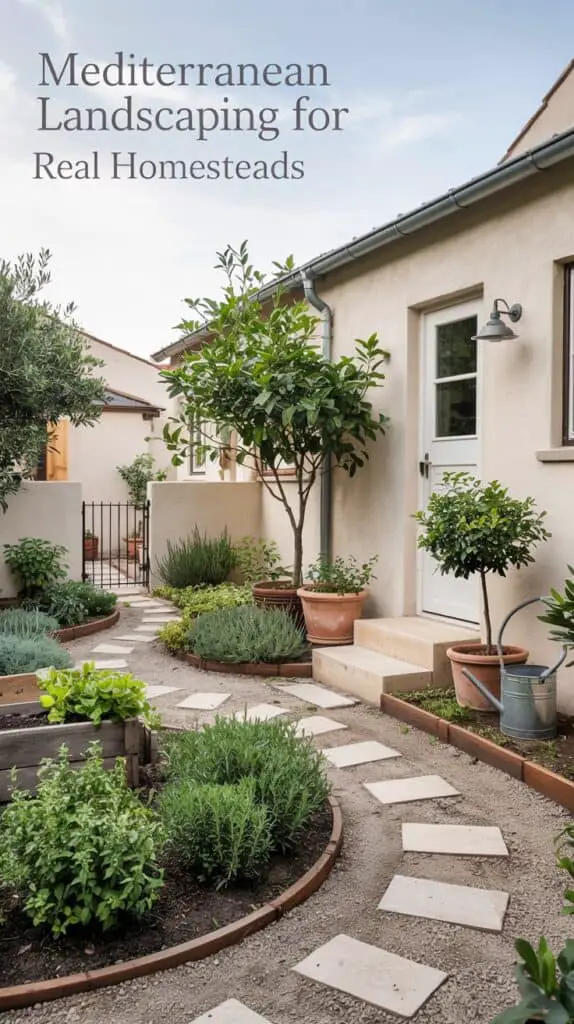
This guide is written for a family homestead design and vegetable garden ideas kind of space: practical routes, tidy edges, and plantings that look intentional without being fussy. Think gravel path loops that stay walkable, herbs you can actually harvest, and olive/citrus vibes that translate even if you don’t live in a true Mediterranean climate.
Start with the “work routes” before the pretty stuff
If you’ve ever tried to “decorate” a yard that still has no clear paths, you know how it goes: everything looks nice for a week, then foot traffic creates new dirt trails and muddy shortcuts. On a small farm or hobby farm, layout comes first.
Walk your property for a few days and notice the default routes: door to driveway, door to vegetable beds, back steps to compost, gate to chicken run, trash bins to curb, kids to trampoline, pets to their favorite corner. Those routes are your framework. Build your Mediterranean Landscaping around them so the tidy look survives chores.
A simple approach that works for a homestead house:
- One main loop path that connects the “daily stops”
- One straight service spur (to compost, bins, feed storage)
- One softer garden stroll path that can be narrower and more scenic
This is where the dream farm feel comes from—not from adding more things, but from making the space feel easy to move through.
Build a gravel path that can handle mud, kids, and wheelbarrows
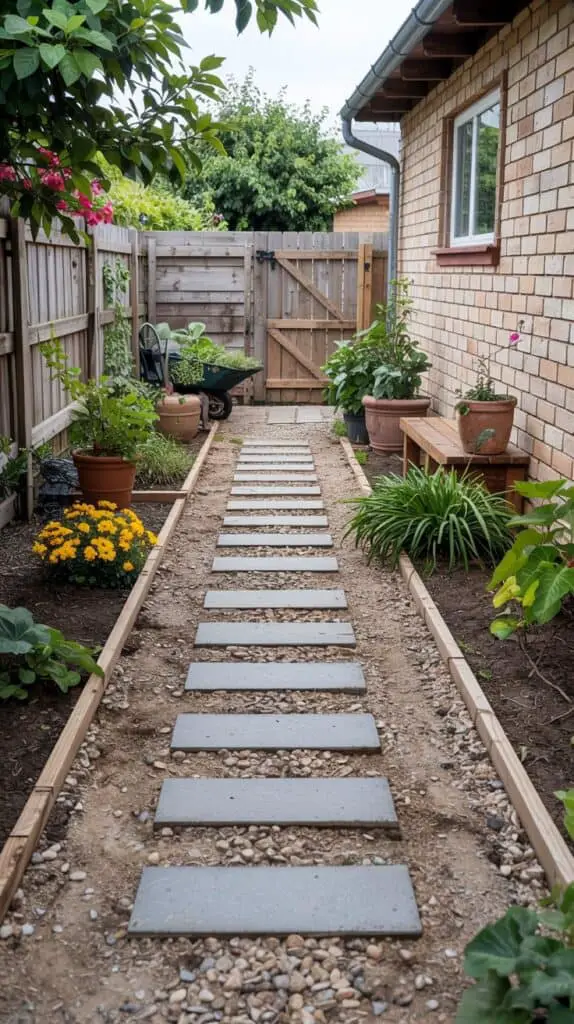
A gravel path is the backbone of the Mediterranean look, and it’s also one of the most practical upgrades you can make for real homestead life. Done well, it keeps shoes cleaner, reduces slipping, and makes the whole yard look more intentional.
For family-friendly function, aim for:
- 36–48 inches wide on main routes (so a wheelbarrow fits comfortably)
- 24–36 inches on secondary routes (garden stroll paths, side runs)
The “stays tidy” recipe (without overbuilding) is:
- Define the edges (metal edging, pavers, brick, or even pressure-treated boards if budget is tight)
- Lay a sturdy weed barrier (especially if you’re fighting aggressive grasses)
- Add a compactable base layer if your soil is clay or your area gets wet
- Top with a gravel that locks together, not round pea gravel that rolls underfoot
If you rent or want renter-friendly options, you can still create a gravel path with minimal digging:
- Use heavy-duty landscape fabric
- Add a thicker gravel layer than you think you need
- Use flexible edging that can be removed later
A small detail that makes the path feel “Modern Mediterranean Homes” instead of “random gravel”: keep it consistent. One gravel tone, one edge style, and repeat it across the property.
Use a courtyard mindset: one calm hub near the house
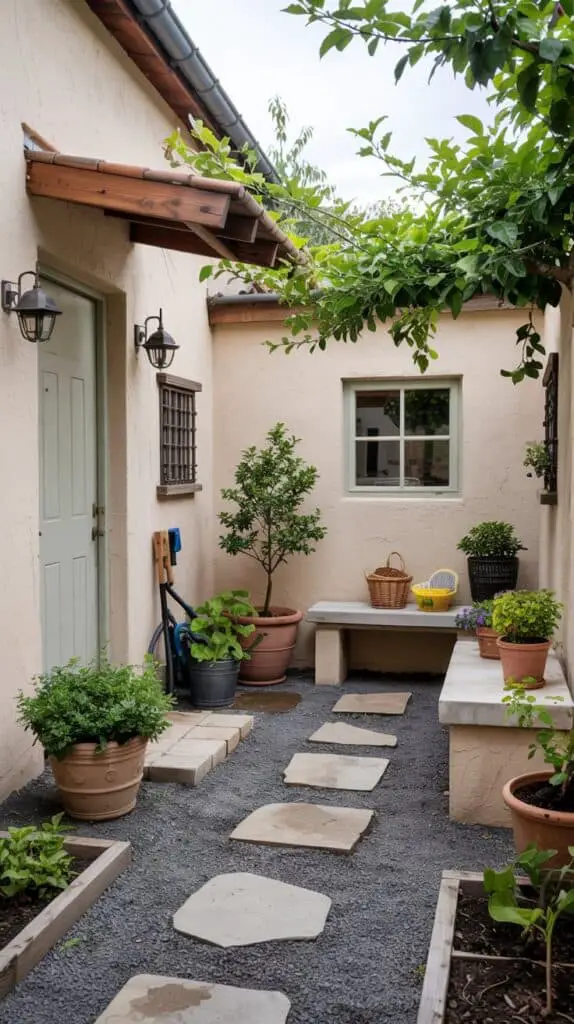
Mediterranean Landscaping often feels like an outdoor room. For a homestead, that translates into one calm hub near the back door—a clean landing spot for muddy boots, garden baskets, and kids who need a snack break.
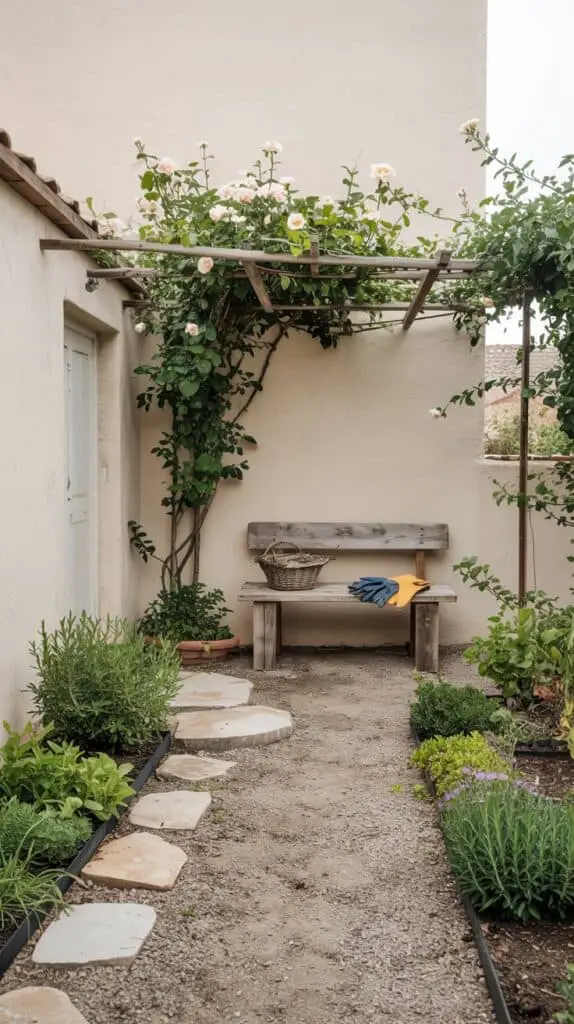
You don’t need a formal patio. A simple gravel pad with a few large stepping stones can read like a modern Mediterranean house courtyard when you keep the elements minimal:
- A gravel base
- A couple of oversized planters (herbs or citrus-style foliage)
- One bench or small table
- One shade element if you can (a simple pergola, shade sail, or even a vine trellis)
This is where the homemaking aesthetic meets real function. It’s the spot where you rinse harvest bins, peel off boots, sort eggs, and still feel like the space is peaceful.
If you love Modern Spanish Style Homes or a Spanish villa vibe, go for warm gravel tones, terracotta-style planters, and a simple black or dark bronze fixture style (hooks, lights, edging). Keep it restrained and it won’t feel themed.
Plant for structure first: evergreen bones and tidy shapes
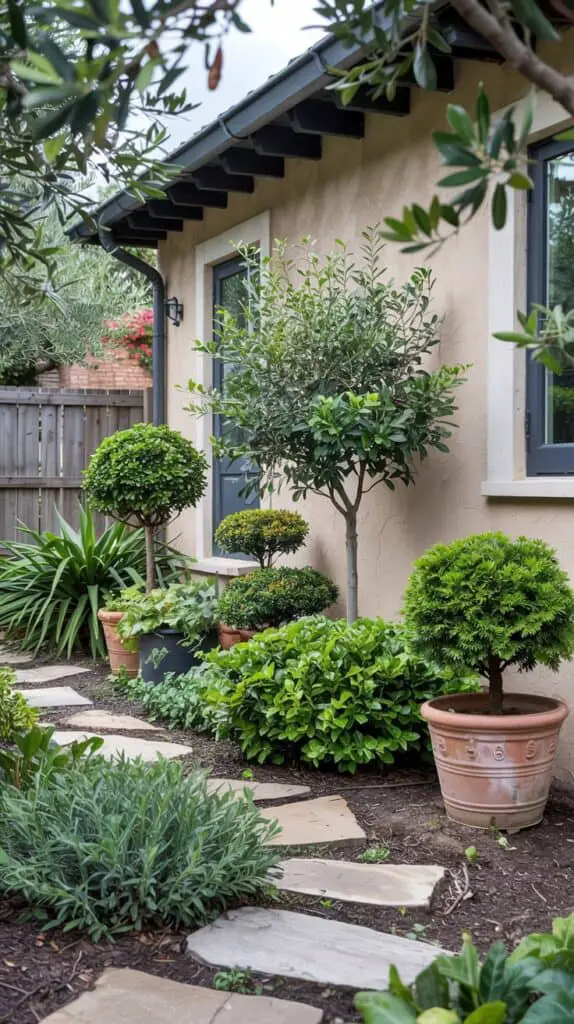
The “Mediterranean” look isn’t just herbs—it’s structure. Even if your plants change with seasons, the yard still looks composed when you have a few evergreen anchors.
Practical, low-fuss structure ideas:
- One or two evergreen shrubs near the house corners
- A row of repeated shrubs along a fence (even if it’s just 3–5 plants)
- A few clipped mounds (or naturally rounded shrubs) to soften hard edges
- A single small tree that gives the olive/citrus vibe, even if it’s not a true olive tree
If your climate supports it, an olive tree is iconic. If it doesn’t, you can still borrow the look:
- Choose silvery foliage plants for that dusty, sunlit tone
- Use upright evergreens with a soft shape
- Add repeated terracotta or neutral planters to hint at Mediterranean home design
For families, “structure plants” also help with boundaries. They subtly tell kids where the path is, where the garden starts, and where not to run full speed.
Make herbs your main “border plant” and harvest zone
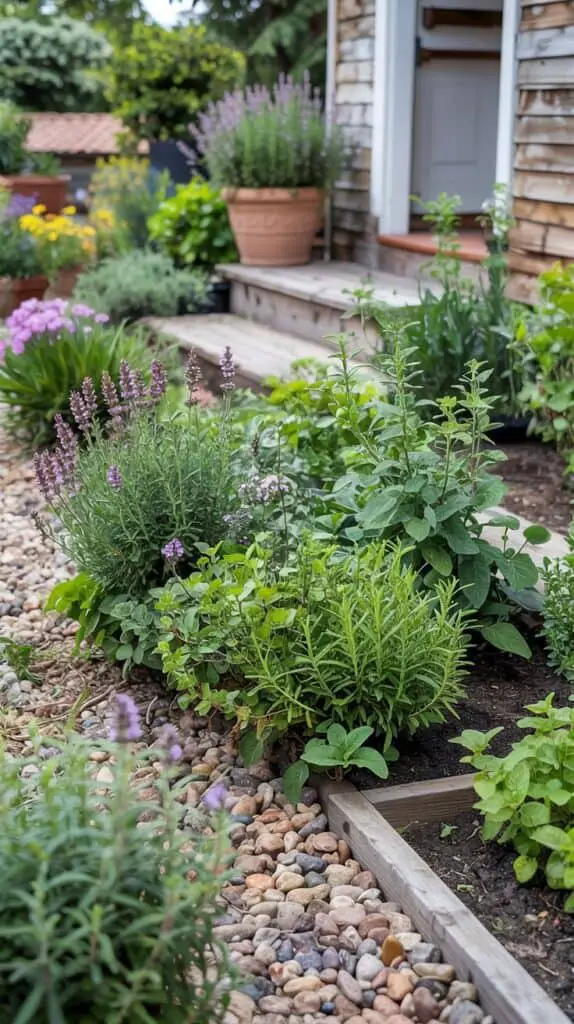
Herbs are the easiest way to create Mediterranean Landscaping that feels lived-in. They’re beautiful, drought-tolerant once established, and genuinely useful for cooking—especially if you’re trying to lean into slow living aesthetic routines like simple meals and seasonal habits.
Great homestead-friendly herb choices:
- Rosemary (structure + scent)
- Thyme (fills gaps and spills over edges)
- Oregano (tough and prolific)
- Sage (soft color, hardy)
- Lavender (if it suits your climate—amazing along a path)
Place herbs where you’ll brush past them. That’s the secret. Along the gravel path edge, near the steps, beside the outdoor faucet, near the kitchen door. When herbs are in the “work route,” they get watered accidentally and harvested constantly.
If you’re worried about mess or bees with little kids, keep the strongest bloomers slightly off the main play lane and use rosemary or thyme closer to traffic. You can still get the Mediterranean interior design feeling outdoors—calm scent, soft texture—without making the yard feel like a buzzing obstacle course.
Create “dry creek” planting beds that stay neat without constant mulch
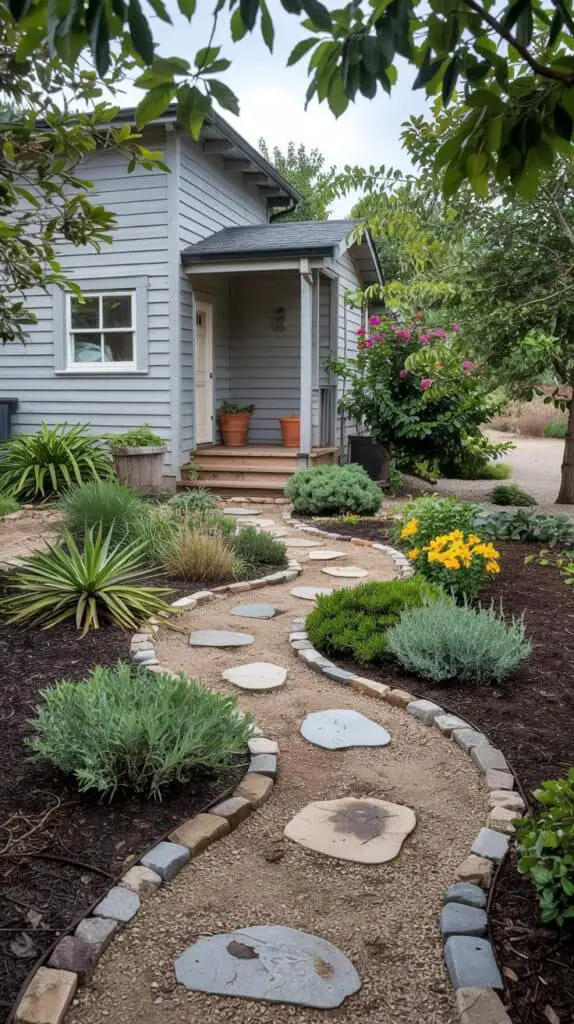
Mulch works, but on many homesteads it migrates—dogs kick it, chickens scatter it, wind shifts it, kids treat it like a sandbox. A Mediterranean approach can be easier: use mineral mulch (stone, gravel, decomposed granite) in planting beds so everything looks tidy longer.
A simple recipe:
- Keep beds slightly raised or clearly edged
- Use a single stone/gravel finish as your “mulch”
- Plant drought-tolerant, sun-loving plants in repeating clusters
This reads instantly like modern Mediterranean homes and it’s practical, too. Less muddy splatter, fewer weeds if the base is right, and it doesn’t break down into a mess you have to top up every season.
If budget is tight, do this in small zones:
- Around the front door or back steps first
- Along the first 10–20 feet of your main gravel path
- Near the outdoor seating hub
Even one “clean bed” zone can make the whole homestead house feel more finished.
Add olive/citrus vibes with containers and cold-climate swaps
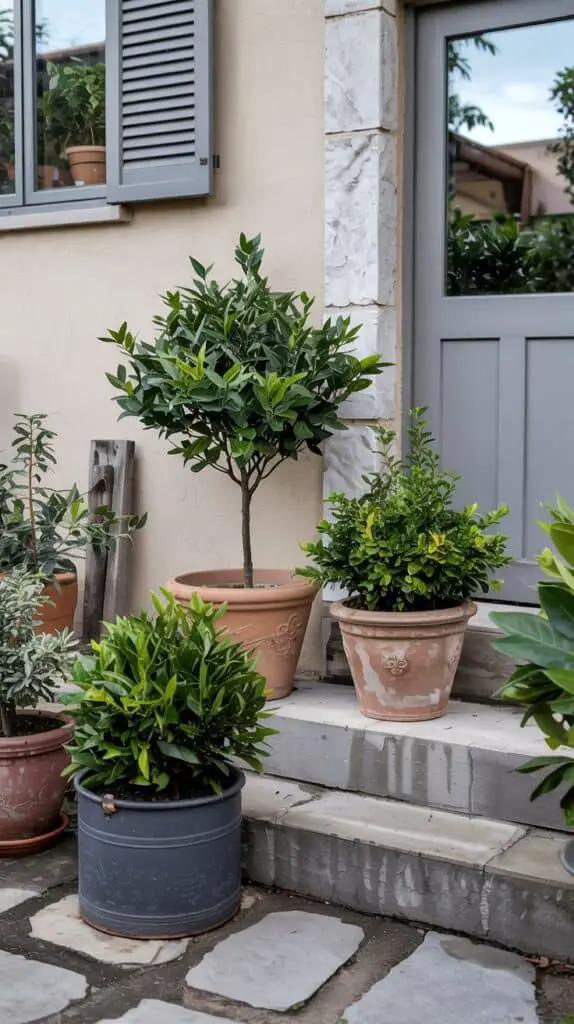
If you don’t live somewhere that supports citrus in the ground, containers are your best friend. A potted citrus tree (or even a citrus-like evergreen) instantly signals “Mediterranean home design,” and you can move it to a protected spot when temperatures drop.
If citrus isn’t realistic, you can mimic the look with:
- Bay laurel in a pot (classic, tidy, and very Mediterranean)
- Rosemary trained as a small shrub in a planter
- Dwarf evergreen options suited to your climate
For the Italian house or Italian home vibe, keep containers simple:
- One shape repeated (round or tapered)
- One neutral palette (terracotta, sand, stone, charcoal)
- Fewer, larger pots instead of many small ones
This is the difference between “intentional” and “cluttered.” If you want a modern Mediterranean house feel, go bigger and simpler.
Use stone and brick accents where they take the most abuse
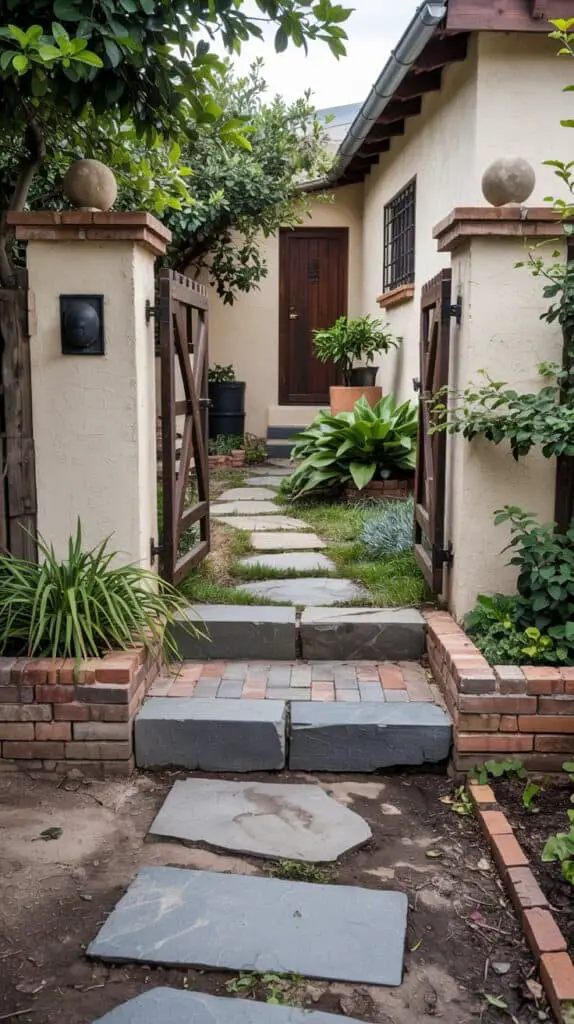
Mediterranean Landscaping often includes stone—stepping stones, small walls, brick edging, or pavers. On a homestead, stone is most valuable where things get worn down fast:
- Under gates (mud magnets)
- At the base of stairs
- Around the outdoor faucet
- By the compost area (where you’re turning and hauling)
- In front of the coop/run entrance
You don’t need to stone everything. Think of stone like protective armor for the high-traffic places. A small band of pavers at a gate can save you from a season of sludge.
If you’re renter-friendly or keeping things flexible, you can do “floating” solutions:
- Large stepping stones set into gravel
- Brick laid tight on compacted sand
- Modular pavers that can be removed later
The goal is simple: your daily routes stay clean enough that the whole property feels calmer.
Keep the vegetable garden functional, then make it match
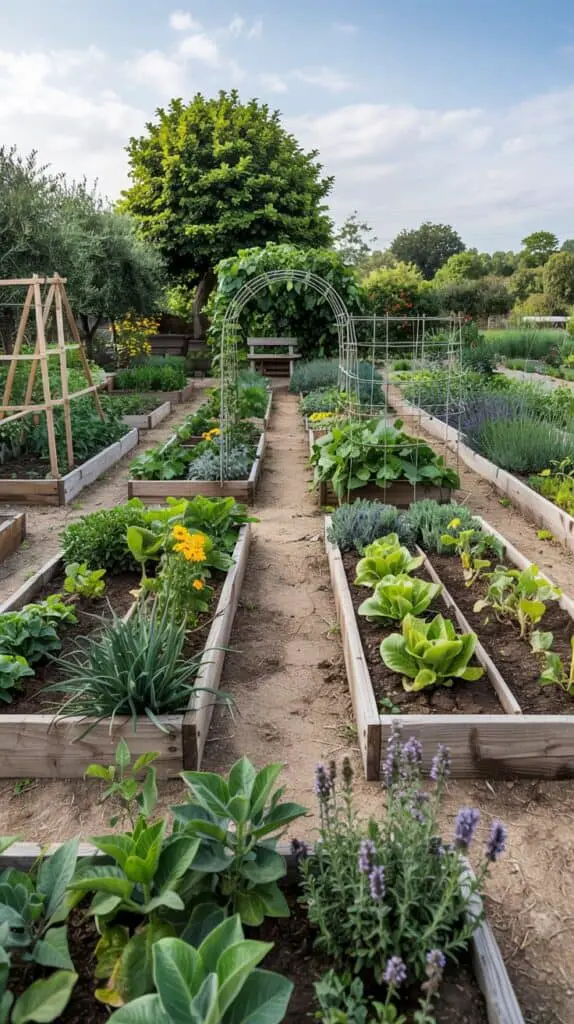
Vegetable gardens don’t have to look messy. In fact, Mediterranean Landscaping pairs beautifully with a productive garden because both reward repetition and restraint.
A tidy, Mediterranean-leaning vegetable area often has:
- A straight gravel path grid between beds
- Simple raised beds or clean-edged in-ground rows
- One consistent trellis style
- A few herbs and flowers as border plants (not a mixed jumble everywhere)
If you’re going for a modern homestead aesthetic, use fewer materials:
- One bed material (wood or metal, not both)
- One path material (gravel)
- One edging style (or none, if beds are clean)
If you love the dream farm look, add one signature detail:
- A small arch trellis at the garden entrance
- A single row of lavender or rosemary along the outer edge
- A simple bench at the end of the main path
That’s enough to create a “garden you want to photograph,” without making it impractical for harvest season.
Make it family-proof: play lanes, clean edges, and “drop zones”
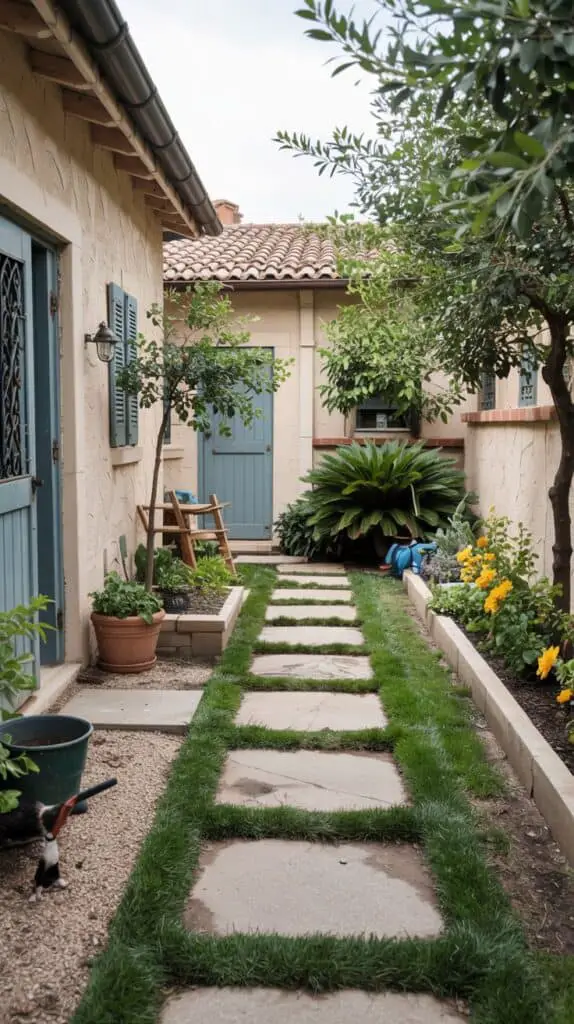
A slow living aesthetic doesn’t mean no toys—it means the space still feels calm when life happens. The easiest way to keep Mediterranean Landscaping looking good with kids and pets is to design for them.
Three practical moves:
- Create one clear play lane (a stretch of lawn or a defined area where running is fine)
- Keep your fragile plantings away from the main sprint route
- Add a “drop zone” near the door (hooks, a bench, a bin) so clutter doesn’t spill into the yard
Edges matter here. Mediterranean spaces look tidy because beds are clearly defined. Even simple edging makes a big difference, especially when kids and dogs are involved. It also helps you mow faster and prevents the “everything blends into weeds” look.
If you have animals, keep a clean transition between animal zones and family zones:
- Gravel buffer strip outside the coop/run
- A hose-friendly pad for cleaning
- A path that lets you do chores without cutting through the prettiest planting beds
It’s not about being perfect. It’s about making the daily routine easier so the yard stays nicer by default.
A simple layout you can copy for a small homestead
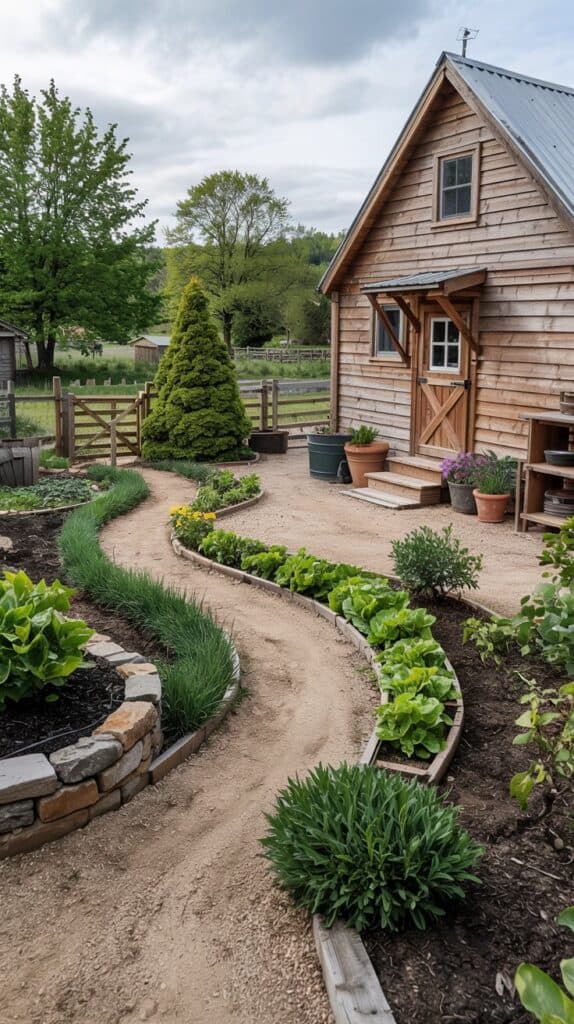
If you want a starting point that works in many spaces, try this:
- Main gravel path loop connecting house → garden → coop → compost → back to house
- A gravel pad/courtyard near the back door
- Two or three structured evergreen anchors near the house
- Herbs planted along the path edge in repeating clusters
- A few large containers for olive/citrus vibes near the entry or courtyard
- Stone or brick reinforcement at gates and muddy pinch points
This gives you Mediterranean Landscaping that feels like modern Mediterranean homes, but it still works for a small farm rhythm—boots, baskets, kids, and all.
Conclusion
Mediterranean Landscaping doesn’t have to be delicate or high-maintenance. When you start with practical routes, build a solid gravel path, and use herbs and simple structure plants for that olive/citrus vibe, the whole homestead house feels calmer and more intentional. Keep materials consistent, focus your “pretty” details where you’ll actually see and use them, and you’ll get a modern homestead aesthetic that holds up to real life—mud, animals, kids, chores, and all.