
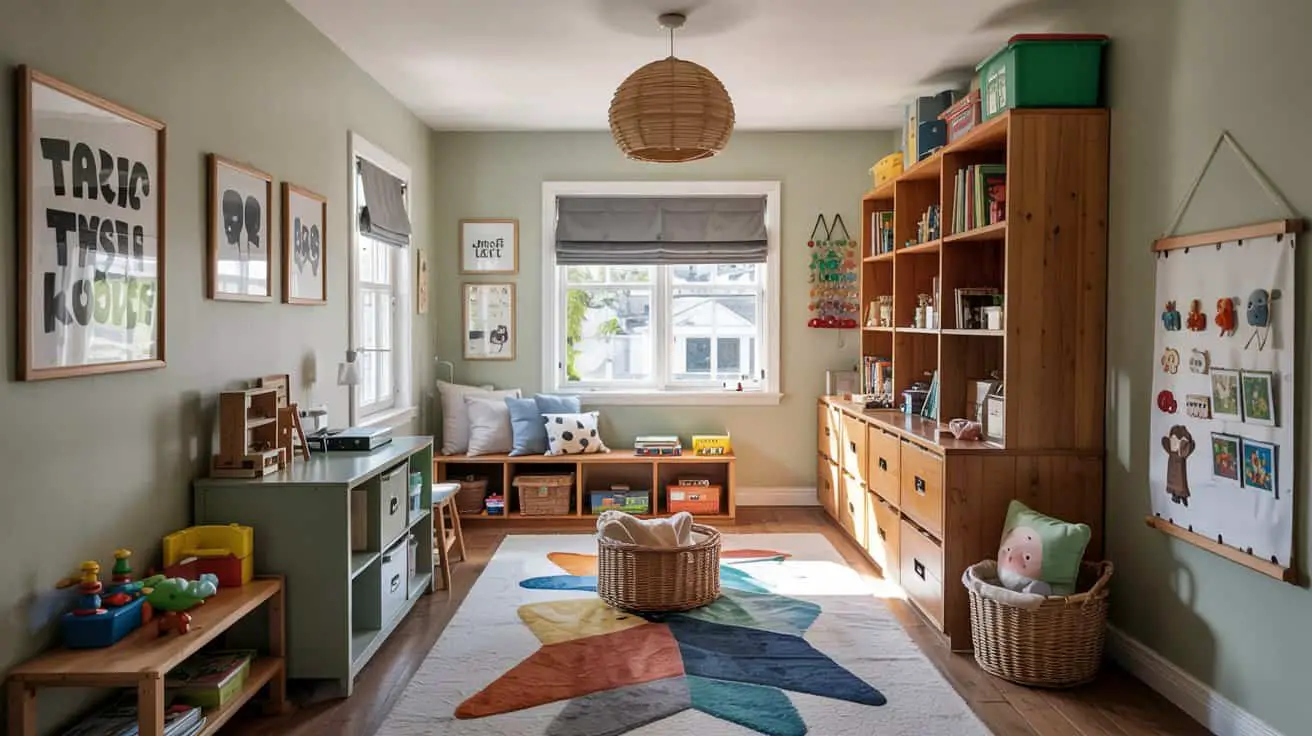
There’s always that one room (or hallway… or long skinny box of a space) in a family home where you think, What on earth am I supposed to do with this? Too narrow for a guest room. Too awkward for a proper living area. And far too weird to leave empty. If you’ve ever stared at a long, thin room and felt personally offended by its shape, you’re not alone—I think every family has at least one of these “mystery” spaces.
But here’s the good news: narrow rooms actually make fantastic playrooms. They’re contained, easy to supervise, and naturally encourage kids to move, read, build, or create in small pockets of the room. When you work with the dimensions instead of fighting them, the whole space becomes surprisingly charming—and shockingly functional.
Below are practical, stylish ideas for turning a long, awkward layout into a play space every family can enjoy (and not trip over).
Create a “Pathway Playroom” That Flows From One Activity to the Next
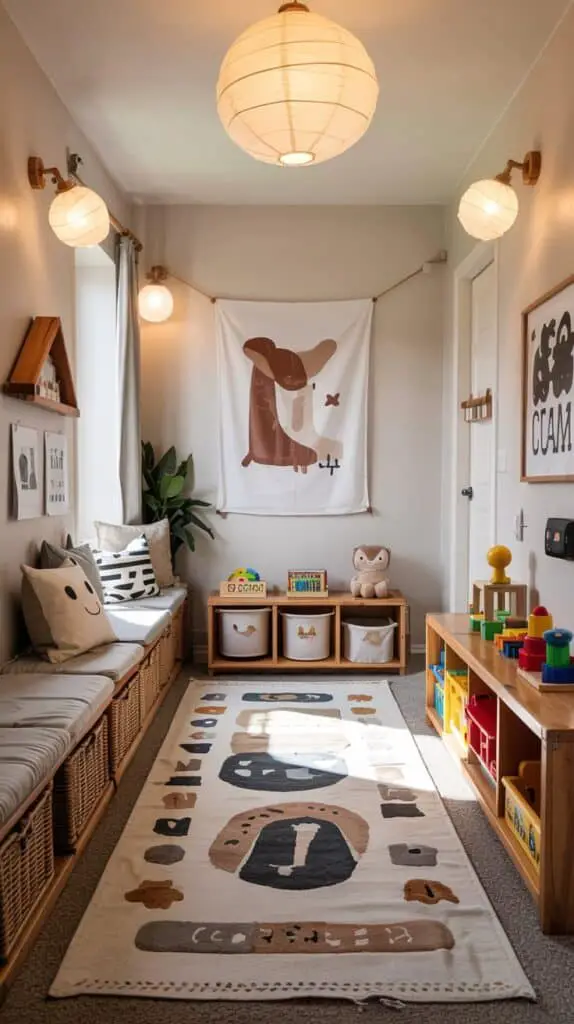
Because the room is already long, use that to your advantage. Think of it like a gentle walkway that shifts into mini-zones. A reading stop here, a building stop there, and a craft table at the far end.
Try arranging zones in this order:
- reading nook near the entrance (soft and quiet)
- block or puzzle area in the middle
- art table or sensory tray at the very end
This lets kids drift through activities without clutter piling up in one spot.
Use Narrow Furniture That Fits the Room Instead of Fighting It
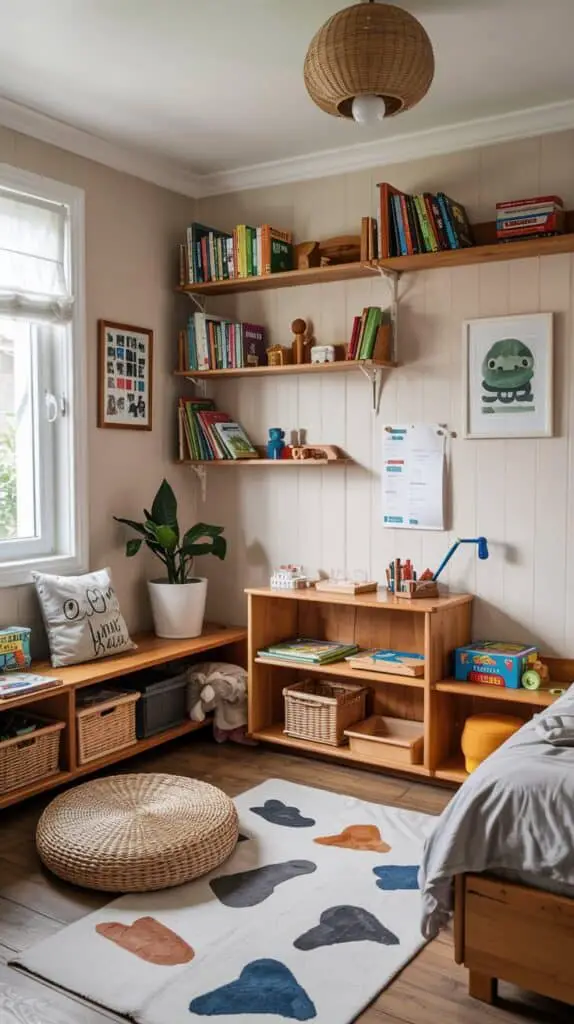
It’s not the room that’s the problem—it’s oversized furniture. For long spaces, choose slimline pieces:
- low, narrow shelves
- a thin kids’ table
- wall-mounted book ledges
- long floor cushions instead of chunky chairs
Suddenly the room feels open instead of cramped. And honestly, kids don’t need giant pieces anyway—they’re tiny humans with tiny legs.
Turn One Wall Into a Storage-and-Display Hero Wall
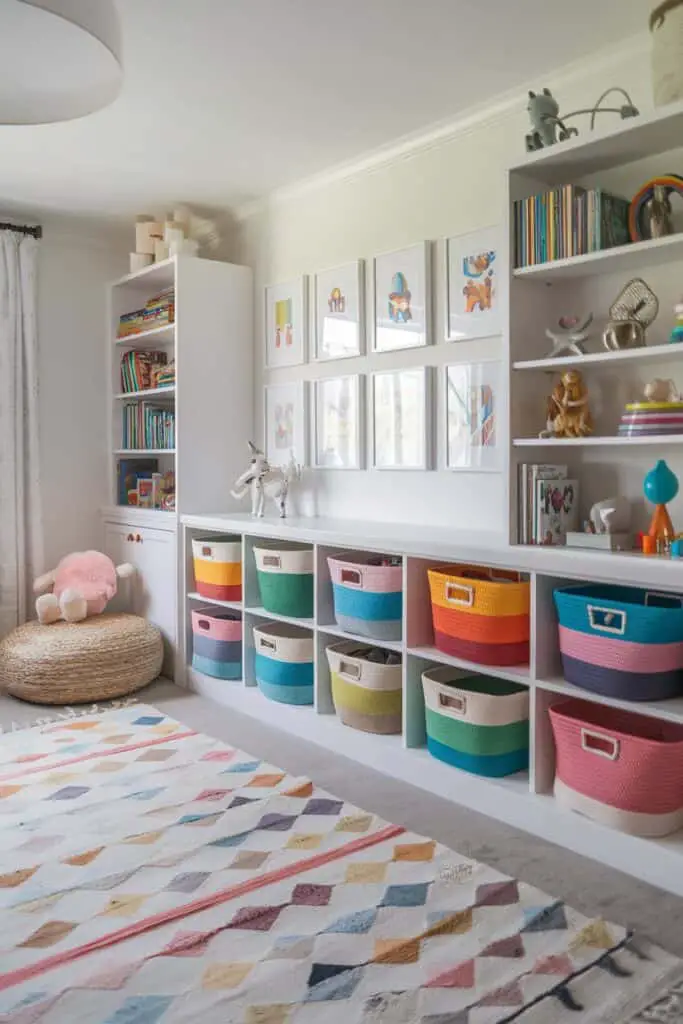
A single long wall can do all the heavy lifting. Install wall-mounted shelves, picture ledges, pegboards, or narrow storage units along one side. Keep everything low so kids can reach it, and use matching baskets to keep the whole room feeling calm.
This keeps toys accessible but controlled, and gives you a place to rotate books or display their crafts without creating visual chaos.
Make Vertical Space Your Secret Weapon
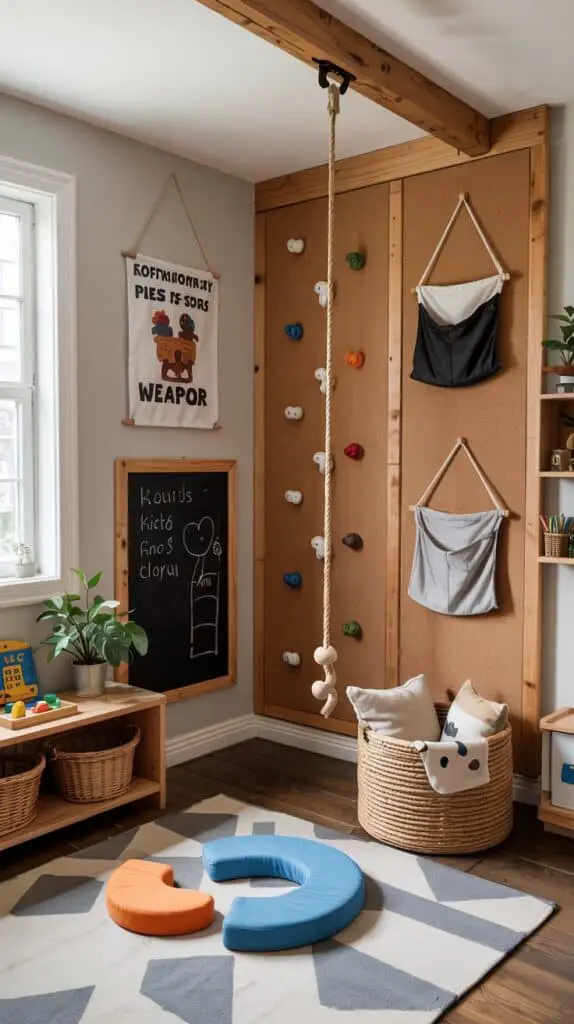
When floor space is tight, the walls become your best friend. Add:
- climbing holds (soft-style, kid-safe versions)
- corkboards
- chalkboards
- magnetic art boards
- hanging fabric pockets
Kids get totally absorbed in vertical play, and the floor stays less cluttered. It also makes the room feel taller and more airy—always a win.
Pick a Single Rug That Runs the Length of the Room
This one trick unifies a narrow space instantly. A long runner or one oversized rug makes the room feel cohesive and bigger. It also softens stomping, jumping, and the occasional “I DROPPED IT AGAIN!” toy moment.
Stick with calm colors—greige, sage, soft patterns—to keep the space feeling grounded and tidy.
Use One Side for Play, the Other Side for Movement
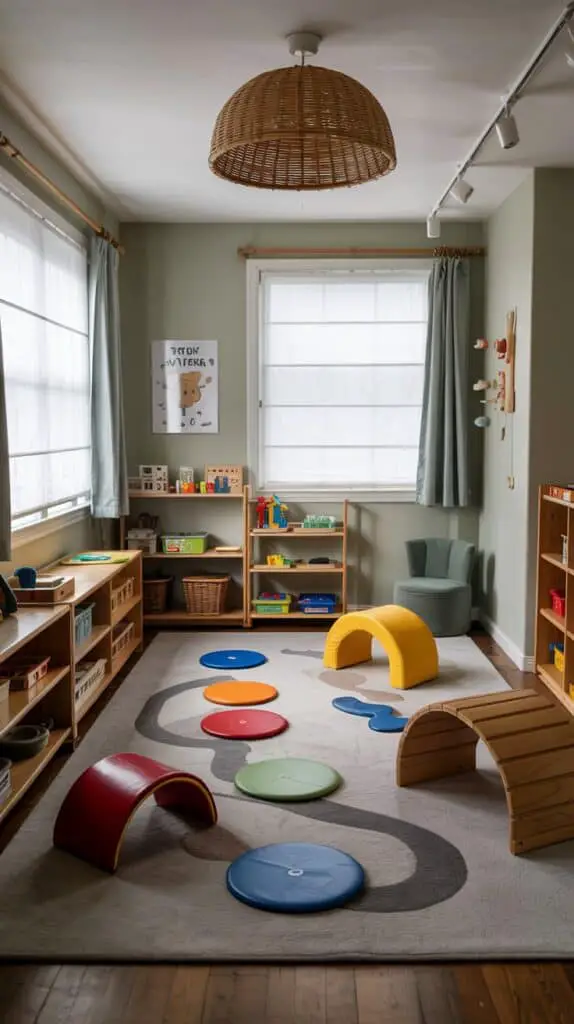
Long rooms are great for quiet activities and active ones. If you have the space, dedicate one long strip to gentle motion play:
- a wobble board
- a toddler balance beam
- stepping stones
- a soft mini climbing arch
The other side becomes a low-sensory area where kids can draw, build, or read. It balances the room and energy levels beautifully.
Add Soft Lighting So the Room Feels Cozy, Not Tunnel-Like
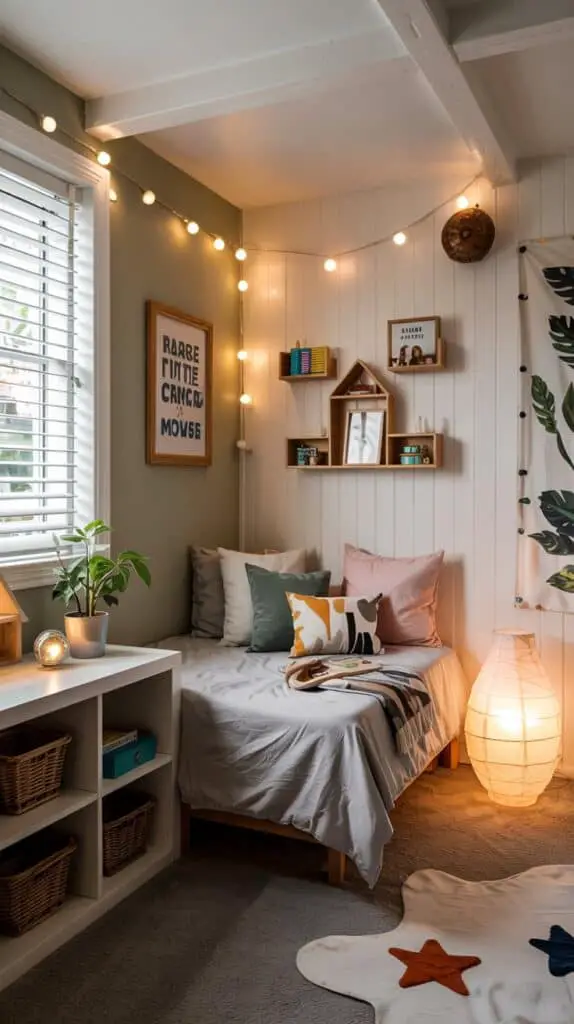
Narrow rooms can feel harsh with bright overhead lighting. Swap it for:
- wall sconces
- warm fairy lights
- a floor lamp in the reading corner
- small LED shelves
Soft light makes the space feel intentional and magical—perfect for a playroom.
Keep Colors Light and Storage Calm
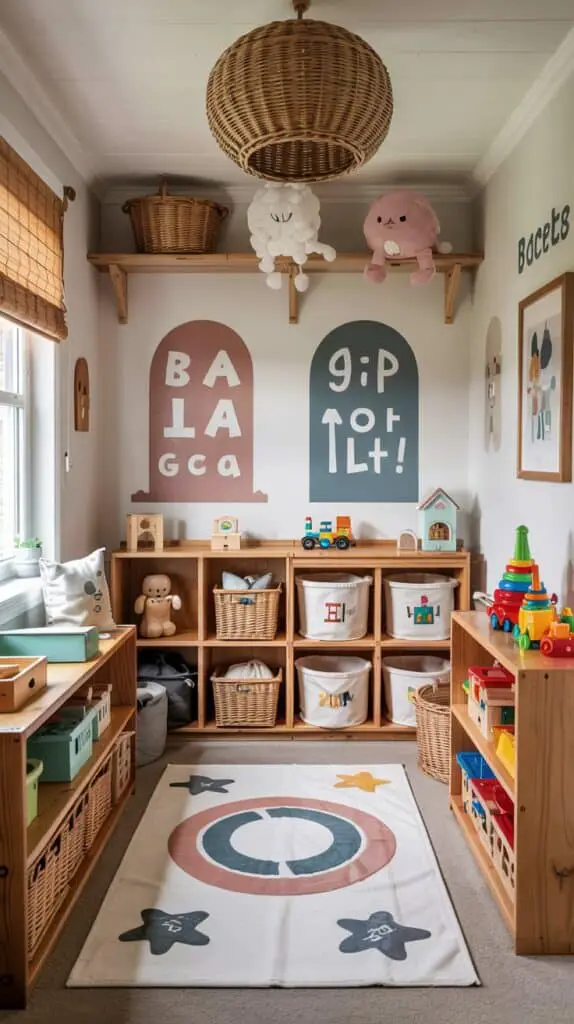
Narrow playrooms shine in a simple palette. Soft whites, warm wood, muted pastels… they make the room look wider and less chaotic. Combine this with storage in the same tone—neutral baskets, wooden crates, simple bins—and the whole room suddenly feels designed, not “help, this is where the toys exploded.”
Make the Far End the “Special Zone” Kids Always Want to Visit
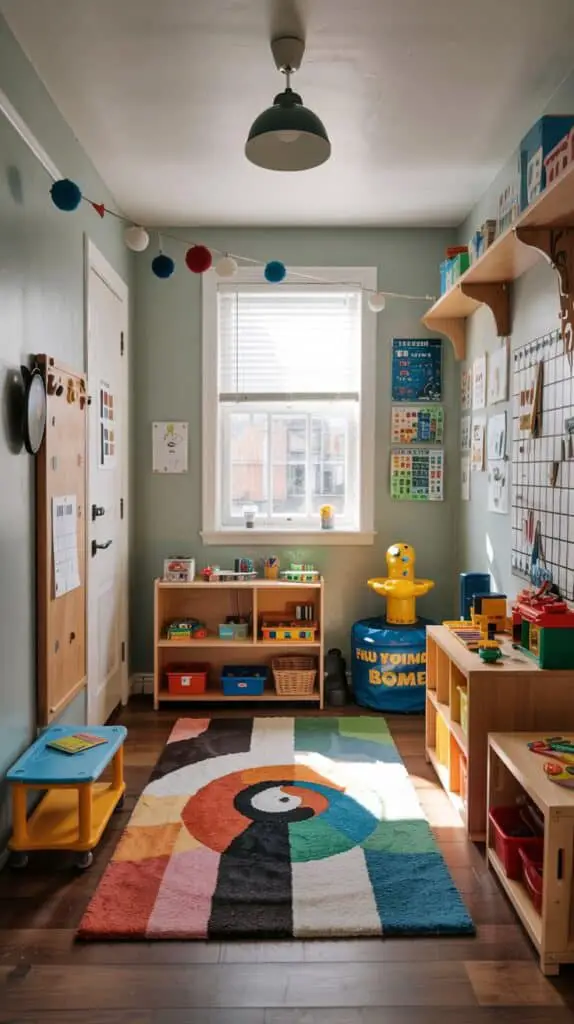
If your narrow room has an end that gets less traffic, turn it into something fun:
- a mini stage
- an art station
- a tiny pretend-play market
- a LEGO or magnet tile wall
Kids naturally wander toward the far end, so making it special gives the room purpose—plus it lures them away from scattering everything near the door.
Let the Space Grow With Your Kids
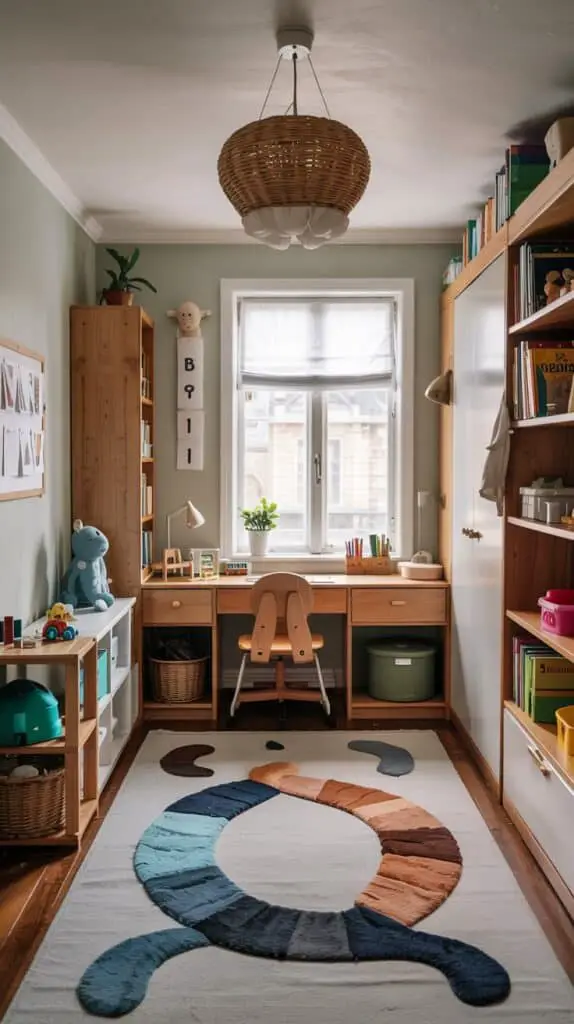
And finally, remember that narrow rooms are shape-shifters. They can be toddler play zones, early reader libraries, craft corridors, tween lounge nooks… the size works for all ages. Start simple, adjust over time, and don’t be afraid to try new zones until the space finally clicks.
Long, awkward rooms aren’t a design curse—they just need a little love and a family willing to get creative. And honestly? They can become some of the most charming, functional spaces in the whole house.