
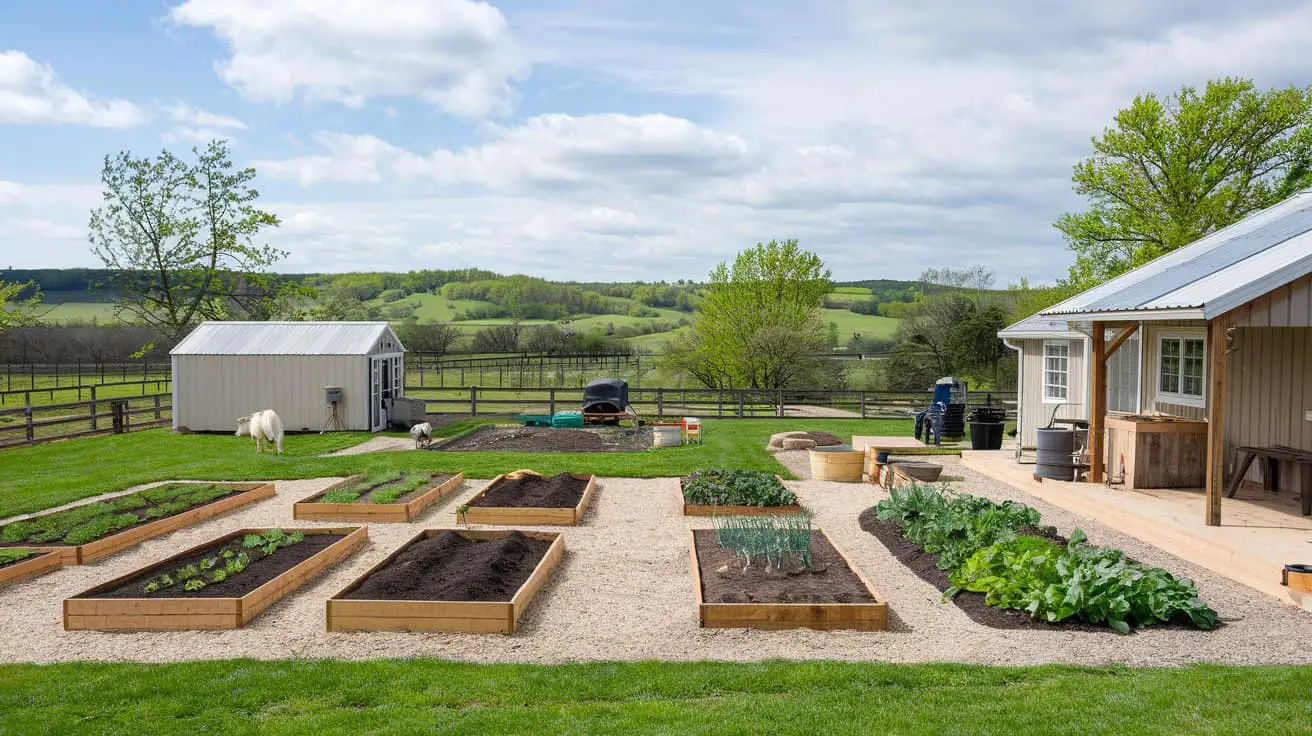
Spring is often when families start rethinking how their land actually works for them. Not in a dramatic, start-from-scratch way, but in small, practical questions: where should the garden go this year, how close is too close to the house, and how can outdoor work fit into daily family life without turning the yard into a mess. A thoughtful homestead layout doesn’t need to be perfect or permanent. It needs to support real routines, changing seasons, and the people and animals who use it every day.
This article focuses on spring-based planning for family homesteads, using raised beds and outdoor work zones as the foundation. Whether you’re working with a backyard homestead, a small homestead layout on two or three acres, or dreaming toward a larger 10 acre homestead layout, the same principles apply: keep systems close, functional, and visually calm. The goal isn’t to copy a mini farm layout you saw online, but to shape a space that feels doable and lived in.
Starting with a Family-Centered Homestead Layout
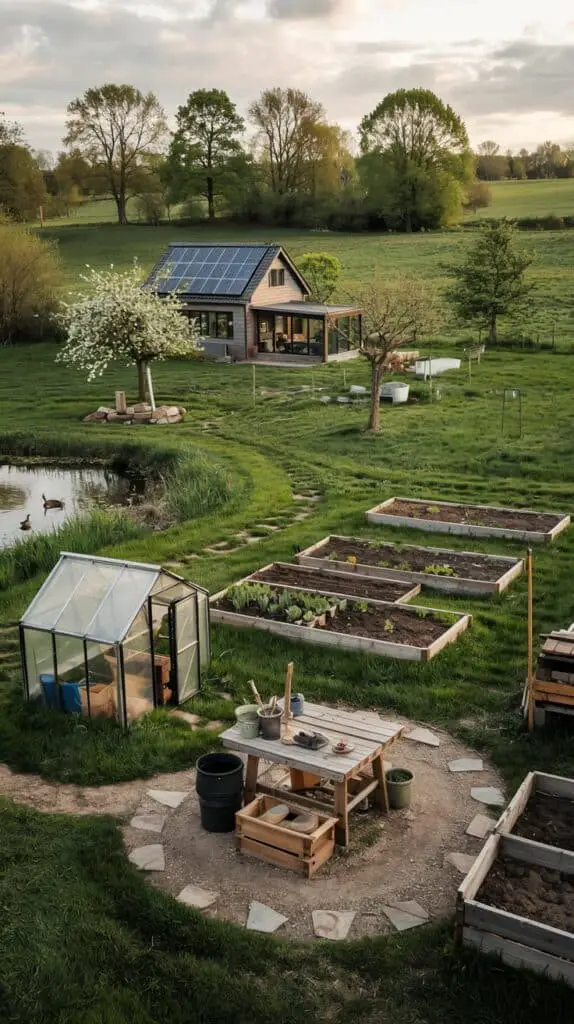
A family-focused homestead layout begins with how people move through the space, not with how much land you have. Spring is the easiest time to observe this. Notice where kids naturally play, where pets rest, and which paths get worn into the ground. These patterns are more useful than any diagram when deciding where to place raised beds or work zones.
For families and beginners, it helps to think in simple zones rather than rigid plans. The areas closest to the house usually work best for things you touch daily: raised beds for greens, herbs, and early crops; a small compost setup; and a basic outdoor work surface. This approach fits well with homestead life in suburban or semi-rural settings and adapts easily to renters who may not want to dig permanent trenches or pour concrete.
If you’re working with a 2 acre homestead layout or even less, proximity matters more than scale. A compact setup near the house reduces overwhelm and makes spring planting feel manageable instead of like a full-time job. Larger properties benefit from the same logic: start small and central, then expand outward over time.
Raised Beds as the Spring Anchor for Homesteading Ideas
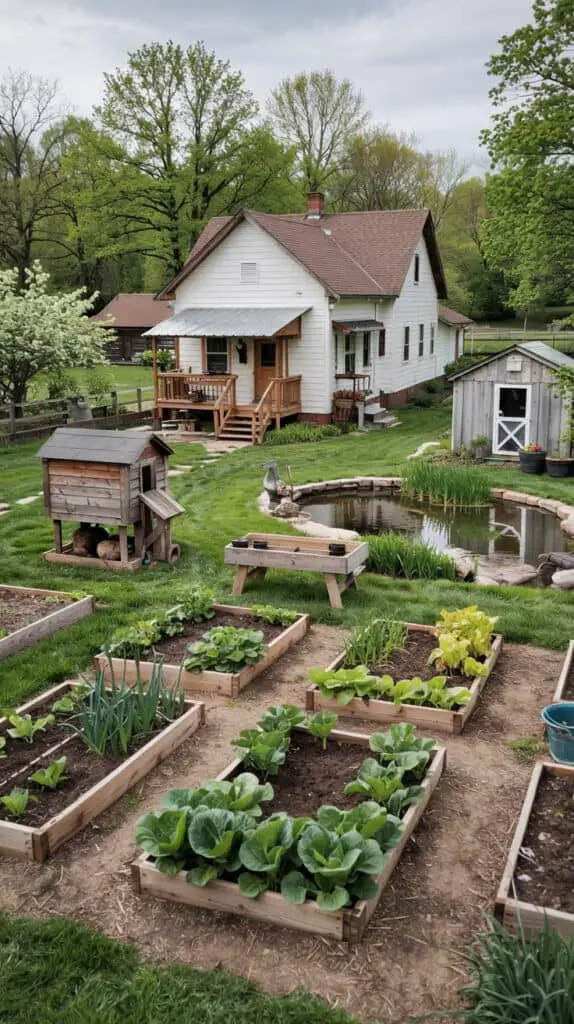
Raised beds often become the emotional center of a family homestead, especially in spring. They warm up faster, are easier to manage with kids, and create a clear visual boundary between growing space and the rest of the yard. In a small homestead layout, they help prevent the garden from creeping into play areas or walkways.
Design-wise, raised beds work best when grouped intentionally rather than scattered. A simple grid or U-shape allows one adult to supervise children while working and keeps tools within reach. For renters or beginners, beds built from untreated wood, metal kits, or even temporary modular systems can be installed and removed without major disruption.
In a backyard homestead, raised beds also help maintain a calm, organized look. They support a homesteading aesthetic that feels intentional rather than improvised. Mulched paths, simple edging, and consistent bed sizes go a long way toward keeping the space visually grounded, which matters when the garden is part of everyday family life.
Designing Outdoor Work Zones That Fit Daily Routines
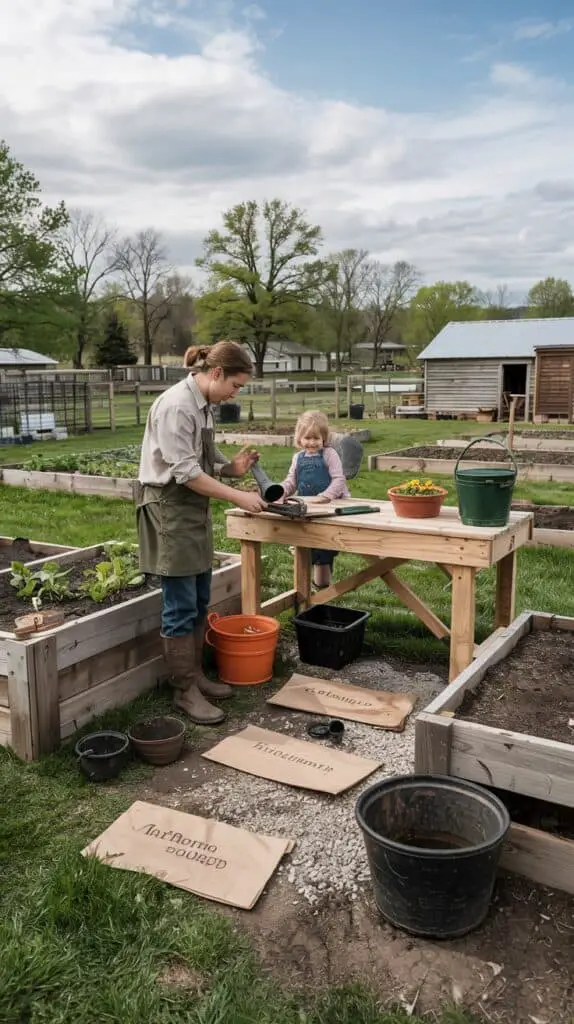
Outdoor work zones are often overlooked in early homesteading ideas, yet they make spring tasks far easier. A work zone doesn’t need to be elaborate. It can be as simple as a sturdy table, a shaded corner, or a gravel pad where muddy boots are welcome.
In a functional homestead layout, these zones sit just outside the garden rather than inside it. This separation keeps raised beds clean while still allowing quick transitions between planting, potting, washing produce, or fixing small tools. For families, placing the work zone where kids can help safely encourages shared responsibility without slowing everything down.
On a 3 acre homestead layout or larger, you might have multiple work zones: one near the main garden, another closer to animal areas or storage. On a mini farm layout, keeping these zones visually simple helps avoid the feeling of clutter that can come from too many half-finished projects.
Planning for Kids, Pets, and Shared Outdoor Space
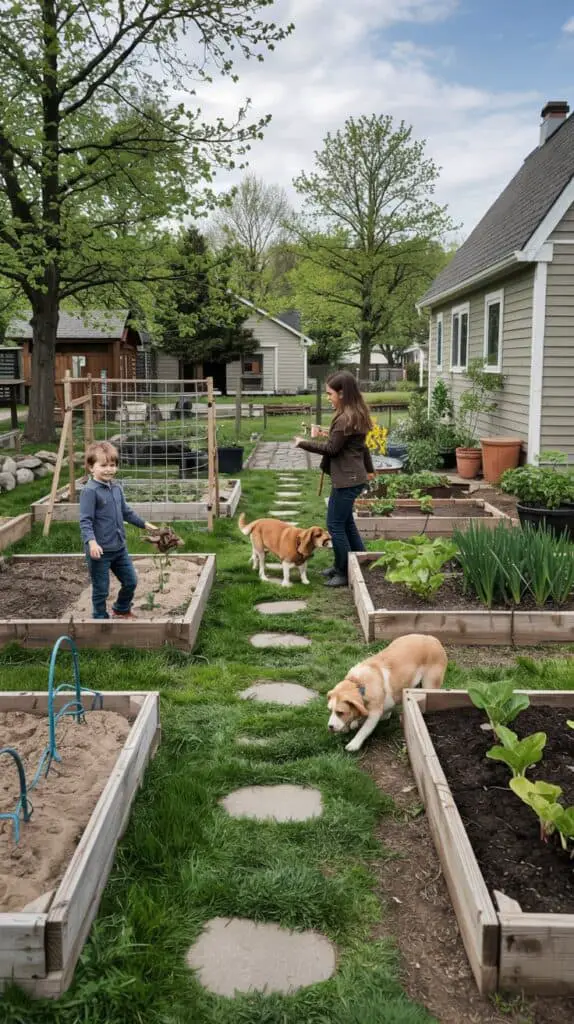
A family homestead design must account for more than plants. Spring is when children and pets spend more time outside, often overlapping with planting and maintenance tasks. A good homestead layout anticipates this instead of fighting it.
Clear paths between the house, garden, and play areas reduce accidental trampling. Low fencing, hedges, or even changes in ground texture can signal where certain activities belong without making the space feel restricted. Raised beds naturally help with this by elevating crops out of reach while still allowing kids to participate.
For pet owners, it’s worth designating pet-friendly zones early in the planning process. This might mean placing beds slightly farther from favorite digging spots or creating a clear boundary between garden soil and open yard. These small decisions protect both the plants and the family’s patience.
Small Homestead Layouts That Still Feel Spacious
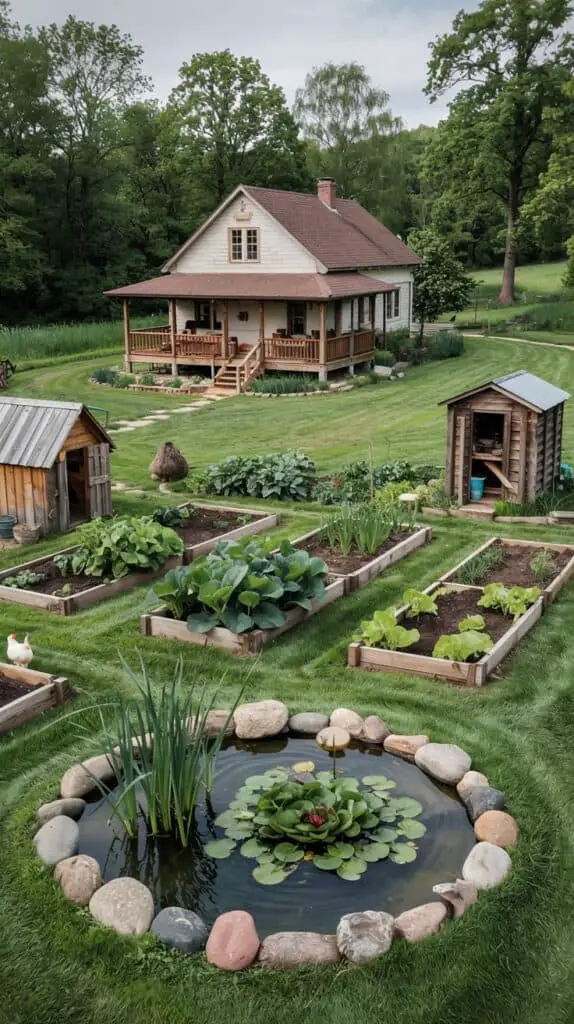
Limited land doesn’t mean limited potential. A small homestead layout benefits from intentional spacing and visual breathing room. Instead of filling every corner with beds, leave open areas that can flex between uses: spring planting, summer play, fall harvest prep.
Vertical elements help here as well. Trellises, espaliered fruit trees, or climbing crops create yield without expanding the footprint. In a backyard homestead, these features also add structure and softness, contributing to a balanced homesteading aesthetic.
For renters, flexibility is key. Portable raised beds, container-based systems, and removable work surfaces allow you to practice homestead life without committing to permanent changes. These setups translate well if you later move to a 2 acre or 3 acre homestead layout, making early efforts feel worthwhile.
Scaling Ideas for a 3 Acre or 10 Acre Homestead Layout
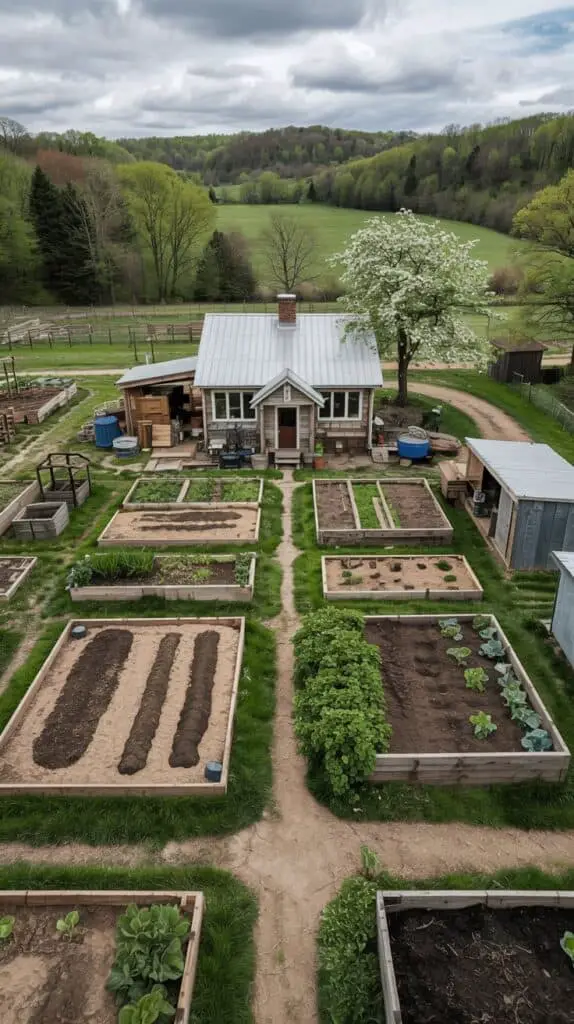
Larger properties often tempt families to spread everything out too quickly. In spring, this can lead to burnout before the season really begins. A better approach is to design the core homestead layout first, then allow space for future expansion.
On a 3 acre homestead layout, keeping the primary garden and work zones near the house maintains daily engagement. Additional land can be left open for later projects like orchards, grazing, or seasonal crops. This phased approach keeps spring tasks realistic and family-friendly.
A 10 acre homestead layout benefits from the same restraint. Even with more land, the daily-use areas should remain compact. Long walks to the garden sound peaceful but often become impractical when juggling kids, work, and weather. Treat the extra acreage as long-term potential rather than immediate obligation.
Integrating Permaculture Design Layout Principles Gently
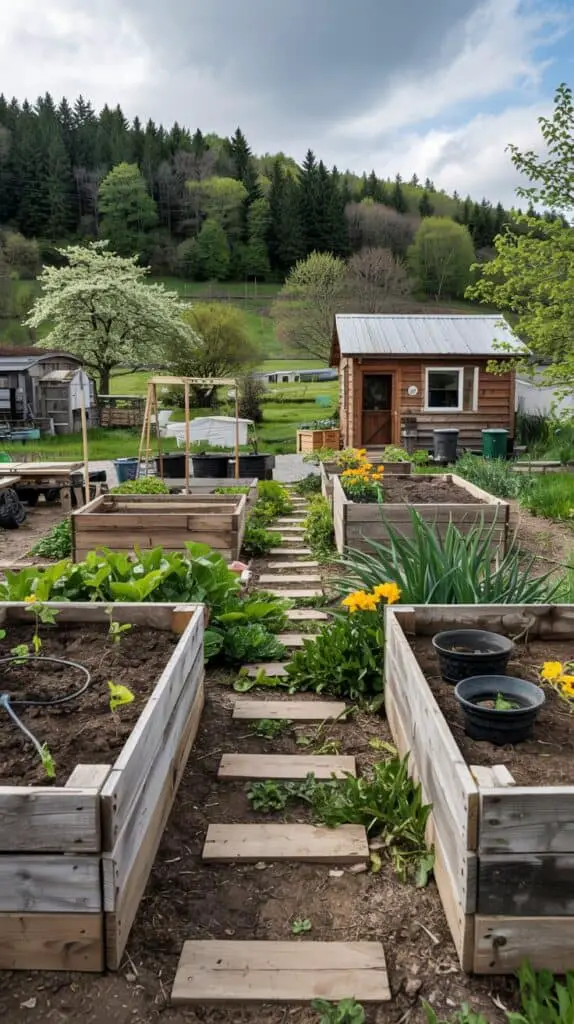
Permaculture design layout ideas often appeal to families interested in sustainability, but they don’t need to be applied all at once. In spring, start with observation and simple stacking of functions.
Raised beds near the house, compost close to the garden, and work zones positioned to catch morning sun all reflect permaculture thinking without requiring complex systems. Over time, you can layer in water catchment, perennial plantings, or animal integration as your confidence grows.
This gentle approach suits beginners and renters especially well. It allows you to experiment with homesteading ideas while keeping the layout adaptable. The result feels intentional but not overwhelming, aligning well with everyday homestead life.
Keeping the Homesteading Aesthetic Calm and Practical
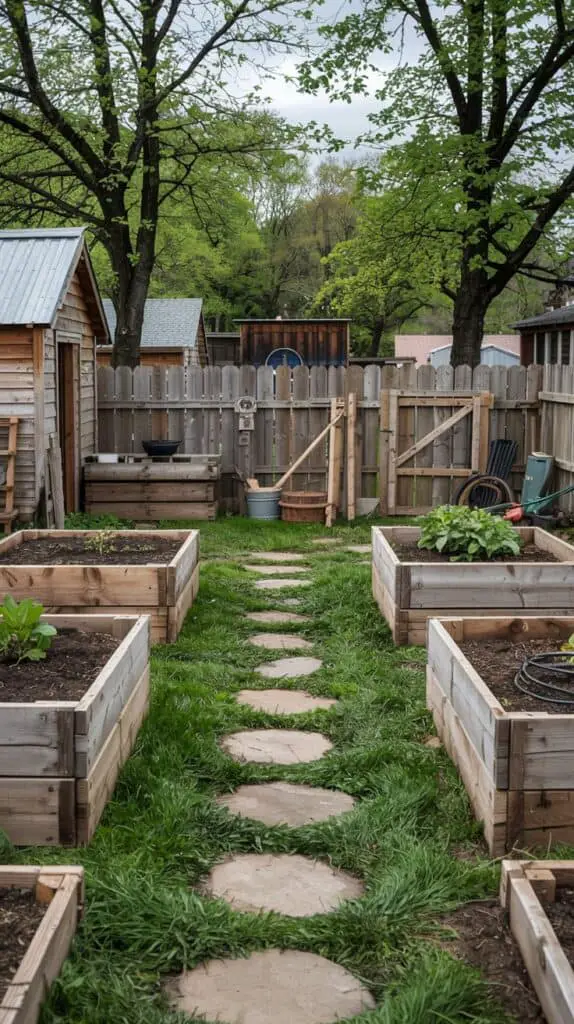
Visual calm matters more than many people expect. A cluttered yard increases mental load, especially during busy spring weeks. A thoughtful homesteading aesthetic supports focus and enjoyment rather than distraction.
Consistency helps here. Matching materials for raised beds, limiting the number of tool storage styles, and choosing neutral ground covers create cohesion. This doesn’t mean everything must match perfectly, just that the space feels considered.
For families, this calm backdrop makes it easier to share the space. When tools have a place and paths are clear, outdoor time feels more inviting. This balance between beauty and function is what makes a homestead layout sustainable long-term.
Adapting the Layout as Seasons and Needs Change
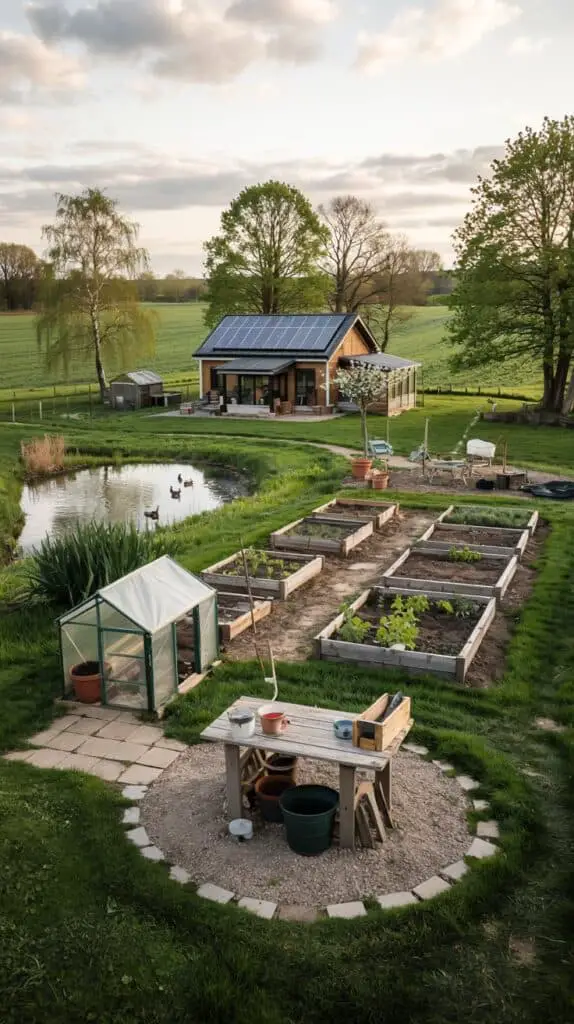
Spring layouts are starting points, not final answers. One of the strengths of a family-centered homestead is its ability to evolve. As children grow, pets age, or work routines shift, the layout should respond.
Raised beds can be moved, expanded, or repurposed. Work zones can shift closer to storage or farther from play areas. Even in a fixed 10 acre homestead layout, flexibility keeps the space aligned with real life rather than an idealized plan.
Allowing for change reduces pressure to “get it right” the first time. It also makes homesteading feel accessible, especially for beginners who are still learning what works for their household.
A Grounded Spring Approach to Homestead Life
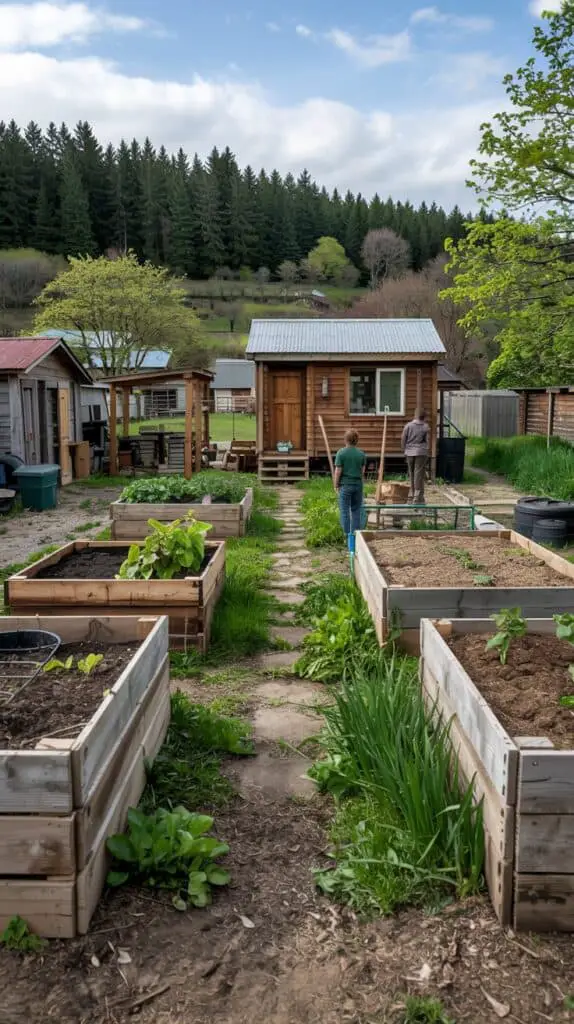
Designing a spring homestead layout for a family is less about maximizing output and more about supporting daily rhythms. Raised beds and outdoor work zones provide structure, but the real success comes from how naturally they fit into everyday life.
Whether you’re working with a backyard homestead, a small homestead layout, or planning toward a larger mini farm layout, starting with simple, family-friendly systems builds confidence. Spring is a season of momentum, and a thoughtful layout helps that energy carry through the rest of the year.
By focusing on function, flexibility, and visual calm, your homestead design can grow alongside your family, one season at a time.