
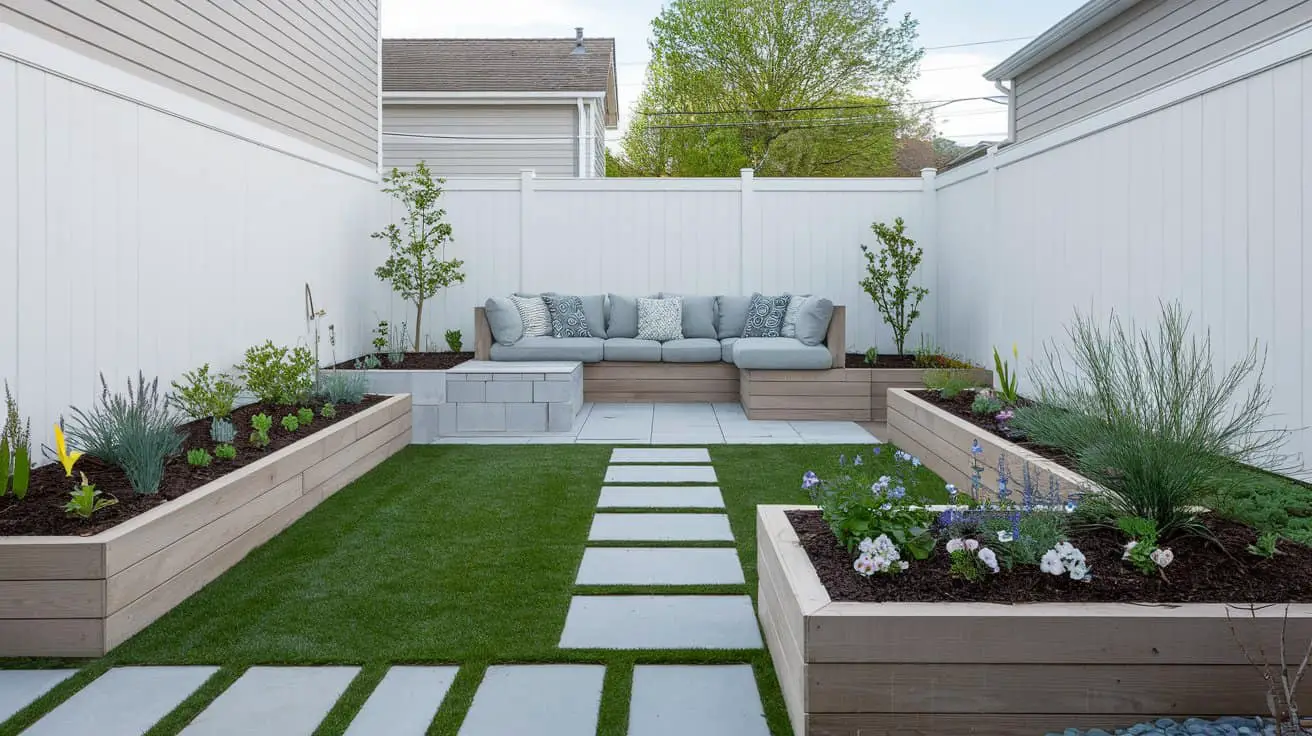
A backyard play space in spring can feel like a fresh start. The grass comes back, the light changes, and suddenly everyone wants to be outside again. But if you’ve ever set up an outdoor play area and realized it doesn’t quite work a year later, you’re not alone. Kids grow fast. Interests shift. And most of us don’t want to redo the whole yard every season.
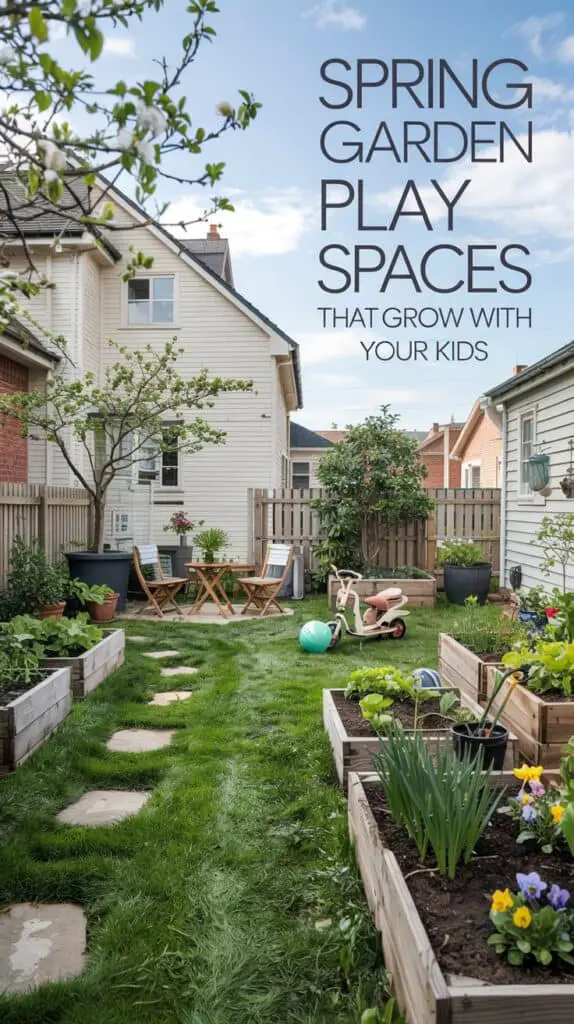
This is a calmer approach: build a spring garden around play that can stretch, adjust, and still look intentional. Think flexible zones, easy-to-move pieces, and plants that handle a little chaos. Whether you’re in a rental, working with a small yard, or just trying to keep things budget-aware, these ideas are meant to evolve with your family instead of fighting your family.
Start with a “clear middle” play zone that stays useful
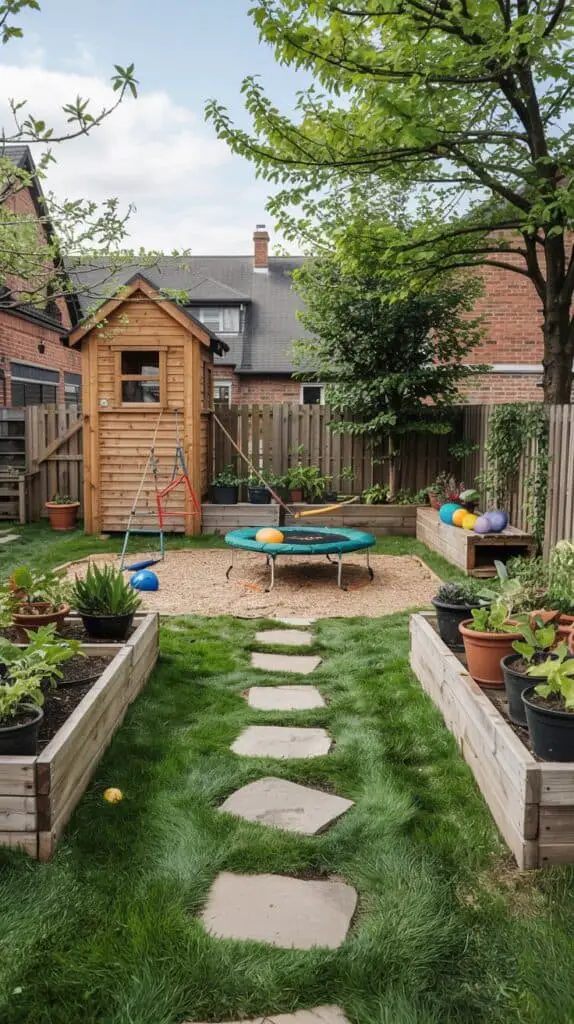
If you only do one thing, make a simple open space that stays open. A clear middle is the part of the yard where kids can run, roll, kick a ball, try cartwheels, or spread out a blanket—without weaving around garden edges every two seconds.
In spring, it’s tempting to plant everything everywhere, but an outdoor play area works best when the busiest movement happens in one predictable place. That doesn’t mean it has to be boring or empty. It just means you protect one central zone and design around it.
A few renter-friendly, budget-aware ways to define the clear middle without permanent changes:
- Use a low border of planters (lightweight pots or fabric grow bags) that can move later.
- Create a simple mulch or wood-chip rectangle for “active play,” leaving grass for calmer play.
- Lay down interlocking outdoor mats under a swing or climbing structure so the ground feels safer and less muddy in early spring.
As kids get older, this same clear middle becomes the place for sports practice, a small trampoline, a badminton net, or a teen hangout blanket zone. The garden stays intact because the messy motion already has a home.
Build “edge gardens” that can handle kid traffic
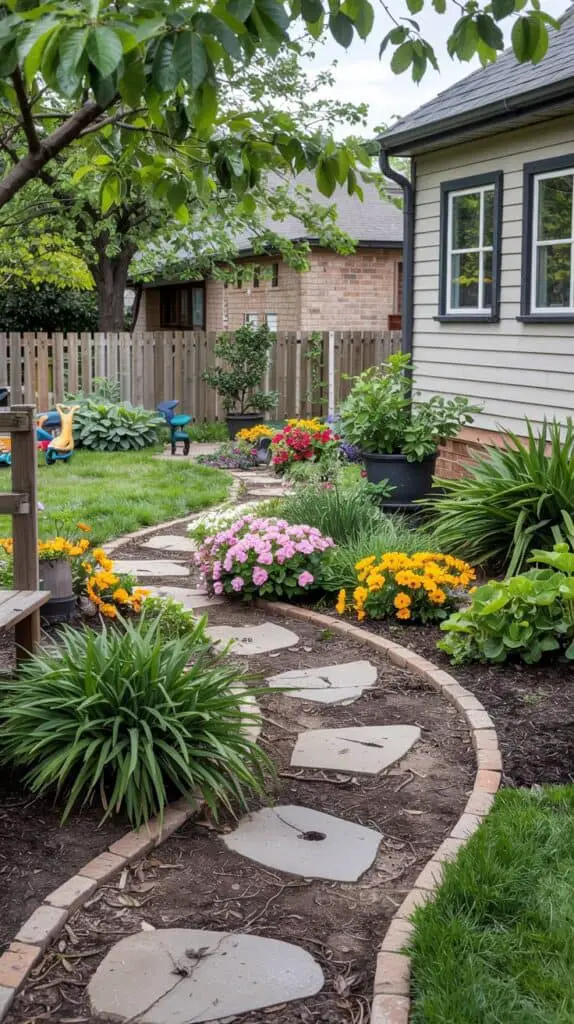
The edges of a yard take a lot of incidental damage: bikes cutting corners, dogs tracking along fences, kids dropping toys, adults dragging a hose. So instead of placing delicate spring flowers in the most trafficked line of travel, treat edges like a sturdy frame.
For a spring garden that lives alongside real play, build forgiving edge beds:
- Choose tough, bendy plants near paths (ornamental grasses, hardy groundcovers, sturdy perennials).
- Use wider paths than you think you need, especially if kids ride scooters.
- Keep the first 12–18 inches of any bed “sacrificial” with mulch or stepping stones so little feet don’t crush plant crowns.
If you love Flower Garden Design and want that pretty, layered look, you can still do it—just push the fluffier, more delicate flowers a bit deeper into the bed. The outermost edge is for structure. The inner section is for your Spring Flowers Garden moment.
This is one of those little layout shifts that makes a backyard feel more peaceful. Kids can move freely, and you aren’t constantly saying “careful” every time someone runs past the beds.
Choose spring flowers that look sweet but don’t need constant rescuing
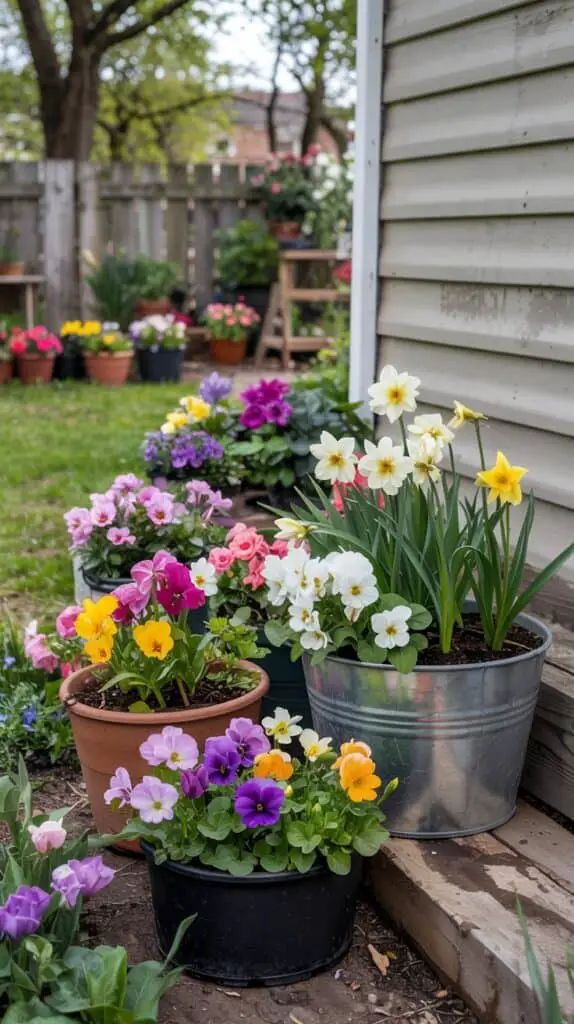
A playground-style yard is not the place for high-drama plants that collapse when brushed. The best spring flowers for a family yard are the ones that look cheerful, bounce back, and don’t require you to hover.
Some realistic choices for spring flowers in an active yard:
- Daffodils and other bulbs that pop up and handle spring rain well
- Tulips if you can accept that they’re sometimes short-lived and occasionally get munched
- Hardy pansies and violas for containers and edges
- Snapdragons for upright color that can handle a little wind
- Calendula or nasturtiums for a cottage feel with kid-friendly “garden snacks” (flowers you can pick without heartbreak)
If you want Flower Garden Inspiration that still feels lived-in, keep most of your spring flowers in containers or raised planters at first. You can cluster pots near seating, along a fence, or by a shed wall where they add color without being in the line of play. Container groupings can be rearranged every year as your needs change.
This is also a great way to do Garden Styles without committing. One year you can lean into a Cottage Garden Ideas vibe with soft pastels. Another year you can go brighter and simpler if your schedule is packed.
Make a path system that doubles as play (and keeps mud manageable)
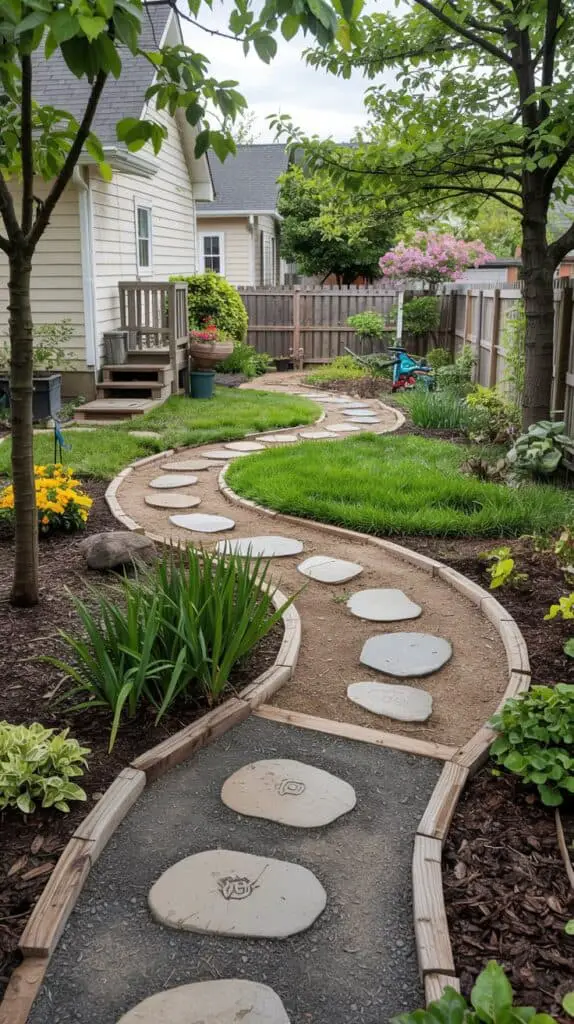
Paths are underrated in family yards. They’re not just for “garden people.” They’re how you reduce mud, protect plants, and give kids a natural loop to ride bikes or run laps.
In spring especially, when the yard is wet, a simple path can save your sanity. It also gives structure to the space so it feels visually intentional rather than scattered.
A few approachable path ideas:
- Stepping stones set in mulch (easy, cheap, and adjustable)
- Gravel paths with edging (more effort up front, but still renter-friendly if done thoughtfully)
- A “loop” path that circles the clear middle, so kids can scoot while adults stand in one spot
- A short sensory path near the garden: flat stones, bark, smooth pebbles in a contained strip for little feet and little hands
If you’re aiming for a Pretty Garden look, pick one path material and repeat it. Repetition is what makes a yard feel calm. It’s also what makes a space photograph well for Pinterest without looking cluttered.
As kids grow, that same path becomes a way to move through the yard without trampling beds. It keeps the outdoor play area functional even when you add more planting over time.
Use raised planters to keep play flexible and protect the garden
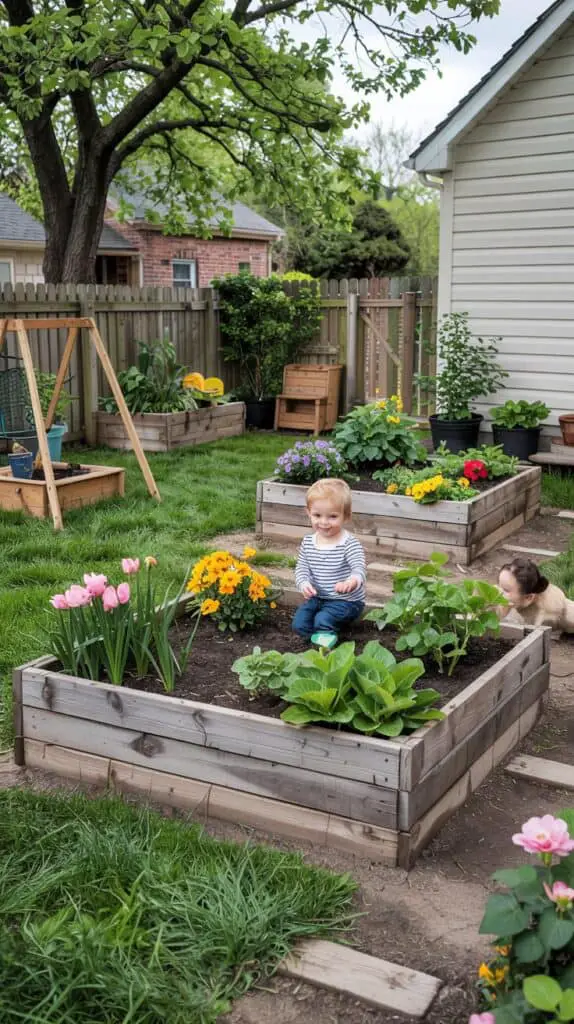
Raised planters are one of the best tools for a spring garden that needs to coexist with toys, pets, and changing ages. They’re also a smart renter-friendly compromise: you get garden structure without digging up the whole yard.
Raised planters can:
- Create natural “walls” that guide movement
- Protect flowers from balls and paws
- Make it easier for kids to help without stepping into beds
- Keep the garden looking tidy even when the rest of the yard is busy
For beginners, start with two or three raised planters instead of a full bed system. Use them to anchor the space: one near the seating area, one near the play structure (but not too close), and one along a fence line.
Plant them with a mix of:
- A few spring flowers for color
- Something edible (strawberries, herbs, peas)
- One structural plant that stays nice when everything else is messy
This is where you can gently play with Floral Garden style—layering textures and colors—without risking the whole yard. And when your layout needs to change, raised planters are easier to shift than in-ground beds.
Add a “dig zone” so your garden isn’t the dig zone
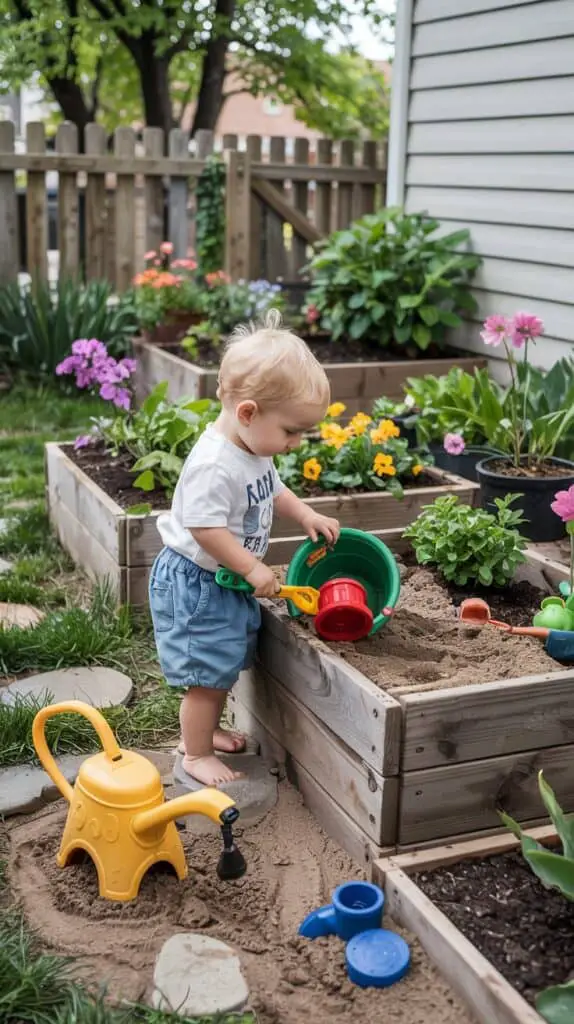
If you have toddlers, young kids, or a dog who likes to “help,” you already know: if you don’t give them a place to dig, they’ll pick one for you. The key is to make a dig zone that feels like part of the design instead of a random sandbox plopped in the corner.
A dig zone can be:
- A covered sandbox (keeps it cleaner and more renter-friendly)
- A large soil bin for “mud kitchen” play
- A small, contained patch of loose mulch with hidden “treasures” (toy dinosaurs, smooth stones)
Place it close enough that you can supervise easily, but not right next to your main spring flowers. If possible, locate it near a hose spigot or where muddy play won’t track straight into the house.
This single choice protects the rest of your Spring Flowers Garden and gives kids a satisfying kind of autonomy. As they grow, the dig zone can become a mini garden bed they manage themselves or a spot for a small compost bin and kid-friendly planting experiments.
Plant a kid-proof wildflower strip for low-effort beauty
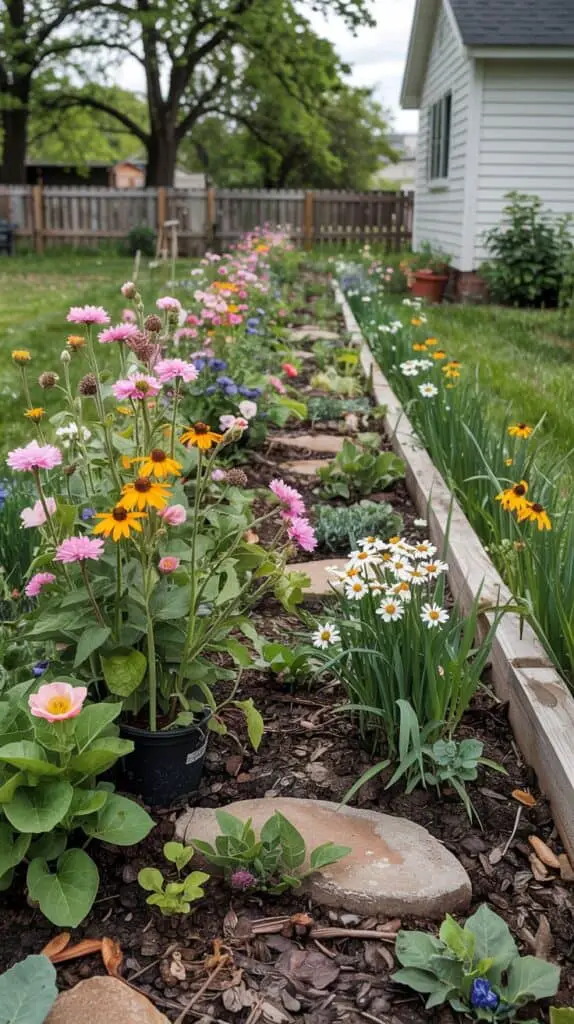
A Wildflower Garden can be a great middle ground between “I want flowers” and “I don’t have time to fuss.” The trick is placement and containment. A wildflower strip works best when it has a clear boundary, like along a fence or beside a shed, rather than floating in the middle of the yard.
To keep it practical:
- Make it a long, narrow strip with an edge (stone, timber, or even a clean mulch border)
- Choose a seed mix that matches your climate and won’t turn into a weedy mess
- Keep the first season expectations realistic—wildflowers can be a little chaotic at first
This is a lovely way to add Flower Garden Inspiration without needing perfect rows. It’s also pollinator-friendly, which can make the spring garden feel more alive.
As kids grow, a wildflower strip becomes a nature study zone: bugs, butterflies, seed heads, dried bouquets, and little observation moments that don’t require you to schedule an activity.
Create a shade-and-seating corner that can mature into a teen hangout
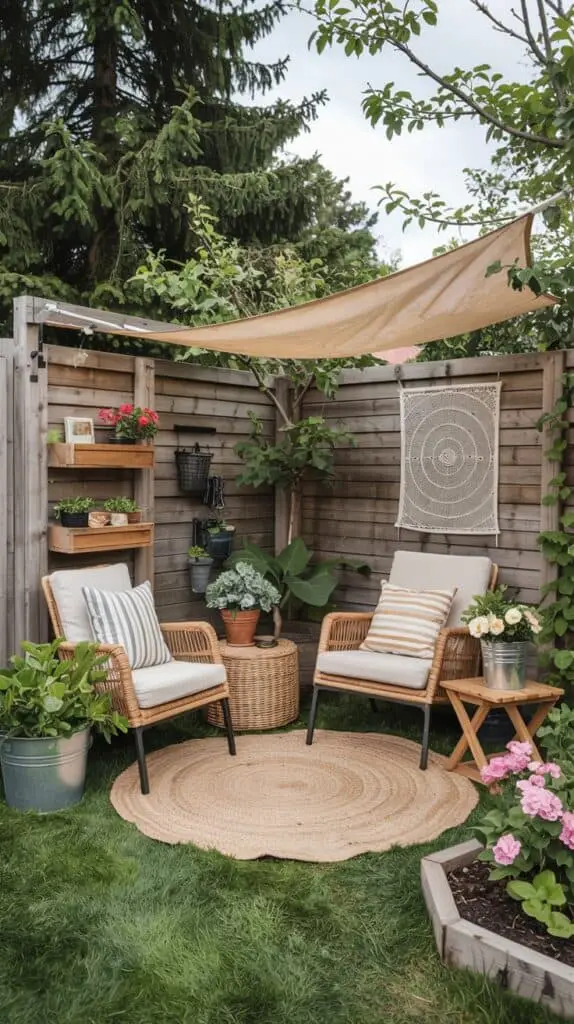
Kids don’t just need movement. They also need a place to slow down. And adults need a spot where it actually feels nice to sit.
A simple seating corner helps a backyard play space grow with your kids because it’s useful at every stage:
- When kids are little, it’s where you supervise.
- When kids are bigger, it becomes the snack-and-chat spot.
- When kids are teens, it’s where they’ll actually hang out if it feels comfortable.
In spring, you can make this corner feel intentional with:
- Two chairs and a small outdoor table
- A simple outdoor rug (or a mulch/gravel pad if rugs feel too fussy)
- A few tall planters to soften the edges
- A trellis or a lightweight shade sail if you can’t plant a tree
If you love Cottage Garden Ideas, this corner is where you can lean into softer planting—maybe climbing flowers on a trellis or a container with a trailing bloom. Keep it contained so it looks styled, not scattered.
This is also where you can transition the yard over time. You can start with portable furniture and planters and later decide if you want something more permanent.
Design “toy storage that looks like landscaping”
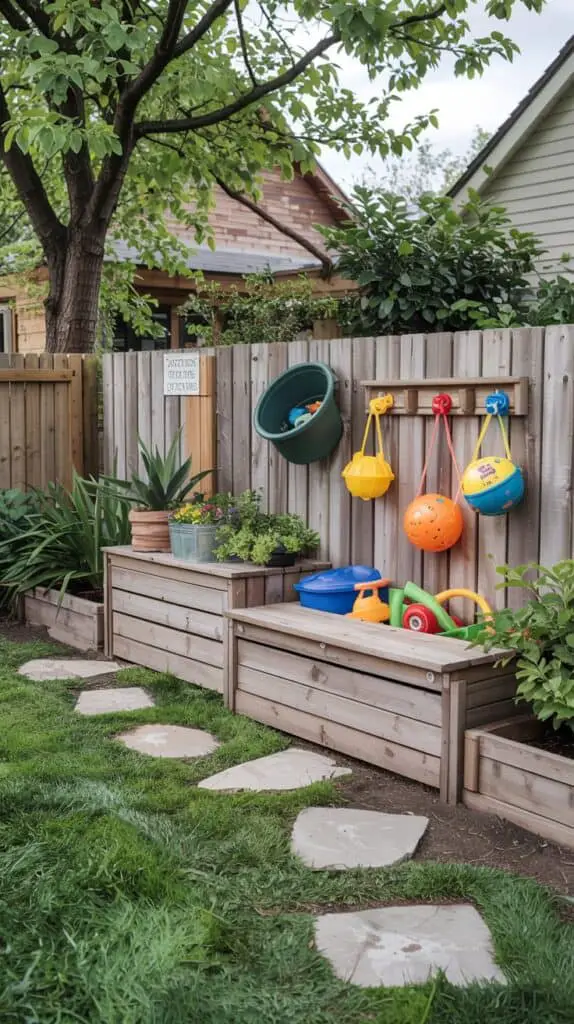
One of the fastest ways a yard stops feeling pretty is when toys don’t have a home. The goal isn’t to hide every toy (kids live here), but to create a default landing spot so the outdoor play area doesn’t take over the whole spring garden.
Try storage that blends in:
- A low bench with hidden storage
- A weatherproof deck box tucked behind planters
- A slim vertical bin near the door for quick toss-in cleanup
- Hooks on a fence for balls, helmets, and jump ropes
To make it feel like part of the landscape, place storage where you’d naturally build a “transition zone,” like near a patio, by the back door, or beside the play structure. Frame it with planters or a small bed so it doesn’t feel like a random plastic box.
This is one of those practical choices that keeps a Pretty Garden vibe possible, even when life is busy.
Use “seasonal swap” containers so the garden can change without replanting everything

If you like the idea of a Spring Flowers Garden but don’t want to commit to a big in-ground plan, containers are your best friend. They’re also perfect for renters and beginners, because you can change your mind anytime.
A simple seasonal container strategy:
- Pick 3–5 containers in the same color family so it looks cohesive.
- Use a consistent “base” plant (like a small shrub or hardy grass) in one or two larger pots.
- Fill the rest with seasonal color that can be swapped as spring moves into summer garden season.
In early spring, you can do bulbs and pansies. Later, you can shift to sturdier warm-season blooms. You get that Floral Garden feel without turning the whole yard into a replanting project.
Containers also let you protect flowers during high-energy phases. If your kids are in a “soccer every day” season, you can move pots a little farther back. When things calm down, you can bring the flowers closer again.
Create a small “grow-with-me” garden patch that belongs to the kids

A lot of spring garden ideas forget the simplest truth: kids care more when they have ownership. A tiny garden patch—small enough to manage, big enough to feel real—can evolve beautifully as they grow.
Start with something very simple:
- One raised planter or a small corner bed
- A few easy wins: strawberries, snap peas, basil, marigolds, sunflowers
- A little sign or marker so it feels like theirs
Keep it close to the outdoor play area so it’s part of the routine, not a separate “garden lesson” that requires effort to remember.
As they get older, the kids’ patch can shift:
- Toddlers: watering and picking flowers
- Elementary age: planting seeds and watching growth
- Tweens: experimenting, building a small trellis, choosing colors
- Teens: it might become a low-maintenance herb bed or a private corner with plants they actually like
It’s one of the most natural ways for a playground-style yard to grow up without losing its warmth.
Plan for “future flexibility” with simple zones, not permanent themes
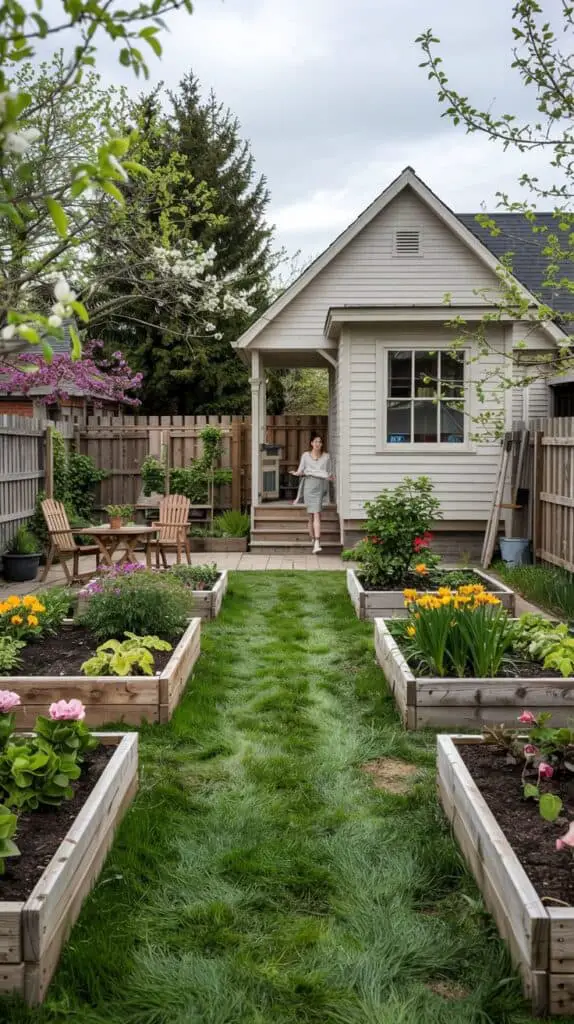
It’s easy to get pulled into a specific Garden Styles vision—cottage, modern, wild, formal—and then feel stuck when your yard needs change. Instead, try zoning your space in a way that can accept different styles later.
A flexible layout might include:
- A clear middle play zone
- One defined seating corner
- Edge gardens that can be filled in gradually
- A few raised planters that can move or be replanted
- A path that organizes traffic
Once those basics are in place, the style can shift over time. One year you can lean into Flower Garden Inspiration with soft spring flowers. Another year you can simplify if your schedule is full. The yard still works.
This is the quieter win: your spring garden doesn’t have to be perfect to be beautiful. It just has to be designed for the life that actually happens in it.
Conclusion
A backyard doesn’t need to choose between “nice garden” and “real kid space.” With a clear play zone, sturdy edges, flexible planters, and a few intentional spring flowers, you can build an outdoor play area that grows with your kids instead of getting outgrown every year.
Start small, keep it practical, and let the garden mature in layers. The goal isn’t a show-yard. It’s a lived-in spring garden that stays welcoming—mud, scooters, blossoms, and all.